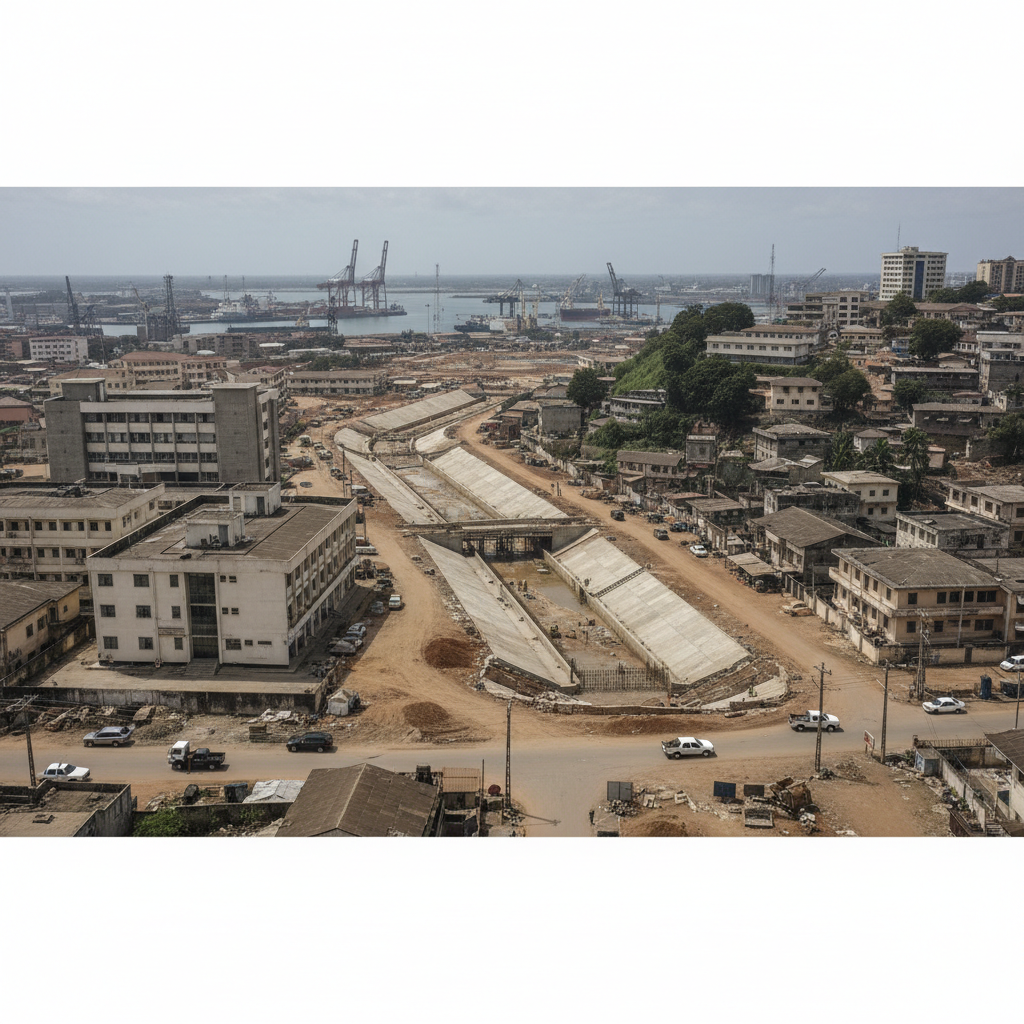
Ghana has allocated over GHS 5.8 billion towards flood control and sanitation interventions across the period 2011 to 2021. This significant expenditure has failed to mitigate perennial flooding in Accra, as highlighted by Rashid Ibrahim, President of the National Union of Ghana Students (NUGS).
The NUGS President emphasized that recurring floods disrupt lives, livelihoods, and educational activities annually. This ongoing problem can no longer be seen as an unforeseen natural occurrence. Instead, it reflects historical issues of poor planning, lax enforcement of sanitation laws, corruption, and inadequate waste management practices. These failures span across successive governments, creating a persistent national challenge that impacts vulnerable communities.
This situation fits into a broader narrative of public spending efficiency and accountability in Ghana. The country frequently faces challenges in translating significant investments into tangible development outcomes. Prior flood control efforts included an estimated GHS 88 million spent between 2011 and 2016. An additional GHS 450 million was invested from 2017 to 2021 under the National Flood Control and Priority Drainage Programme. These initiatives were managed through the Ministry of Works and Housing. In 2020, a new ministry was even established to specifically oversee sanitation and environmental management. Despite these dedicated efforts and external support, the flooding crisis endures.
Rashid Ibrahim, the NUGS President, stated that the substantial investments raise questions. He emphasized concerns about implementation, accountability, value for money, and the actual effectiveness of these interventions. Ibrahim highlighted the devastating impact on children and young people. They often lose access to education, face displacement, experience health risks, and in tragic cases, lose their lives during these disasters.
The ongoing crisis implies a need for urgent and decisive action from the government. Policy decisions must address corruption, inefficiency, and weak accountability mechanisms that undermine interventions. Decision-makers must prioritize protecting lives and securing the nation's future over short-term interests. Citizens' irresponsible waste disposal practices also contribute to the problem. Communities expect transparency regarding how public resources are spent, what projects are completed, and the achieved outcomes. The persistence of flooding despite major spending will continue to fuel public calls for greater oversight and long-term solutions.