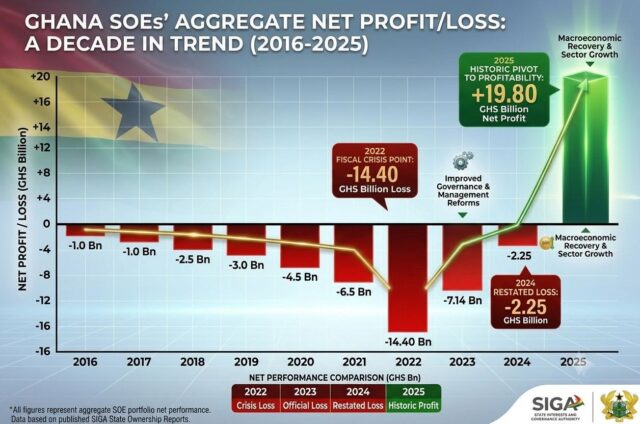
Ghana’s State-Owned Enterprises (SOEs) collectively reported a net profit of GHS 19.8 billion in 2025. This marks their first consolidated profit in four years, reversing a trend of cumulative losses.
Total revenue for these entities surged by 28.12% to GHS 176.43 billion. Non-energy sectors significantly contributed to this growth, with agriculture revenue increasing by 203.71% and manufacturing by 114.74%. Infrastructure also saw a substantial rise of 92.24%, diversifying the SOE revenue base.
This financial turnaround fits into Ghana's broader economic narrative of seeking fiscal stability and improved public sector performance. The government has been under pressure to reduce the financial burden of SOEs on the national budget. Historically, these entities have often required significant state support, impacting public finances. The reported profit, therefore, presents a seemingly positive development for the country's economic outlook.
The State Interests and Governance Authority (SIGA) presented this data, highlighting a structural victory for state enterprises. SIGA oversees the performance of Ghana's SOEs, aiming to improve their efficiency and profitability. Their narrative suggests a successful strategy in turning around these state-owned entities.
However, the underlying drivers of this profit raise questions about its sustainability and true economic impact. Policymakers must carefully analyze the components of this reported profit. Understanding the distinction between operational improvements and external macroeconomic factors is crucial for future policy decisions. This analysis will determine if the gains are robust or merely temporary.
A closer examination reveals that macroeconomic factors largely drove the 2025 profit. SOEs recorded GHS 11.72 billion in net foreign exchange gains. This gain reversed a significant GHS 12.01 billion foreign exchange loss from 2024. The stabilization of the Ghanaian cedi against major currencies played a critical role in this reversal. This single factor accounted for a GHS 23.73 billion positive shift in the SOE financial statements. Furthermore, net finance costs decreased by 42.49%. This reduction primarily stemmed from monetary policy rate cuts and pauses in domestic debt restructuring. It did not reflect aggressive corporate deleveraging by the SOEs themselves. More than half of the headline earnings turnaround is an unearned dividend of broader macroeconomic stabilization.
Despite the GHS 19.8 billion paper profit, Ghana’s 53 wholly-owned commercial SOEs remitted only GHS 16 million in cash dividends to the state. This represents a 29.4% drop from the previous year. This discrepancy highlights a significant challenge in public sector finance. Only two entities, TDC Development Company and Ghana Reinsurance, paid dividends to the treasury. The remaining SOEs used their reported profits to service legacy debts, cover historic deficits, and manage uncollected public receivables. This situation creates a sovereign dividend paradox, where profits do not translate into cash for the national treasury. The lack of cash flow back to the government means these paper profits offer limited direct fiscal relief. It also suggests that operational efficiency improvements are still needed. The government must address this gap to ensure SOEs contribute meaningfully to national revenue. This will strengthen public finances and reduce reliance on external borrowing.
The implications are clear for Ghana's economic managers. They must differentiate between genuine operational alpha and macroeconomic beta. Operational alpha refers to profits generated through improved business performance. Macroeconomic beta refers to gains from external economic conditions. Relying solely on macroeconomic tailwinds for SOE profitability is risky. Such gains can quickly evaporate during economic downturns. The government should focus on implementing reforms that enhance the operational efficiency of SOEs. This includes improving governance, reducing debt, and ensuring timely collection of receivables. Strengthening cash flow management within these entities is paramount. This will ensure that reported profits translate into tangible contributions to the state. Investors and international partners will watch closely for these reforms. They seek evidence of sustainable financial health in Ghana's public sector. The long-term stability of Ghana's economy depends on these critical adjustments. Without them, the GHS 19.8 billion profit may remain a fleeting mirage.