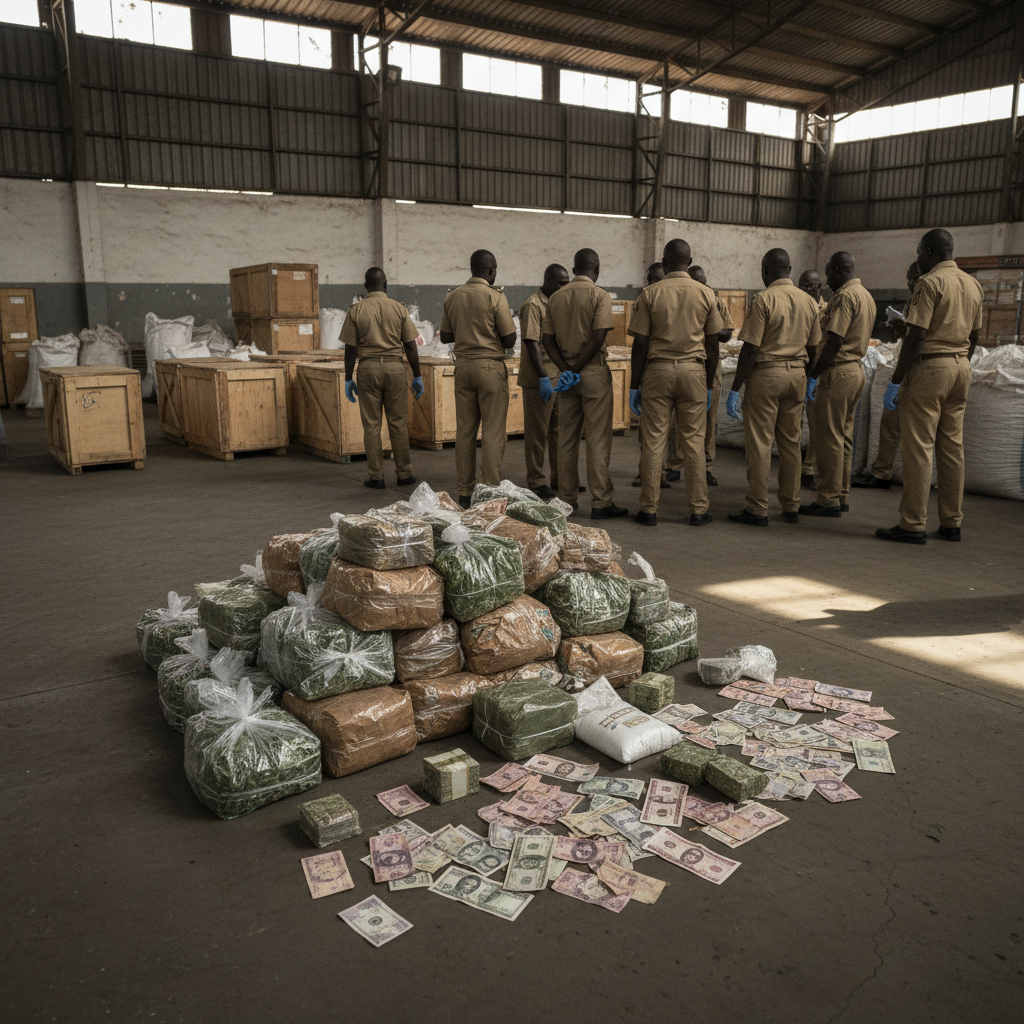
Ghanaian authorities have arrested 217 individuals and initiated 165 prosecutions in an intensified crackdown on illicit drugs. Interior Minister Muntaka Mohammed-Mubarak confirmed these figures, highlighting the government's commitment to combating drug trafficking and abuse. The operations have also resulted in significant seizures of narcotics and financial assets linked to the drug trade.
This aggressive stance has led to the confiscation of over 8,500 kilogrammes of various narcotics. Additionally, law enforcement agencies intercepted approximately 45.4 million tramadol tablets, underscoring the growing threat from synthetic drugs. These seizures demonstrate the scale of the challenge and the proactive measures taken by the Narcotics Control Commission (NACOC) and other security agencies.
The government's strategy extends beyond arrests, targeting the financial networks that sustain the illicit drug trade. This approach aligns with broader efforts to combat financial crimes and money laundering within Ghana's economy. Disrupting these financial flows is crucial for weakening criminal organizations and protecting the integrity of the financial system. Such actions also aim to prevent illicit funds from distorting legitimate economic activities.
Interior Minister Muntaka Mohammed-Mubarak stated that intelligence-led operations recovered 73 tainted assets over approximately 20 months. He further reported the seizure of more than 19 kilogrammes of gold in suspected drug-money laundering cases. Cash amounts of approximately GHS 6.9 million and US$440,000, believed to be linked to drug activities, were also restrained. These figures illustrate the significant financial impact of the crackdown on criminal enterprises.
The government's focus on asset recovery aims to dismantle the economic foundations of drug trafficking. This strategy ensures that authorities go beyond apprehending individuals to disrupting the financial networks that enable the illicit drug trade. Decision-makers and financial institutions will closely monitor the effectiveness of these measures in curbing illicit financial flows. Continued vigilance and international cooperation will be essential for sustained success.
Beyond enforcement, the Interior Minister emphasized the importance of education and prevention in the fight against drugs. NACOC has conducted over 2,000 educational programmes nationwide. These initiatives targeted 1,153 first-cycle schools, 185 second-cycle schools, and 41 tertiary institutions. Educational activities also reached 187 faith-based institutions, 147 communities, and 235 workplaces, raising awareness about drug abuse risks.
Minister Mohammed-Mubarak highlighted that the preventive component is vital for helping young people and vulnerable groups understand the devastating effects of illicit drugs. This comprehensive approach seeks to discourage involvement in drug use or trafficking. However, he acknowledged that rehabilitation remains a significant challenge, noting Ghana lacks a dedicated national rehabilitation center. Addressing this gap will be crucial for providing adequate support to individuals struggling with drug dependence.
The ongoing operations, carried out in collaboration with the Ghana Police Service and other security agencies, reflect a coordinated national effort. This multi-faceted strategy combines law enforcement, financial disruption, and public awareness campaigns. The government aims to create a safer environment by reducing drug availability and demand. Future efforts will likely focus on strengthening rehabilitation infrastructure and enhancing intelligence gathering to further dismantle drug networks.