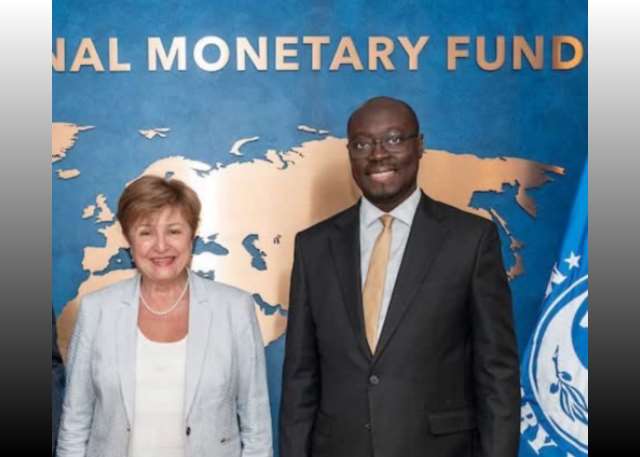
Ghana has secured an additional 1.00% of its Gross Domestic Product (GDP) for development spending, effective from 2027. This significant fiscal breathing room comes after the International Monetary Fund (IMF) agreed to lower Ghana’s primary surplus target from 1.50% to 0.50% of GDP.
This adjustment allows the government to redirect substantial resources towards vital infrastructure projects, social programmes, and other development priorities. The shift marks an important evolution in Ghana's economic adjustment programme, moving from aggressive fiscal repair to a more balanced approach that combines debt sustainability with essential development investment.
This development fits into Ghana's broader economic narrative of recovery and stabilisation following a period of significant debt and macroeconomic challenges. The country has been under an IMF programme, which typically imposes strict fiscal targets to restore financial health. This new agreement reflects a recognition that sustained economic growth also requires strategic investment, not just austerity. Ghana's GDP was approximately GHS 1.45 trillion in 2023, meaning 1.00% of GDP could represent around GHS 14.5 billion in additional spending capacity.
Dr. Adrian Alter, the IMF’s Resident Representative in Ghana, confirmed the change. He stated, “By relaxing the fiscal stance from 1.5% primary surplus on a commitment basis to 0.5% of GDP, that basically allows an extra percentage point of GDP to be spent on development needs starting in 2027.” This statement underscores the direct impact of the revised target on the nation's ability to fund its growth agenda.
The implications of this decision are far-reaching. It provides Ghana with a crucial opportunity to accelerate economic development and improve the quality of life for its citizens. Decision-makers must now ensure these newly available funds are allocated efficiently and transparently to maximise their impact. Markets will closely watch how the government manages this increased fiscal space, particularly regarding its commitment to avoiding past pitfalls like accumulating arrears.
The revised surplus target does not mean an end to fiscal discipline. A primary surplus measures the difference between government revenue and non-interest expenditure. Lowering the target means the state will save less before interest payments are considered, but it must still run a positive primary balance. This ensures continued fiscal responsibility while enabling growth-oriented spending.
The 1.00 percentage-point difference can be directed towards development expenditure, provided spending controls remain effective. The government must finance expenditure from revenue and sustainable borrowing. It must also avoid a return to accumulating arrears and off-budget commitments, which contributed to Ghana’s previous fiscal difficulties. These controls are crucial for the safe and effective use of the additional fiscal space.
Dr. Alter noted that the government entered 2025 with considerable inherited pressures. These included a large stock of arrears and a wider fiscal deficit carried over from 2024. He explained, “The government in 2025 inherited a large stock of arrears, and basically, it needed to address a much larger fiscal deficit in 2025 that was brought from 2024.” To deal with this, the government had to cut some expenditure and implement stronger controls, such as commitment authorisation.
The commitment authorisation framework is vital. It aims to prevent public entities from creating obligations without sufficient cash backing or budgetary provision. This mechanism is central to ensuring that the additional fiscal space is not dissipated through inefficient spending or new arrears. Effective implementation of these controls will determine the success of this new fiscal approach.
An additional 1.00% of GDP can significantly contribute to infrastructure, health, education, and energy sectors. However, this amount can also be quickly wasted if absorbed by poorly targeted recurrent spending or inefficient procurement. The revised framework thus presents both an opportunity and a test for Accra. It is an opportunity to demonstrate that fiscal consolidation can lead to tangible development benefits for households and businesses.
For the private sector, the composition of spending will be particularly important. Investments in roads, ports, electricity systems, and digital infrastructure can reduce business costs and attract private capital. Spending on education and health strengthens human capital over the long term. These productive investments are essential for fostering sustainable economic growth and improving Ghana's overall competitiveness.