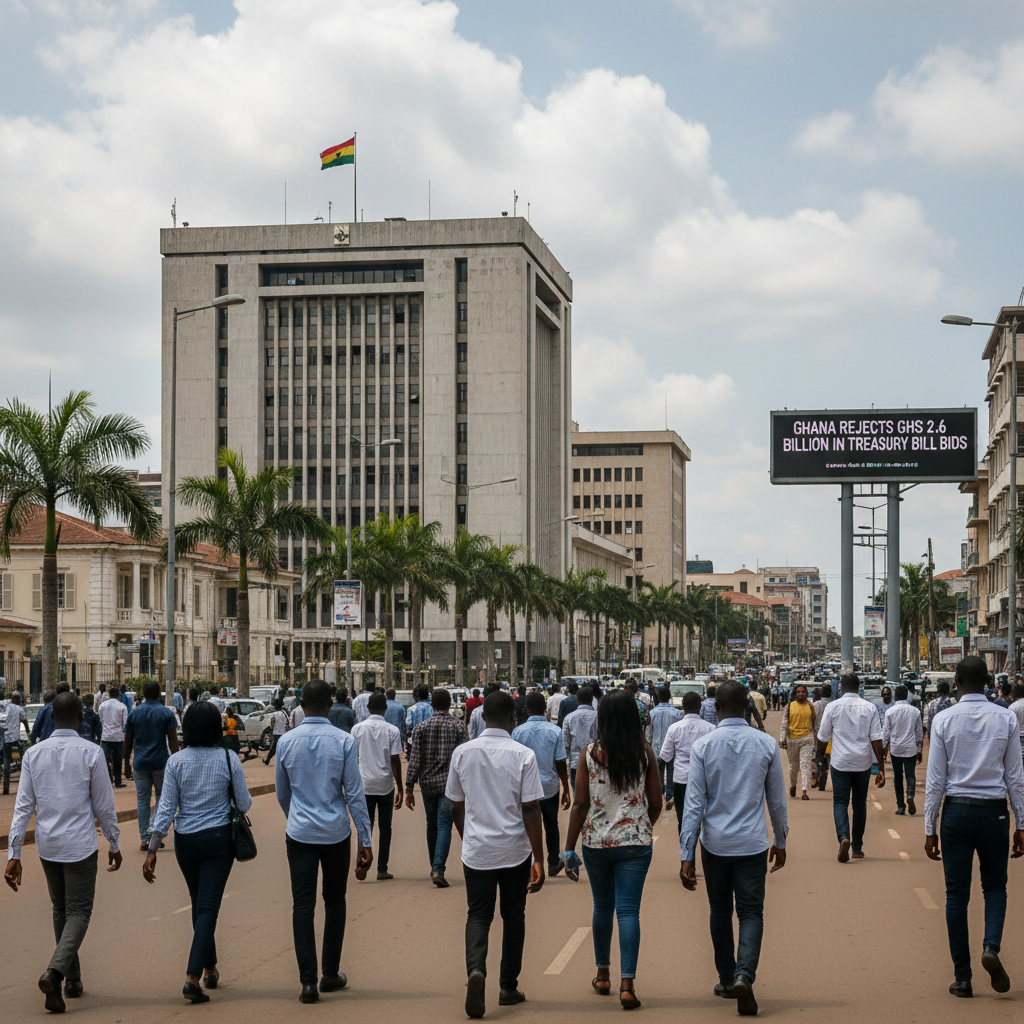
Ghana's government rejected GHS 2.6 billion, or 26.4%, of bids at its recent Treasury bill auction. This decision aimed to manage the nation's debt and control borrowing costs. Investors offered GHS 10 billion, significantly oversubscribing the government's target of GHS 5.67 billion.
The large number of bids indicates strong investor confidence in Ghana's short-term government debt. However, a portion of these bids likely demanded higher interest rates. The government accepted GHS 7.38 billion, allowing it to borrow the necessary funds at more favourable rates. This careful management helps the government avoid excessive interest payments, benefiting public finances.
This auction result aligns with Ghana's ongoing efforts to stabilize its economy. High borrowing costs have historically strained the national budget. The government secured a GHS 3 billion package from the International Monetary Fund (IMF) in May 2023. This program includes a debt restructuring component. Managing domestic borrowing effectively is crucial for the success of this restructuring plan. The strong demand for Treasury bills suggests a positive market sentiment, but the rejection of high-cost bids underscores fiscal discipline.
While no direct quote is available for this specific auction, the Bank of Ghana regularly communicates its commitment to prudent debt management. Its goal is to maintain stability in the financial markets and achieve sustainable public debt levels. This approach safeguards the country's economic future.
Looking ahead, market participants will closely monitor future Treasury bill auctions. The government's consistent rejection of high-cost bids will demonstrate its resolve in debt management. This strategy could lead to lower average interest rates on government securities. Lower borrowing costs free up funds for critical public services and development projects.
This outcome is a positive signal for Ghana's economic stability. It suggests that financial markets are responding well to the government's fiscal policies. Continued strong investor interest, coupled with disciplined borrowing, will be vital. These factors are essential for Ghana to navigate its economic recovery successfully. The market’s response to upcoming auctions will provide further insight into these trends.