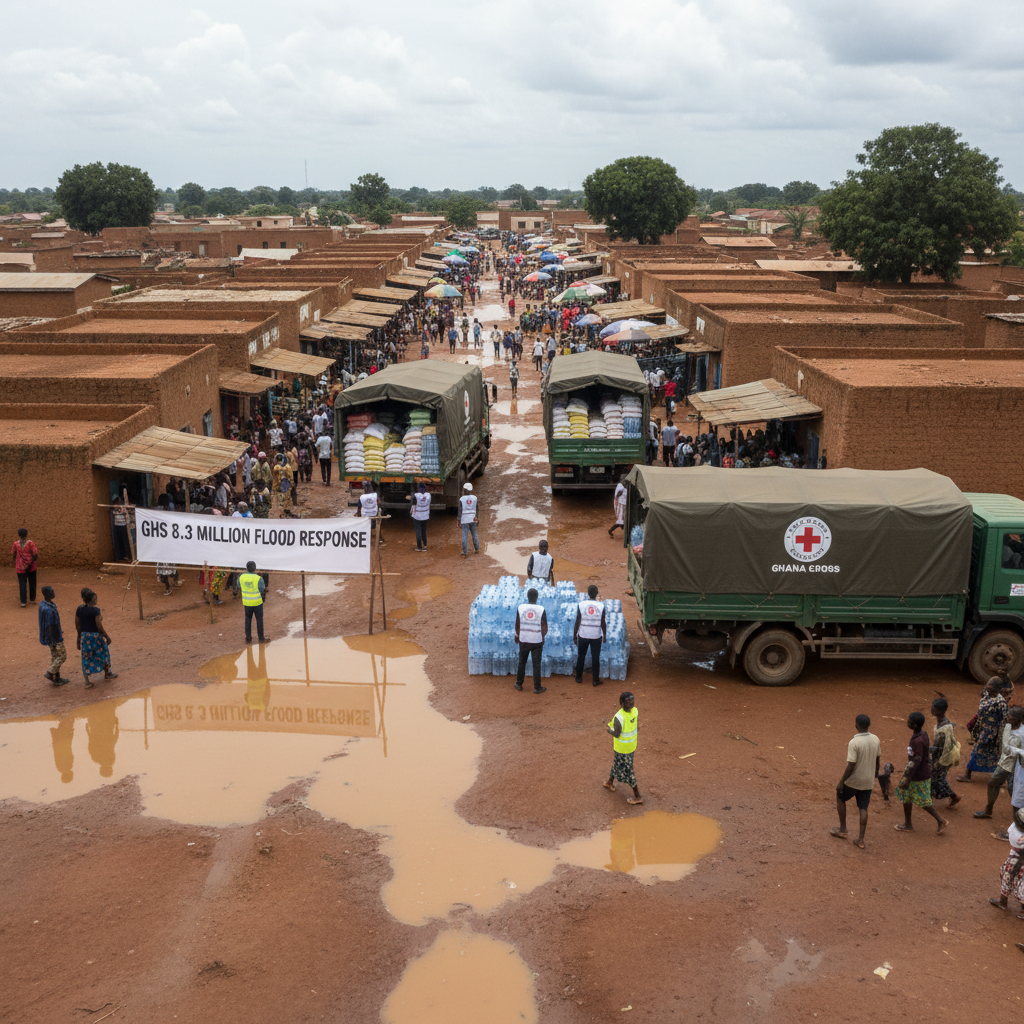
The Ghana Red Cross Society (GRCS) has launched an GHS 8.3 million Disaster Response Emergency Fund (DREF) operation. This initiative aims to assist 30,000 flood victims over the next six months. The Secretary General, Mr. Eric Gregory Kwatia, warned that Ghana's increasing exposure to climate change is intensifying flood disasters.
Mr. Kwatia emphasized the urgent need for a united national effort to protect vulnerable communities. He spoke at the official launch of the emergency flood response operation in Accra on Friday, July 30. The devastating floods that struck four regions in June highlighted Ghana's growing vulnerability to extreme weather events. These floods affected 69,867 people, left thousands homeless, and claimed 30 lives.
Ghana faces significant economic and social challenges from climate change. The June floods, following exceptionally heavy rainfall, overwhelmed drainage systems across Greater Accra, Central, Volta, and Western North Regions. This event underscores the country's need for robust infrastructure and effective disaster preparedness. The Red Cross's intervention aligns with broader national efforts to build resilience against environmental shocks, which frequently disrupt livelihoods and economic activity.
Mr. Kwatia stated, "The June floods are a stark reminder of Ghana's growing vulnerability to climate change and extreme weather events. The humanitarian needs are immense and the window to act is now." He stressed that humanitarian organizations cannot respond effectively without sustained collaboration. This includes government institutions, development partners, the private sector, and local communities.
The GHS 8.3 million DREF operation, supported by the International Federation of Red Cross and Red Crescent Societies (IFRC), will provide crucial aid. This includes emergency shelter materials, household items, and technical support to families whose homes were destroyed. The Red Cross plans to distribute 150 shelter kits, 2,000 blankets, and 2,000 kitchen sets. Additionally, 1,050 vulnerable households, approximately 5,250 people, will each receive GHS 1,200 through mobile money transfers. This unconditional cash assistance allows families to address their most pressing needs, supporting early recovery and respecting their dignity.
Beyond immediate relief, the crisis threatens livelihoods and public health. Contaminated water supplies and overcrowded shelters create conditions for disease outbreaks. Mr. Kwatia warned of an elevated risk of cholera, acute diarrhoeal diseases, dysentery, typhoid, and malaria among displaced populations. The Red Cross deployed 10 staff members and 50 volunteers immediately after the floods. They supported search and rescue, administered first aid, and provided psychosocial support. The DREF activation has strengthened their capacity for a broader humanitarian intervention.
The government and its partners must prioritize long-term strategies for climate change adaptation and mitigation. This includes investing in resilient infrastructure and improving early warning systems. The private sector also has a role in supporting community resilience and recovery efforts. Continued collaboration is essential to prevent future suffering and help communities recover from increasingly frequent and intense weather events. The effectiveness of these coordinated efforts will be crucial for Ghana's economic stability and public welfare.