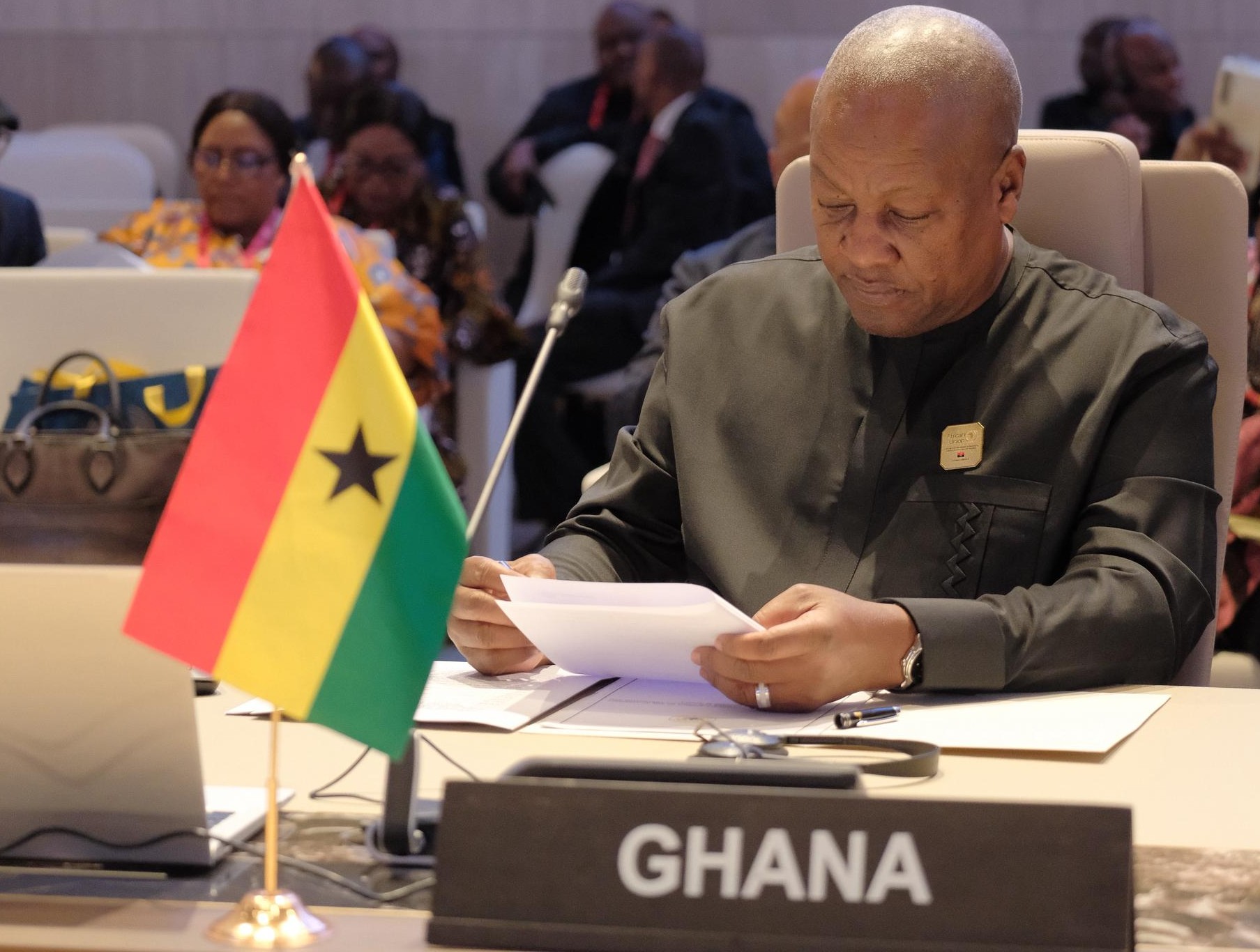
Ghana places significant importance on sustainable, predictable, and African-owned financing for the continent's peace and security agenda. President John Dramani Mahama articulated this position at the 21st Extraordinary Session of the African Union Assembly in Luanda, Angola, on August 30, 2026. This commitment underscores a strategic shift towards greater self-reliance in managing regional conflicts and security challenges.
President Mahama stressed the critical need for early warning systems to translate into prompt action, which requires readily available and predictable resources. He noted that despite comprehensive continental mechanisms, Africa still faces persistent conflicts. The summit's timing was crucial for addressing these ongoing security concerns effectively.
This emphasis on African-owned financing fits into Ghana's broader foreign policy and economic strategy, promoting regional stability as a prerequisite for economic development. Ghana has historically contributed troops to peacekeeping missions and advocates for stronger regional institutions. The push for predictable funding mechanisms aims to reduce reliance on external partners, aligning with the principle of 'African solutions to African problems'. This approach also seeks to safeguard national budgets from unpredictable external funding fluctuations for security operations.
President Mahama stated, "We welcome the progress made in operationalising the African Union Peace Fund and support its continued capitalisation towards the $1 billion target." He further encouraged the "accelerated implementation of the Peace Fund resource mobilization strategy, including the effective application of the 0.2 per cent import levy." This levy is designed to generate consistent revenue from African trade to support peace initiatives.
The implications of this push are significant for regional stability and economic integration. A well-funded African Union Peace Fund could enable faster, more decisive responses to emerging conflicts, potentially preventing their escalation and reducing their economic toll. Decision-makers will closely watch the progress of the Peace Fund's capitalization and the implementation of the import levy. This initiative could also encourage greater financial discipline and accountability within African security structures, fostering investor confidence in a more stable continent. The long-term goal is to create a robust, self-sufficient security architecture that supports sustainable development across Africa.
President Mahama also acknowledged the importance of predictable international financing for African-led peace support operations. He welcomed United Nations Security Council Resolution 2719 of 2023. This resolution provides a framework for financing AU-led peace operations through UN assessed contributions. Ghana encourages continued efforts to operationalize this framework, ensuring it aligns with African ownership and shared responsibility for international peace. Burundi President Évariste Ndayishimiye, the AU Chairperson, echoed these sentiments. He stated that lasting African ownership of the peace agenda requires predictable, sustainable, and flexible African funding. He emphasized strengthening the African Union Peace Fund to match continental ambitions. This collective resolve highlights a unified African front on security financing.