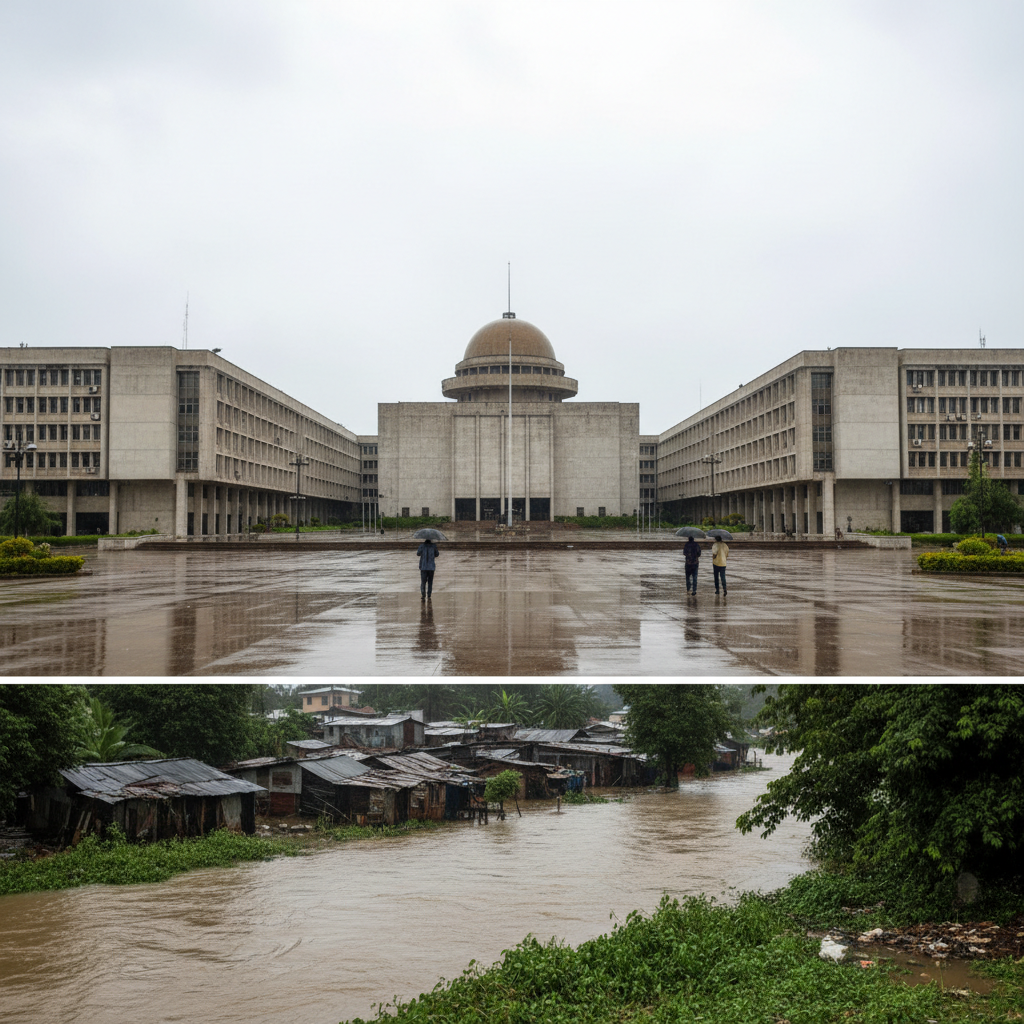
Dr. Kingsley Agyemang, Member of Parliament for Abuakwa South, has urged African governments to create dedicated, legally protected disaster risk management funds. This initiative aims to help countries prepare for and respond to increasingly severe floods across the continent.
The insurance and risk management expert emphasized that African nations must move beyond treating floods as post-occurrence emergencies. Instead, consistent investment in prevention, preparedness, and resilience is crucial. Dr. Agyemang highlighted that many African countries possess early warning systems but lack the necessary financing and coordination to act effectively before disasters strike.
This proposal fits into a broader narrative of Ghana and Africa grappling with the escalating impacts of climate change. Recent devastating floods in West Africa, including Ghana and Côte d’Ivoire in June, underscored the region's vulnerability. These events led to at least 12 confirmed deaths in Ghana and affected thousands of households, renewing concerns about preparedness for extreme weather.
“Most often on the continent, there are effective early warning systems for many of these flood disasters,” Dr. Agyemang stated in an interview with the BBC’s Focus on Africa. He added, “But the truth of the matter is that governments are unable to respond effectively to those early warning signs because of the financing regime.”
The establishment of such funds would enable governments to accumulate reserves for critical infrastructure projects, including drainage and flood-control measures. It would also support emergency response efforts and other preventive interventions. This proactive approach is vital as climate change is projected to increase both the frequency and severity of flooding across Africa.
Dr. Agyemang, with over 20 years of experience as a risk management consultant, proposed an integrated financing model. This model would draw resources from multiple domestic sources. He suggested combining annual government budget allocations with revenues from mineral resources, corporate taxes, levies, and support from development partners. This diversified funding base would ensure sustainability.
The MP, who also serves as Vice-Chairman of Parliament’s Human Rights Committee, insists these proposed funds must be established by law. They should also be ring-fenced, meaning legally protected from being diverted by governments to other priorities. He argued that protecting lives and property represents a fundamental responsibility of every government.
“The basic responsibility of every government is to protect life and property,” he asserted. “A government cannot say it has a priority more important than its basic responsibility of protecting life and property.” This legal protection is critical to ensure the funds are used for their intended purpose, preventing misuse or reallocation during times of fiscal pressure.
The Intergovernmental Panel on Climate Change (IPCC) has issued stark warnings regarding Africa's future climate. The IPCC estimates that a flood with a historical one-in-100-year probability could occur roughly once every 40 years at 1.5°C to 2°C of global warming. This frequency could increase to about once every 21 years at 4°C of warming across large African river basins. These projections highlight the urgent need for a strategic shift in disaster management.
For Dr. Agyemang, who also lectures at the Ghana Institute of Management and Public Administration (GIMPA), these projections make a shift from a “reactionary” approach increasingly urgent. He questioned, “Why should African governments always be waiting for donations to support victims anytime disaster strikes on the continent?” He advocates for a more domestically sustainable funding regime.
Beyond financing, Dr. Agyemang identified other barriers to effective flood management. These include weak institutional coordination, political interference in urban planning, and low insurance penetration. He suggested African countries could learn from jurisdictions like the United Kingdom’s flood reinsurance arrangements and the United States’ National Flood Insurance Programme.
He also called for flood prevention to be integrated into economic planning, rather than treated as an emergency expenditure. “We have to begin to perceive risk prevention or flood prevention as an investment and economic activity rather than contingency,” he explained. This reframing would prioritize long-term resilience and economic stability.
The consequences of flooding extend beyond immediate deaths and property damage. Dr. Agyemang, also a public health expert, warned that repeated flooding creates conditions for the spread of waterborne diseases. This includes cholera, typhoid, and malaria, placing additional pressure on already stretched health systems. Proactive investment can mitigate these public health crises.
Legislation is essential to protect these proposed funds from diversion. “If it is not backed by legislation, member states or governments can take the funds and use them for any other thing,” Dr. Agyemang cautioned. His reviews indicate no African country currently operates a comprehensive, legally protected disaster risk management fund of this nature.