Ghana's government missed its first-half 2026 revenue target by GHS 1.4 billion. This shortfall occurred despite new measures like artificial intelligence-driven customs administration and tax reforms. The Centre for Policy Scrutiny (CPS) disclosed this information, raising concerns about the effectiveness of recent interventions.
The policy think tank stated that Ghana's revenue performance fell short, even with efforts to improve tax compliance. Total revenue and grants for the first half of 2026 reached GHS 96.1 billion. This figure represents 98.5 percent of the budget target, creating the GHS 1.4 billion deficit. This underperformance points to ongoing challenges in domestic revenue mobilisation.
This situation fits into Ghana's broader economic narrative of striving for fiscal consolidation. The government aims to reduce its budget deficit and manage public debt. Consistent revenue underperformance makes achieving these goals more difficult. It also puts pressure on public services and infrastructure projects.
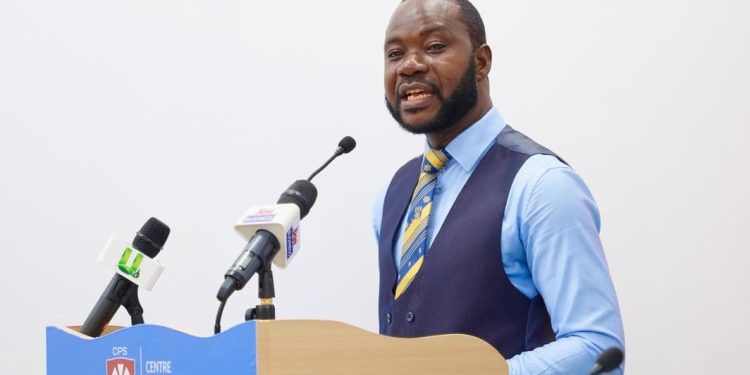
Dr. Adu Owusu Sarkodie, Executive Director of CPS, presented the Centre's assessment. He stated, "Revenue and grants underperformed by GH¢1.4 billion in the first half of 2026. Although the shortfall was marginal in percentage terms, it points to persistent weaknesses in domestic revenue mobilisation despite the implementation of new compliance measures." This highlights the need for a re-evaluation of current strategies.
The implications are significant for Ghana's economic stability. The government must find more effective ways to generate income. Decision-makers will need to review the current revenue mobilisation strategy. Markets will watch closely for signs of improved fiscal management and sustained revenue growth. Failure to address this could impact investor confidence and the country's credit rating.
The CPS identified several key revenue areas that underperformed. These include Value Added Tax (VAT), petroleum receipts, excise duties, and import duties. These shortfalls happened even with modernised collection efforts. Initiatives like AI deployment in customs administration and the Modified Taxation Scheme were in place.
Dr. Sarkodie noted that the implementation of revenue-enhancing measures has not yet produced significant improvements. This suggests that digital tools and administrative reforms alone are not enough. They require strong enforcement and effective implementation to yield meaningful fiscal gains. The government needs to ensure these tools are used to their full potential.
The Centre also linked part of the revenue challenge to weaker external inflows. Specifically, foreign-financed project loans were lower than expected. Only 15.8 percent of projected foreign project loans for the first half of 2026 were realised. This limits resources available for important capital expenditure programmes. Such programmes are crucial for economic development.
Dr. Sarkodie urged the government to adopt a more sustainable approach to fiscal consolidation. He suggested focusing on improving revenue generation. This approach should be prioritised over relying mainly on expenditure reductions. He stated, "The government has used an expenditure-led fiscal consolidation. There is also the need to embark on revenue-led fiscal consolidation without overburdening the taxpayer."
The CPS recommended several actions to strengthen the revenue system. These include enhancing tax administration and broadening the tax base. Improving compliance is also essential. A reliable revenue system can better support government programmes and reduce fiscal vulnerabilities. This will help Ghana achieve its long-term economic objectives.
The assessment forms part of CPS’s broader review of the 2026 Mid-Year Budget. The review also raised concerns about inconsistencies in some fiscal figures. It highlighted the reliance on lower-than-planned expenditure to achieve fiscal targets. This indicates a need for greater transparency and accuracy in budget reporting.