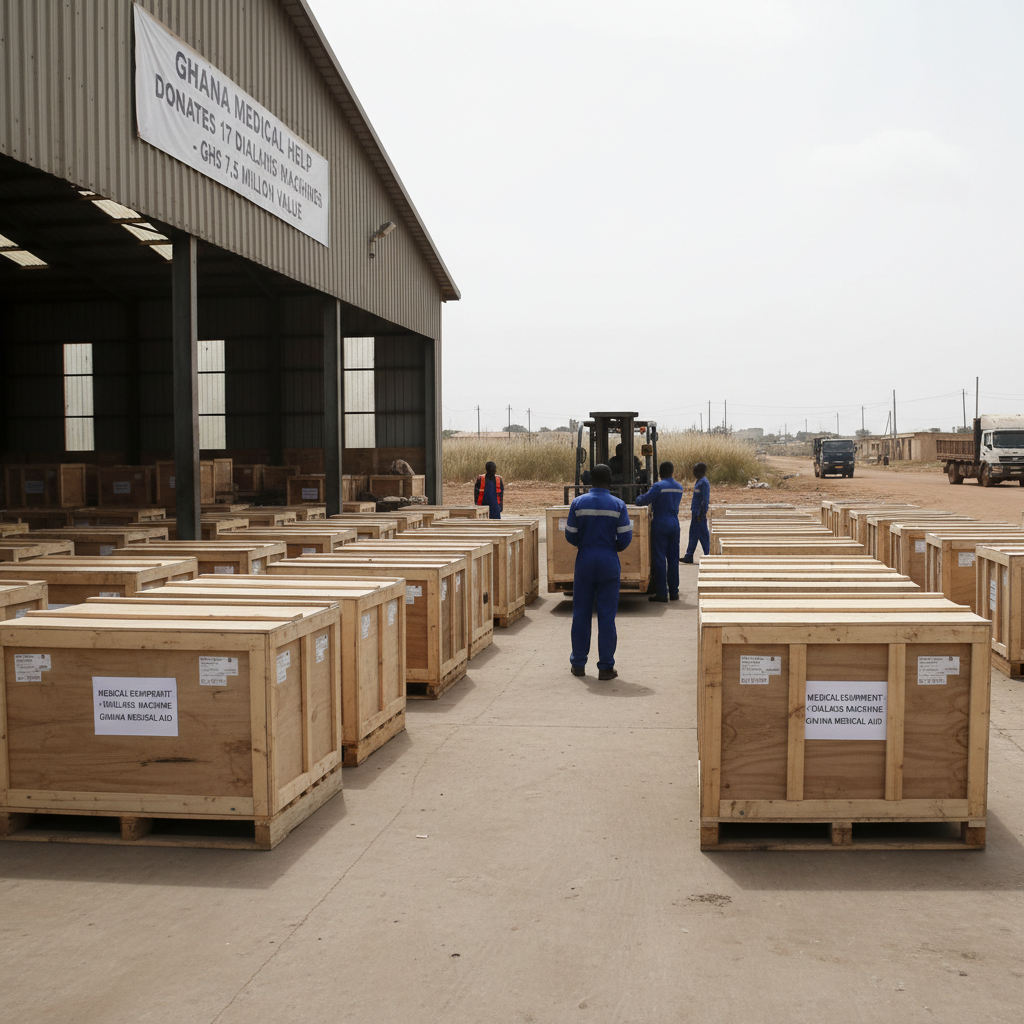
Ghana Medical Help (GMH), a Canadian-Ghanaian charity, has donated 17 state-of-the-art Fresenius 5008 dialysis machines and specialised imaging systems to hospitals. This medical intervention is valued at GHS 7.53 million. The equipment will benefit facilities in the Upper West and Upper East Regions of Ghana.
This significant donation aims to close a critical gap in specialist healthcare for patients with acute and chronic kidney diseases. International philanthropists fully funded the equipment. Beneficiary hospitals incurred no costs. This initiative is particularly important for Northern Ghana, where healthcare access remains a challenge.
This donation provides a vital boost to regional healthcare infrastructure. It aligns with broader efforts to improve access to specialised medical services outside major urban centres. The National Health Insurance Scheme (NHIS) now covers two dialysis sessions weekly for acute cases. This coverage means financial barriers to kidney treatment have reduced. The main problem left is geographical distance for patients in these regions.
Dr. Dominic Akaateba, GMH Country Director and Co-Founder, highlighted a critical aspect of the donation. He challenged existing models of foreign aid. Dr. Akaateba stated, "A lot of international NGOs come in for self-gratification—they donate, take a picture, and go away without strengthening the local system." He emphasised that GMH seeks no financial return from the equipment. Hospitals will generate revenue through the NHIS. This approach aims to build a sustainable local healthcare system.
The successful implementation of this GHS 7.53 million investment now depends on local management and staff. Dr. Akaateba warned that poor local attitudes could undermine the effort. He urged medical staff to treat patients with dignity. He also highlighted issues like informal payments, stating, "The dialysis nurse at the centre will demand a five-cedi 'ward fund' from a patient." Dr. Akaateba stressed that the equipment was given freely out of goodwill. Donors expect proper utilisation for the benefit of ordinary patients.
This intervention will significantly reduce the burden on patients. Dr. Mark Padmore Awudi, Acting Medical Superintendent of St. Theresa’s Catholic Hospital, noted that 40 percent of dialysis patients in the Wa Regional Hospital come from Nandom. These patients currently travel long distances, sometimes beginning at 1:00 AM, to receive treatment. The new Nandom centre will alleviate this hardship.
Furthermore, Nandom’s strategic location offers cross-border medical relief. Issahaque Suleman, Special Assistant to the Paramount Chief of Nandom, confirmed this. Patients from southern Burkina Faso will also benefit. This expands the humanitarian impact of the donation beyond Ghana's borders.
Canadian partners made the logistical feat possible. Island Health, led by Biomedical Engineering Director Martin Poulin, donated the machinery. They also provide ongoing virtual training for local engineers. Mike Potter and his family fully funded the considerable shipping costs. The Wa regional dialysis centre will be named after the Potter family in recognition of their contribution. Addressing the critical staffing deficit remains an urgent next step for regional health authorities.