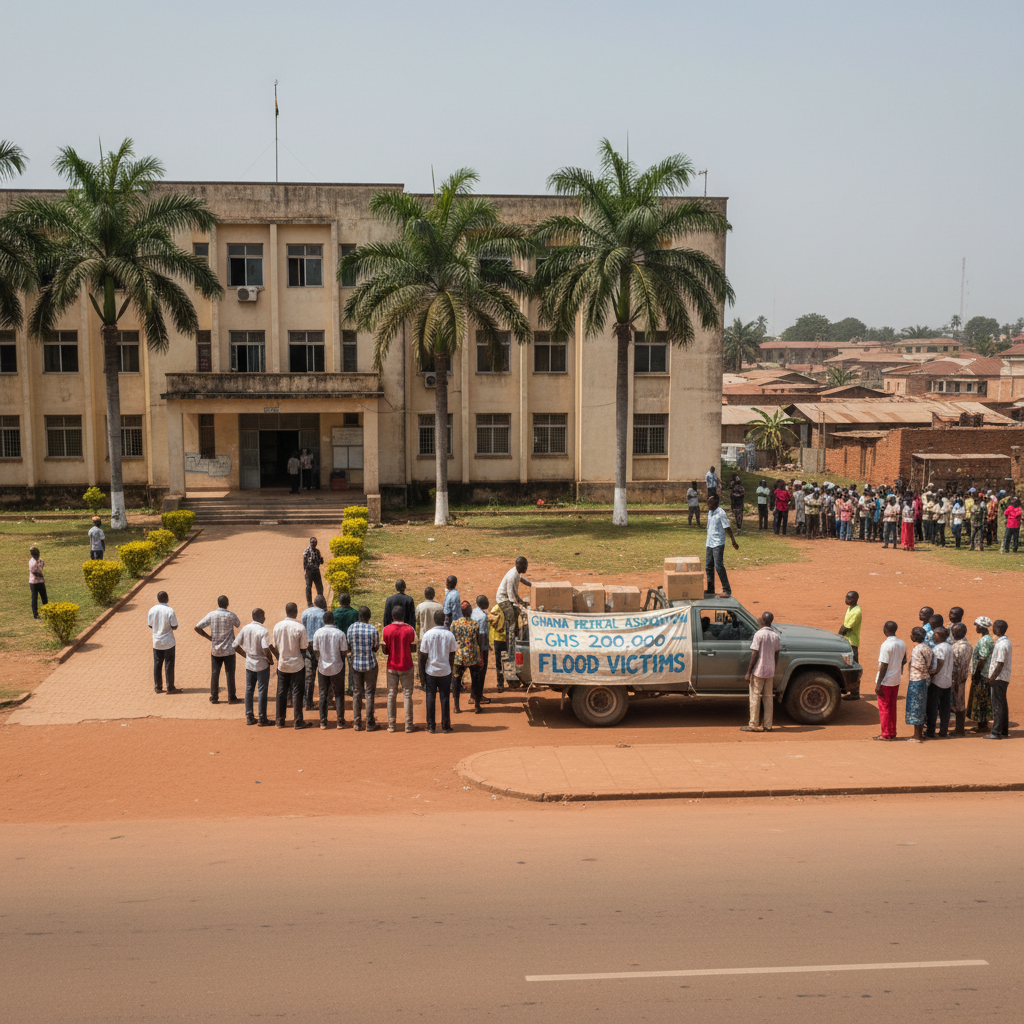
The Ghana Medical Association (GMA) has donated relief items valued at GHS 200,000 to the National Disaster Management Organisation (NADMO). This donation aims to support flood victims in Accra, following severe flooding on June 29. The supplies include drinking water, blankets, and sanitary products.
This contribution by the GMA comes after a significant flood disaster in Accra, triggered by a steady downpour on Monday, June 29. The heavy rains caused drains to overflow, submerged roads, and inundated homes and businesses. Hundreds of families were displaced, losing possessions and livelihoods.
Accra faces recurring flood challenges, often linked to inadequate drainage systems and unplanned urban development. This latest event adds to a pattern of economic disruption and displacement caused by rainfall. Previous data shows such events impact informal sector workers disproportionately.
Professor Ernest Yorke, President of the GMA, emphasized the critical need for this support. He stated the donation addresses immediate humanitarian needs and mitigates public health risks, such as waterborne diseases. Professor Yorke highlighted that floods leave lasting physical, emotional, and social scars on victims.
The immediate implication of the donation is the provision of essential aid to affected communities. However, the GMA also warned of emerging health threats, including cholera outbreaks, due to standing water and damaged sanitation. Experts will monitor disease prevalence in affected areas.
The GMA also stressed that recovery extends beyond distributing relief packages. Families in temporary shelters face overcrowding and food insecurity. Children are often displaced from schools, and livelihoods vanish overnight. These challenges create significant psychological burdens for survivors.
Health professionals are particularly concerned about the conditions ripe for disease outbreaks. Contaminated water sources and compromised sanitation systems create breeding grounds for illnesses. This shifts the danger from immediate destruction to long-term health crises.
The Ghana Medical Association urges residents to adopt proper hand hygiene and responsible waste disposal. They also advise promptly seeking medical attention for any illness symptoms. Vigilance is crucial in preventing a wider public health crisis post-flood.
Professor Yorke asserted that public awareness alone will not solve Ghana's recurring flood problem. He advocated for long-term investments in modern drainage infrastructure. Stronger sanitation enforcement and disciplined urban planning are also essential. Rainfall is inevitable, but catastrophe is not, he added.
The GMA blames the scale of destruction on preventable failures, including poor planning and weak enforcement of building regulations. Indiscriminate development on waterways and inadequate investment in drainage systems exacerbate the problem. These systemic issues demand comprehensive solutions.
The Association calls for better collaboration among state institutions. This includes NADMO, metropolitan assemblies, and public health agencies. They argue that disaster preparedness must receive the same urgency as disaster response. Each flood should serve as a lesson for future policy decisions.
As Accra begins to dry out and rebuild, the broader question remains. Will this disaster push Ghana to prepare for changing climate patterns? Will the nation build safer, more resilient communities to avert similar scenes with future heavy rains? The response will define Accra's future resilience.