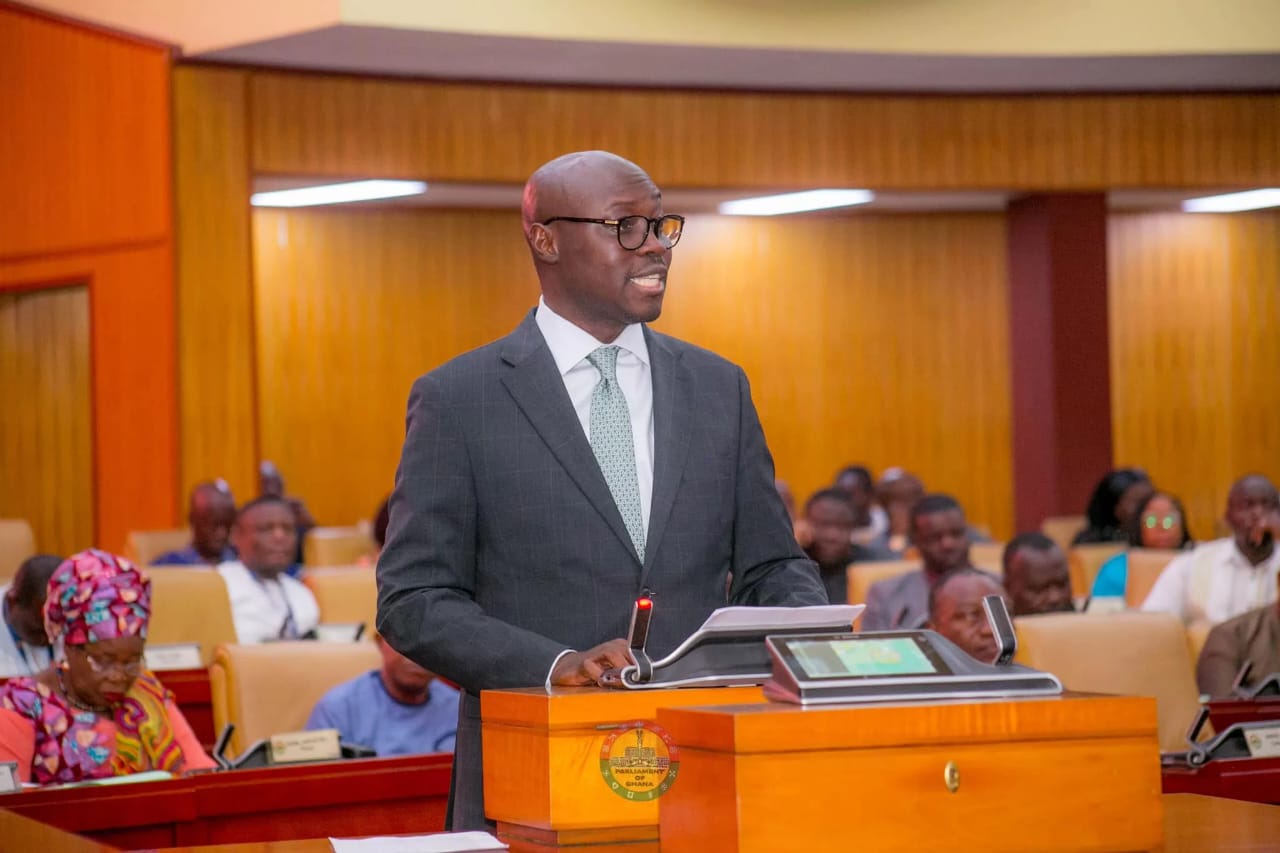
Ghana’s government will not seek a supplementary budget for 2026. This decision reaffirms the original appropriations, signaling a strong commitment to fiscal restraint. Finance Minister Dr. Cassiel Ato Forson presented this stance to Parliament on Thursday, July 23, 2026, during the Mid-Year Fiscal Policy Review.
The review, titled “Resetting for Growth, Jobs, and Economic Transformation,” aims to convince Ghanaians, creditors, and investors that the country has moved beyond crisis. It emphasizes a strategic realignment of spending within the existing budget envelope. This approach contrasts with historical trends where mid-year reviews often led to increased spending or revised targets.
This fiscal discipline comes despite Ghana experiencing stronger-than-expected economic performance. Real GDP grew by 6.00% in 2025, with non-oil GDP expanding by 7.60%, marking the strongest growth in 14 years. The nominal economy surpassed GHS 1.40 trillion and exceeded US$100.00 billion, with GDP per capita rising to US$3,384.80, a 33.90% increase from US$2,527.30 in 2024. This robust growth continued into the first quarter of 2026, with overall GDP growing by 6.40%.
Dr. Forson attributes this recovery to superior economic management and transformational reforms. He highlighted fiscal correction, tax modernization, and fiscal policy support for inflation targeting and exchange-rate stability. The government rejects claims that the recovery is solely due to debt restructuring or the International Monetary Fund (IMF) program.
The 2025 economic expansion was driven by the services and agriculture sectors. Information and communication grew by 20.20%, and gold expanded by 19.60% in real terms. In the first quarter of 2026, services grew by 7.10%, industry by 6.90%, and agriculture by 4.00%. The return of oil and gas to positive growth, supported by approximately US$3.50 billion in new investment, is also a significant factor.
The government maintains its major macroeconomic targets for the year. These include real GDP growth, non-oil growth, and inflation within the 8.00% ± 2.00 percentage-point band. It also targets a primary surplus of 1.50% of GDP and reserves covering at least three months of imports. These targets underscore the commitment to stability and sustainable growth.
Investors will likely welcome the government’s commitment to fiscal restraint. However, households may question when this stability will translate into tangible relief. The tension lies between the economy performing better and the government’s refusal to increase spending. This signals that stability remains fragile and requires continued protection.
The government’s narrative frames the current economic state as a recovery from a crisis inherited in January 2025. Dr. Forson cited a cedi collapse, inflation above 50.00%, high interest rates, depleted reserves, and sovereign downgrades as consequences of past economic mismanagement. This historical context reinforces the government's argument for continued discipline.
The emphasis on restraint suggests that the discipline required to exit a crisis must become the discipline needed to sustain growth. The composition of growth, with strong services and ICT performance, supports the government’s claim that the recovery is not merely a commodity story. However, gold remains central to the external account and currency stability, presenting both opportunities and vulnerabilities.
Inflation, which fell from 23.80% in December 2024 to 5.40% in December 2025, is a clear indicator of stabilization. This positive trend also serves as a warning against complacency. The government’s approach aims to ensure that economic recovery is durable and not undermined by premature fiscal expansion.