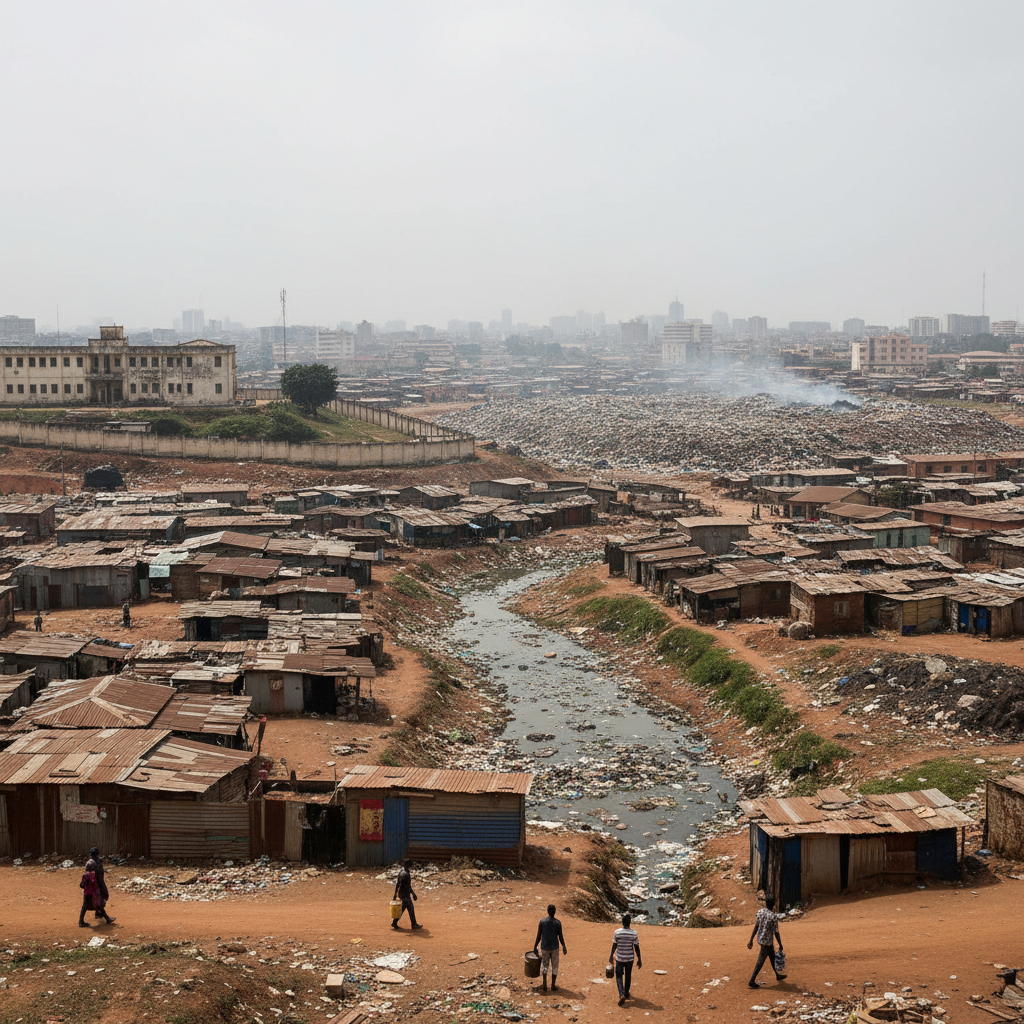
Ghana’s economy suffers an estimated GHS 420 million in losses each year due to poor sanitation. Flooding in urban areas, largely caused by blocked drains and inadequate waste disposal, displaces thousands and destroys property during every rainy season.
The US-Ghana-based advocacy group Re|Root Collaborative urges a shift from reactive disaster spending to proactive investment in sanitation infrastructure. This strategy aims to tackle Ghana’s growing waste and flooding challenges. Urban areas continue to grapple with consequences of inefficient waste management systems.
This financial burden highlights a significant economic vulnerability for Ghana. The World Bank data confirms the substantial annual loss from poor sanitation alone. This issue exacerbates other public finance challenges and strains emergency response budgets. The recurring floods disrupt economic activity and livelihoods across several regions.
Anysa Santitini, Executive Director and Co-Founder of Re|Root Collaborative, observed that waste management remains a low priority in Ghana. She cited recent floods in Accra as a direct result of poor waste disposal and drainage systems. Ms. Santitini noted the absence of basic waste management logistics crippling community-level sanitation efforts.
Ms. Santitini expressed concern that the government often waits for disasters before committing substantial funds to repair damage. She argued that investing in prevention from the start would be a more efficient use of resources. This approach would reduce the need for large expenditures after a disaster occurs.
The advocacy group calls on central government, municipal assemblies, and private sector partners to prioritise infrastructure, logistics, and public education. Specific needs include more skip containers, scheduled waste collection, and recycling incentives. Continuous public education is essential to help citizens understand how waste disposal impacts their safety during rainy seasons.
Despite collecting billions of cedis since 2021, Ghana’s Sanitation and Pollution Levy (SPL) has not delivered its intended waste treatment and landfill infrastructure. Stakeholders allege that funds from the SPL, a 10-pesewa charge per litre on petrol and diesel, have been redirected. These funds were meant to combat air pollution and finance waste management facilities but may have addressed broader energy sector debts.
Spencer Tweneboah Korankye, Program Support and M&E Consultant for Re|Root Collaborative, called for the government to protect the SPL. He urged increased budgetary allocation to the sanitation sector. Mr. Korankye stressed that dedicated and ring-fenced financing is crucial for building necessary treatment plants and landfills. He also proposed an upward adjustment of waste disposal charges.
Waste management companies face inadequate logistics to manage waste effectively at dumping sites. Current charges do not cover the cost of trucks, skip containers, fuel, and personnel for regular collection and proper disposal. Without charge adjustments, service delivery will suffer, leading to continued waste dumping in drains and waterways.
This situation demands immediate policy attention to avoid escalating economic and environmental costs. Greater transparency in the management of the Sanitation and Pollution Levy is also essential. Prioritising these investments could mitigate future disaster-related expenditures and improve public health outcomes.