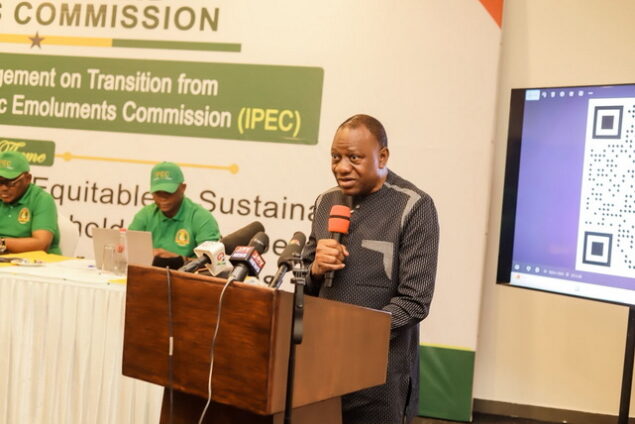
Ghana is establishing an Independent Public Emoluments Commission (IPEC) to reform public sector compensation. This move aims to balance fair worker remuneration with the government's fiscal sustainability. Dr. Rashid Pelpuo, Minister for Labour, Jobs and Employment, stated this transition is more than just an institutional change. It seeks to resolve long-standing tensions between pay, productivity, and the national wage bill.
Minister Pelpuo stressed the importance of social dialogue in this process. He highlighted that consultation, fairness, and consensus are critical for IPEC to gain the confidence of workers and public institutions. Speaking at a stakeholder engagement in Accra, he described the reform as part of a broader effort. This effort is to reshape Ghana's entire compensation architecture. The government's approach reflects a commitment to transparency and inclusiveness before the new system becomes operational.
Public sector compensation is a highly sensitive area of economic management in Ghana. It affects workers' living standards, government expenditure, and overall fiscal health. The creation of IPEC offers an opportunity to bring greater consistency and predictability to pay decisions. However, without worker confidence, the reform risks simply moving existing disagreements to a new body. This initiative fits into Ghana's ongoing efforts to manage its public finances responsibly. It also addresses historical disparities in pay across various public institutions.
Dr. Pelpuo emphasized that the engagement with Organised Labour is vital. He stated it demonstrates the government's dedication to building consensus. This approach acknowledges that public sector pay impacts household consumption, morale, and employee retention. It also significantly influences the government's wider fiscal position. The current compensation structure has accumulated disparities, causing disagreements over allowances and market premiums. An independent commission could provide a more equitable and financially sustainable framework.
An independent commission could also shield remuneration decisions from short-term political pressures. However, its success depends on transparent methodology and credible economic data. Workers must believe their concerns are genuinely represented for the system to be effective. This is why dialogue has become central to the proposed transition. Public sector pay reform can create both winners and losers, especially when rationalizing allowances. Broad consultation is therefore essential for the reforms' political and industrial sustainability.
The fiscal dimension of this reform is equally important. Compensation represents a substantial component of recurrent public spending. Wage settlements directly affect the fiscal space available for critical sectors like infrastructure, healthcare, and education. The government must reconcile workers' demands for improved real incomes with available revenue. Dr. Pelpuo stressed that remuneration affects livelihoods, workplace fairness, and the wider economy. This relationship becomes particularly sensitive during periods of changing inflation.
During inflationary periods, employees seek wage adjustments to preserve purchasing power. Simultaneously, the government tries to prevent compensation growth from undermining fiscal objectives. IPEC could manage this tension by providing a structured approach. Its mandate would consider inflation, productivity, fiscal capacity, and labour-market conditions. This framework would allow for more proactive compensation decisions. It would move away from reactive negotiations, ensuring a more stable and equitable system for Ghana's public sector.