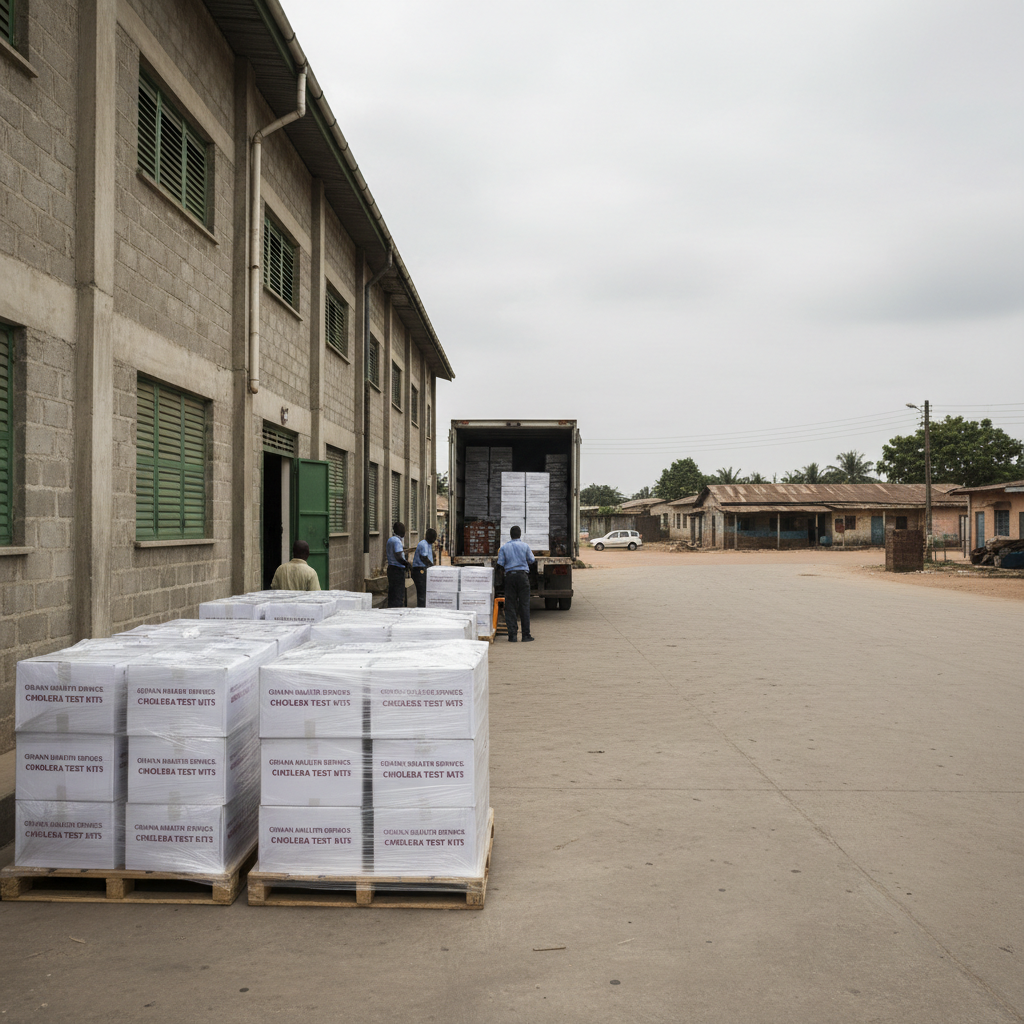
The Ghana Health Service (GHS) has received six emergency health kits and 600 cholera rapid diagnostic tests. These vital supplies will strengthen the country's public health response following the severe floods recorded in June 2026. This intervention aims to enhance healthcare delivery and improve disease surveillance in communities most affected by the recent deluges.
The support directly addresses concerns over the potential emergence and rapid spread of waterborne diseases. Floods often create conditions ripe for such outbreaks, posing significant risks to public health. The emergency supplies will equip health workers with additional tools to identify suspected cholera cases quickly. This rapid identification is crucial for prompt response to potential outbreaks, limiting their scale and impact.
This initiative fits into Ghana's broader strategy for disaster preparedness and public health resilience. The nation frequently experiences seasonal flooding, which strains its healthcare infrastructure. Previous flood events have highlighted the urgent need for robust surveillance systems and readily available medical supplies. This current donation builds upon lessons learned from past emergencies, aiming to prevent widespread health crises.
The specific source of these emergency health kits and cholera tests was not detailed in the initial report. However, such support often comes from international health organizations or development partners. These entities frequently collaborate with national health services to bolster public health capacities. Their contributions are vital for countries like Ghana in managing post-disaster health challenges effectively.
The immediate implication is a strengthened capacity for disease detection and control in flood-prone regions. Health authorities will closely monitor affected areas for any signs of cholera or other waterborne illnesses. This proactive surveillance is essential to protect vulnerable populations. Decision-makers will be watching for the effective deployment and utilization of these resources.
This support is expected to bolster ongoing surveillance efforts at the community level. It will also strengthen preparedness measures against future health threats. The goal is to ensure affected populations have access to timely healthcare and effective disease prevention. This includes educating communities on hygiene practices to prevent disease transmission.
The June 2026 floods displaced thousands and damaged critical infrastructure across several regions. The economic impact of such events is substantial, affecting livelihoods and public services. A robust health response helps mitigate secondary economic losses from widespread illness. Preventing outbreaks keeps people healthy and able to return to work and rebuild their lives.
Ghana's public health system faces continuous challenges, including resource constraints and geographical access issues. Donations like these provide a critical boost to frontline health workers. They enable faster and more effective responses during emergencies. This support underscores the importance of international cooperation in global health security.
The long-term implications involve a potential reduction in morbidity and mortality rates associated with post-flood diseases. Effective disease control prevents healthcare systems from becoming overwhelmed. It also reduces the financial burden on individuals and the state. This proactive approach is a key component of national development and stability.
Monitoring the distribution and impact of these kits will be crucial for assessing their effectiveness. Health officials will track disease incidence rates in the coming weeks and months. This data will inform future public health interventions and resource allocation. The focus remains on safeguarding the health of all Ghanaians, especially those in vulnerable communities.