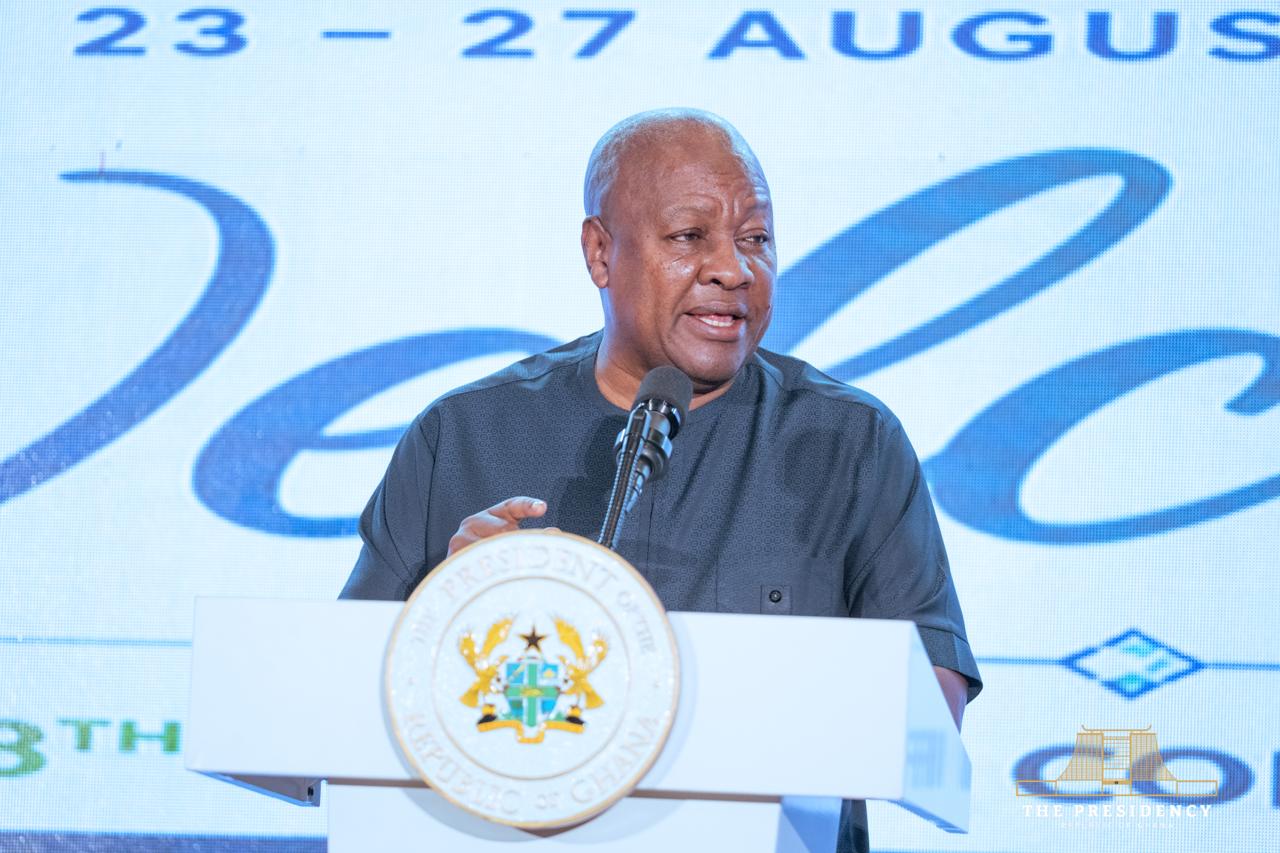
Ghana’s national health insurance coverage currently stands at 76 percent. President John Dramani Mahama announced this figure, stating the government aims for a 90 percent coverage target.
This ambitious target forms part of Ghana’s broader strategy to achieve universal health coverage. Reaching 90 percent would significantly expand access to the National Health Insurance Scheme (NHIS) for many more citizens. However, it would still leave a portion of the population without direct NHIS access.
This development fits into Ghana’s ongoing efforts to strengthen its social safety nets and improve public health outcomes. The government has consistently prioritized healthcare access as a key component of national development. Data from the World Health Organization often highlights the importance of robust health insurance systems for economic stability and productivity. Previous administrations have also worked to expand the NHIS, making this a continuous national agenda.
President Mahama, speaking at the 28th Annual Conference of the Association of Medical Councils of Africa in Accra, emphasized the government’s commitment. He stated, “Ghana’s health agenda is anchored on equity, equality, and sustainability.” The President further explained that strengthening the NHIS is a core part of this agenda.
To address the remaining gaps, the government is implementing additional healthcare interventions. One key initiative is the Free Primary Healthcare programme. This programme, partly inspired by Kenya’s model, has been introduced in approximately 160 of Ghana’s 260 districts. The government plans to extend this programme to the remaining 100 districts. This expansion will ensure more Ghanaians, especially those in underserved rural communities, can access essential healthcare services.
The Free Primary Healthcare programme also aims to bolster preventive healthcare. It provides free treatment at Community-based Health Planning and Services (CHPS) compounds and mobile health kiosks. This ensures that individuals who might otherwise struggle to reach healthcare facilities can receive care without financial burden. President Mahama noted, “They can go to any of the CHPS compounds, the mobile health kiosk, and receive treatment free of charge without showing any identification.”
Beyond primary care, the government utilizes the Ghana Medical Trust Fund. This fund protects individuals living with chronic and high-cost medical conditions from financial hardship. These combined interventions are designed to ensure that healthcare costs do not deter citizens from seeking necessary treatment. The President reiterated, “We’re pursuing free primary healthcare so that cost does not prevent people from receiving essential care at the point of need.”
These initiatives are integral to Ghana’s broader strategy to achieve universal health coverage. They aim to improve access, reduce financial barriers, and strengthen both preventive and primary healthcare delivery. The government acknowledges the support from the World Health Organization and other development partners. The collaboration with the government of Kenya for the primary healthcare model also highlights international cooperation in health policy. This comprehensive approach seeks to build a more resilient and equitable healthcare system for all Ghanaians, ensuring that health remains a fundamental right rather than a privilege.