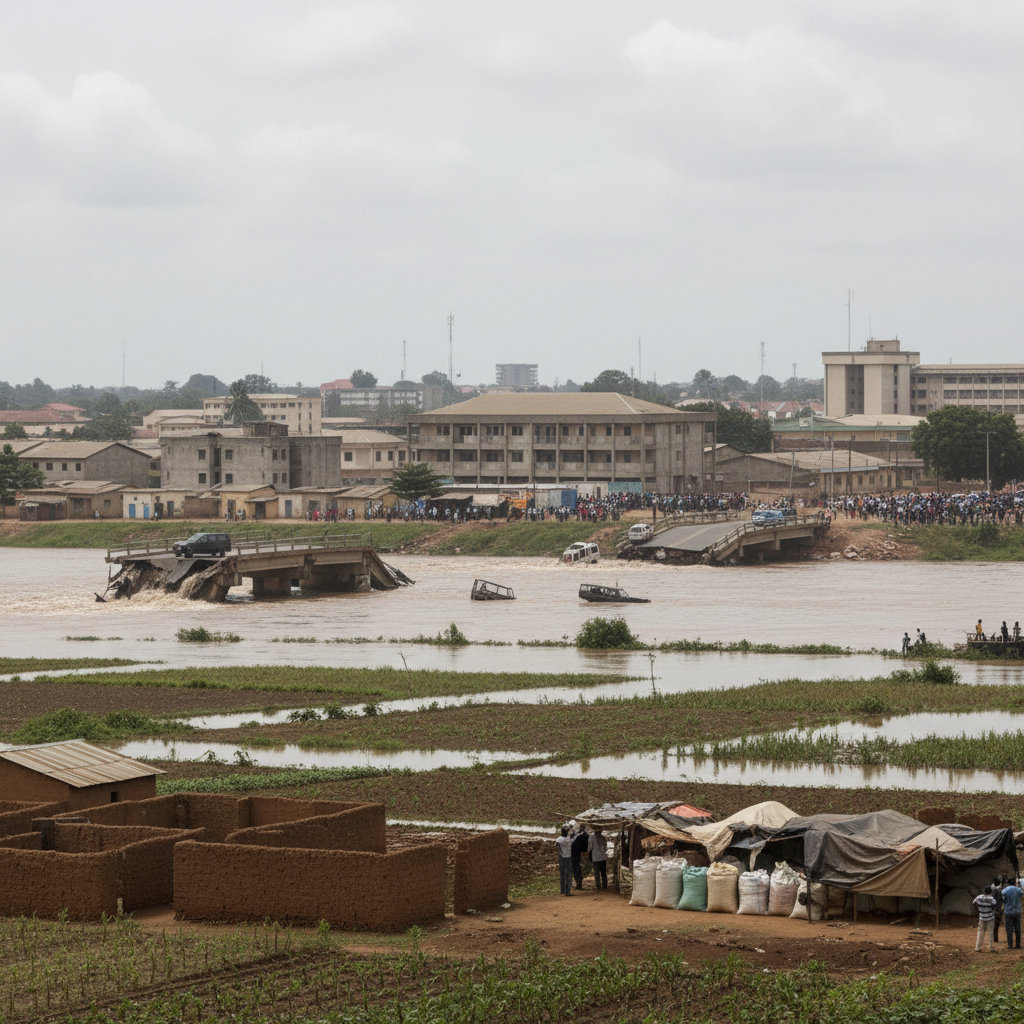
Urban flooding in Ghana's Greater Accra Metropolitan Area caused economic losses exceeding GHS 6.3 billion between 2015 and 2025. This cost includes GHS 1.8 billion in damage to small and medium-sized enterprises (SMEs). Public infrastructure sustained GHS 2.1 billion in damages, while residential properties faced GHS 800 million in losses.
These significant financial setbacks underscore a persistent governance crisis rather than merely a seasonal issue. In June 2026, heavy rains again submerged communities like Kaneshie and Odawna. The National Disaster Management Organization (NADMO) reported approximately 3,000 residents in the Odawna area were directly affected. Furthermore, 13 fatalities were confirmed by July 1, 2026, indicating severe human costs.
Nationally, Ghana loses an estimated USD 200 million (approximately 2 per cent of GDP) each year to natural disasters. More than 2 million people are affected annually. This highlights a broader failure in flood management, despite various interventions. The problem reflects weak enforcement of planning regulations, inadequate sanitation systems, and persistent behavioural challenges.
The Greater Accra Resilient and Integrated Development (GARID) Project, backed by the World Bank, was initially approved for USD 350 million. Its purpose was to address flooding within the Odaw Basin. However, USD 65 million was reallocated for Ghana's COVID-19 response. This reduced available project funding to approximately USD 285 million. By June 2025, USD 118 million of the USD 127 million drawn down had already been spent. Yet, many of the same communities continue to experience devastating floods.
A major cause of persistent flooding is the disconnect between municipal spatial planning authorities and traditional authorities. This allows construction in wetlands and natural waterways. Only about 35 percent of buildings in Accra possess approved permits. Metropolitan, Municipal and District Assemblies (MMDAs) inspect fewer than 20 percent of structures annually. This weak compliance with building regulations exacerbates the problem. Additionally, approximately 70 percent of Accra's primary drainage channels are heavily silted with refuse. This reduces their carrying capacity by almost 50 percent.
The widespread issue of poor sanitation contributes significantly to the flooding. Between 2015 and 2025, flood-related diseases, including cholera, generated an estimated GHS 360 million in public health losses. This demonstrates the wider impact of inadequate flood management beyond direct property damage. Rapid urbanization has also replaced natural permeable surfaces with concrete. This increases stormwater runoff and eliminates natural water retention areas.
Moving forward, Ghana faces critical decisions regarding urban planning, infrastructure investment, and institutional coordination. The government must address the fragmentation between various authorities to enforce building regulations effectively. Enhanced investment in robust waste management systems and public awareness campaigns on sanitation are crucial. Without these integrated approaches, the economic and human costs of urban flooding will likely continue to rise. Decision-makers must prioritize sustainable flood mitigation strategies to protect livelihoods and public health. This requires a collaborative effort from all levels of government and community engagement.