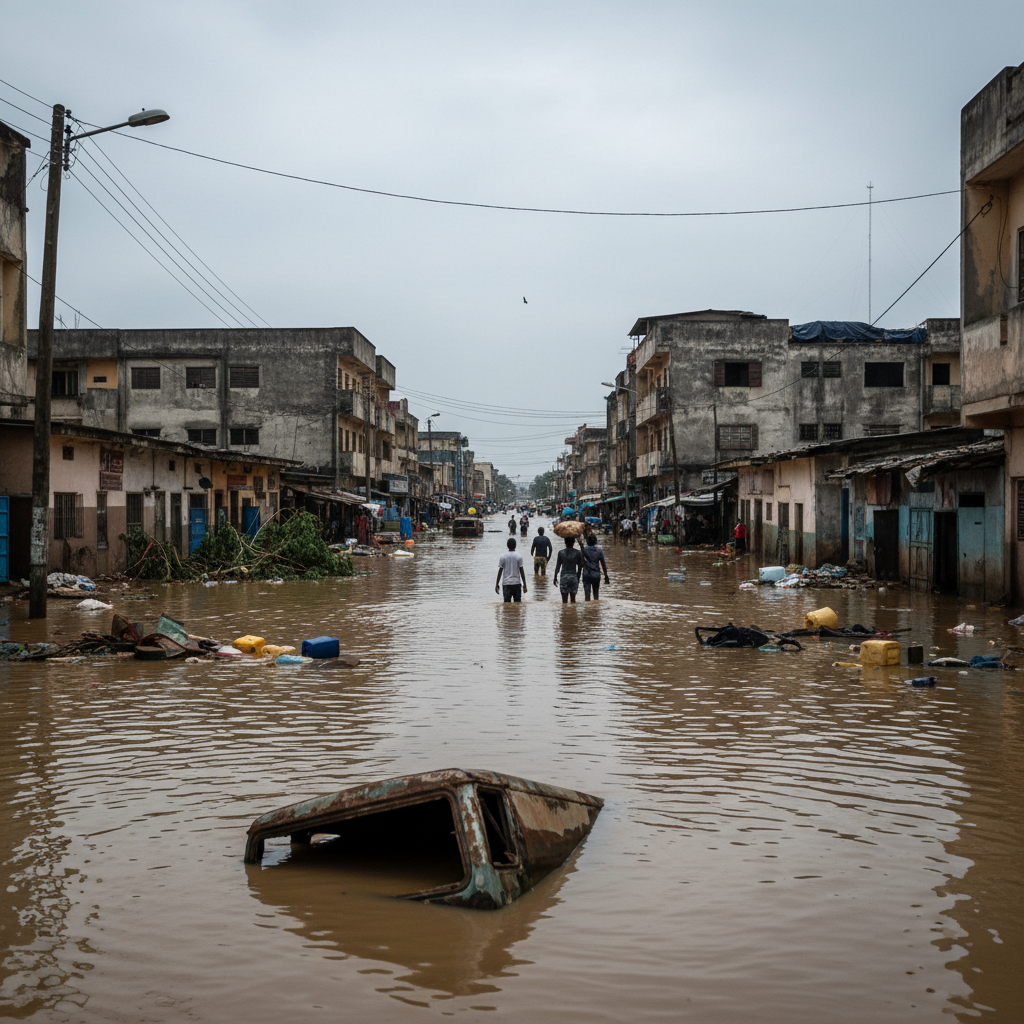
Ghana’s June 2026 floods have officially claimed at least 35 lives, with an unspecified number of individuals still missing. This devastating event follows the June 2015 fire-flood disaster at Circle, which resulted in over 150 fatalities.
These recurring tragedies stem from a cycle of “normalised deviance” where unacceptable practices become accepted due to a lack of immediate consequences. Professor Collins Badu Agyemang highlights that these floods are not merely natural disasters but predictable outcomes of human behaviour and institutional failures. The problems affect countless Ghanaians who lose homes, businesses, and livelihoods.
The persistent flooding underscores significant weaknesses in urban governance and public engagement across Ghana. Each rainy season brings a familiar fear of devastation for communities nationwide. This pattern suggests a failure to learn from past incidents, impacting the country's economic stability and public trust in institutions. Data from 2015 showed widespread economic disruption, and the 2026 figures will likely reveal similar effects on local economies and individual finances.
Professor Collins Badu Agyemang, a lead psychologist and senior faculty member at the Centre for Urban Management Studies, stated, “The greatest tragedy of a nation is not that disasters occur, but that its people begin to expect them, prepare to endure them, and eventually mistake preventable suffering for normal life.” He emphasises that the issue is fundamentally a behavioural and organisational problem, not just an engineering one. This perspective suggests that addressing the flood crisis requires more than just rebuilding infrastructure.
Moving forward, reversing the trend of normalised deviance is crucial for preventing future flood disasters. Policymakers must confront the behavioural patterns and institutional weaknesses that contribute to these recurring events. This includes stronger enforcement of environmental regulations and urban planning rules. Citizens and government agencies must work together to change habits such as indiscriminate waste disposal and illegal construction on waterways. The financial markets and public confidence will respond to tangible signs of progress in addressing these systemic issues. Without significant shifts in behaviour and governance, Ghana risks continuing this devastating cycle of loss and recovery every rainy season.
The economic cost of repair and humanitarian aid following these floods is substantial. These funds could be used for other critical development projects if preventative measures were effective. The psychological toll on affected communities also impacts productivity and social stability. Each flood event erodes trust in public services and emergency response mechanisms. Addressing these underlying issues will require a sustained, coordinated effort from all stakeholders. Furthermore, the lack of accountability for past failures perpetuates the cycle of indifference. This ongoing challenge necessitates a national conversation about governance, individual responsibility, and long-term resilience strategies. The tragic loss of 35 lives in 2026 must serve as a stark reminder of the urgent need for change.