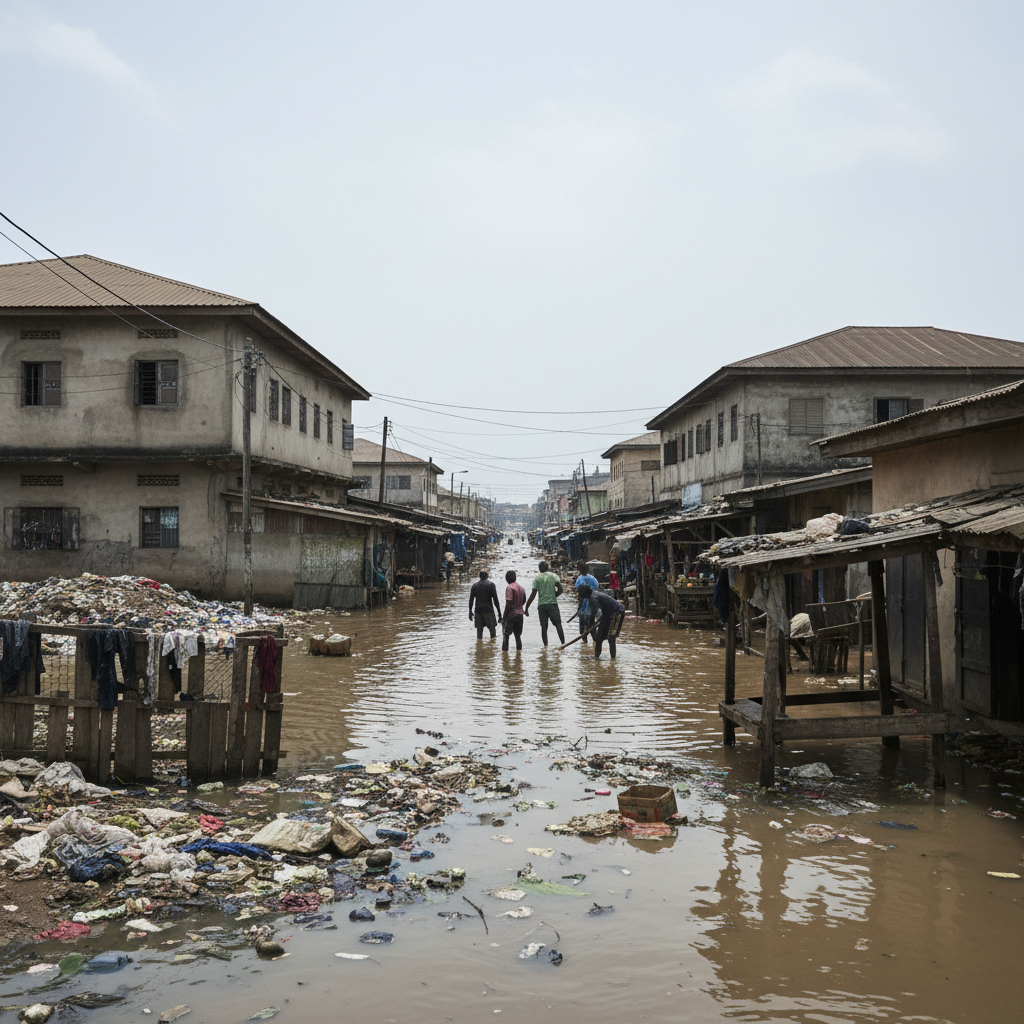
Ghana's persistent annual flooding, which causes widespread damage and disrupts livelihoods, is largely a consequence of inadequate waste management practices. This issue, highlighted by Edward Debrah, a Chartered Environmentalist, indicates that blocked drainage systems, not just heavy rainfall, are the main culprits behind the devastating deluges.
The problem stems from the widespread dumping of waste, including plastic bags, food containers, and construction debris, into drains and waterways. This indiscriminate disposal chokes the natural flow of water, causing drains to overflow and communities to flood when rains arrive. No drainage infrastructure, regardless of its design quality, can function effectively when filled with refuse.
This situation fits into a broader narrative of environmental challenges and infrastructure strain within Ghana's rapidly urbanizing landscape. Rapid development, sometimes without proper planning, exacerbates the issue by encroaching on waterways. The economic cost of these annual floods, including road repairs, rebuilding homes, and lost business income, runs into millions of GHS each year, straining public finances and hindering national development.
Edward Debrah, a UK-based Chartered Environmentalist and HSEQ Executive, emphasizes that Ghana possesses environmental laws and sanitation by-laws, but their inconsistent enforcement undermines their effectiveness. He states that illegal dumping continues largely because offenders rarely face consequences, and buildings still appear on waterways due to weak planning regulation enforcement. Consistent application of these laws is crucial for protecting lives, property, and the environment.
Addressing this crisis requires a multi-faceted approach. Decentralizing waste management, empowering local authorities with resources and responsibility, is a key step. This would allow for tailored solutions to specific community needs, including more accessible collection points and better recycling facilities. Stronger partnerships with the private sector are also essential for effective waste collection and processing.
Furthermore, public education is vital. Environmental awareness should be integrated into daily life through schools, workplaces, and community groups. When citizens understand the direct link between improper waste disposal and flooding, they are more likely to adopt responsible practices. Prevention, through regular drain maintenance and reliable waste collection, is significantly more cost-effective than post-flood recovery efforts.
The implications are clear: without significant reform in waste management and law enforcement, Ghana will continue to face severe economic and social disruptions every rainy season. Decision-makers must prioritize these systemic issues, moving beyond reactive measures to proactive, long-term solutions. This includes strengthening regulatory bodies and investing in resilient waste management infrastructure across all Metropolitan, Municipal, and District Assemblies.
The annual conversation about flooding must shift from seasonal reaction to year-round prevention. Government, local authorities, businesses, and individual citizens all have a critical role to play. Effective waste management is not merely a sanitation concern; it is a public health, environmental, economic, and national development imperative for Ghana's future.