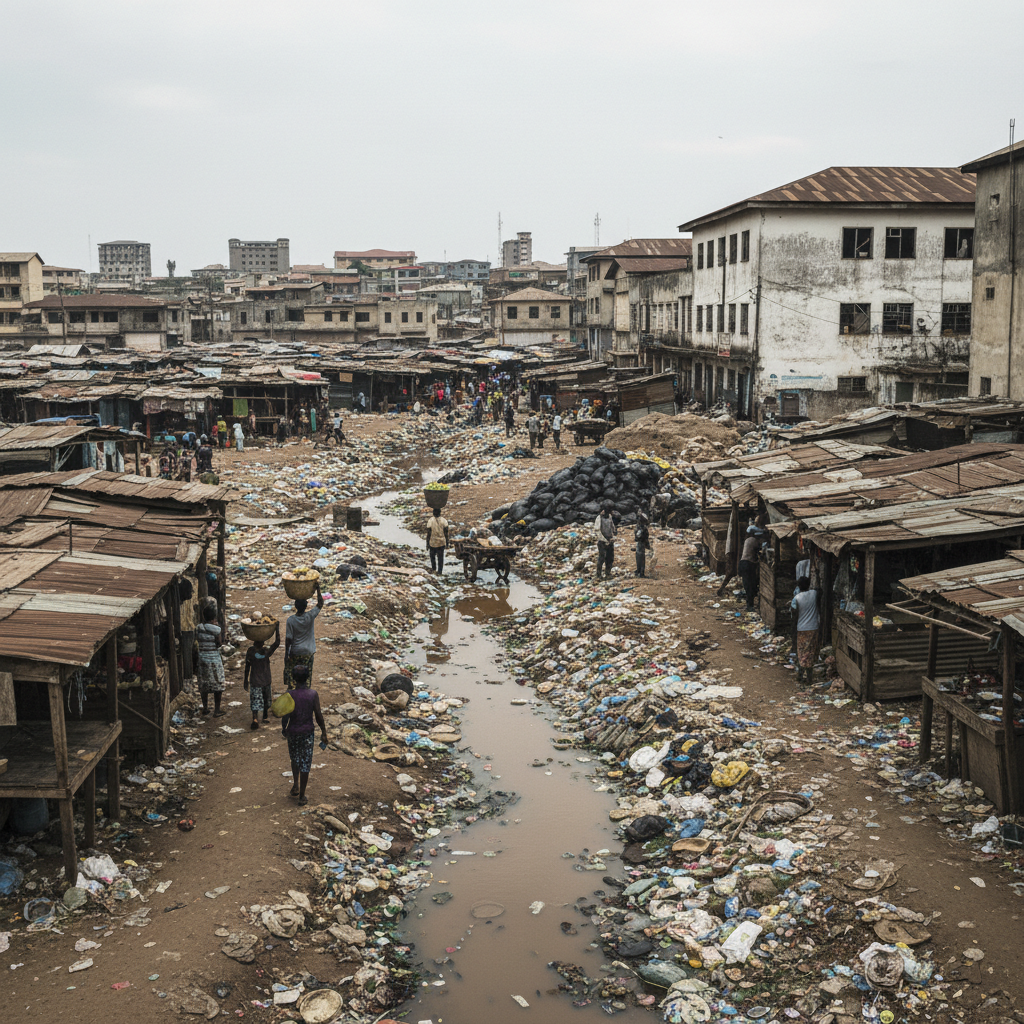
Ghana’s major cities are grappling with severe flooding and pervasive waste accumulation, a crisis emerging 18 months after the non-renewal of the sanitation contract between the Youth Employment Agency (YEA) and Zoomlion Ghana Limited in 2025.
This deterioration stems from the inability of Metropolitan, Municipal, and District Assemblies (MMDAs) to assume full responsibility for nationwide sanitation services. The decision to cancel the contract, influenced by public pressure and concerns over Zoomlion's operational efficiency, has led to choked drainage systems and submerged homes across urban areas.
The unfolding sanitation crisis marks a significant setback in Ghana's ongoing efforts to manage its urban environments and public health. The nation has a history of battling waste management issues, often exacerbated by rapid urbanisation and insufficient infrastructure. This situation contrasts with previous periods when coordinated sanitation efforts, including those by companies like Zoomlion, provided a more structured approach to waste collection and drain maintenance.
Francis Atayure Abirigo, writing in BFTOnline, stated that the cancellation of the YEA-Zoomlion contract proved to be a costly mistake. He highlighted previous criticisms by investigative journalist Manasseh Azure Awuni regarding Zoomlion’s contracts. Those criticisms focused on transparency and value for money, ultimately leading to the contract’s non-renewal.
The immediate implication of this policy shift is a continued decline in urban sanitation and an increase in the frequency and severity of flooding events. Stakeholders will be watching for potential government interventions to address the growing waste backlog and improve drainage infrastructure. This situation necessitates a reassessment of decentralized waste management strategies and the capacity of MMDAs. Effective solutions will require strategic planning, adequate funding, and overcoming past procurement challenges to prevent further environmental and economic damage.
The current struggles of local assemblies underscore structural weaknesses, including political interference and inadequate funding. These pervasive issues hinder their ability to deliver consistent sanitation services at scale. Without a robust national framework, the burden on local authorities becomes overwhelming.
The lack of an extensive operational system for waste collection and drain desilting contributes directly to the current state of affairs. Ghana’s capacity to manage large-scale environmental challenges depends heavily on coordinated logistics, infrastructure, and manpower. The current crisis suggests these elements are lacking post-contract cancellation. This policy decision could result in long-term negative effects on public health and national productivity.