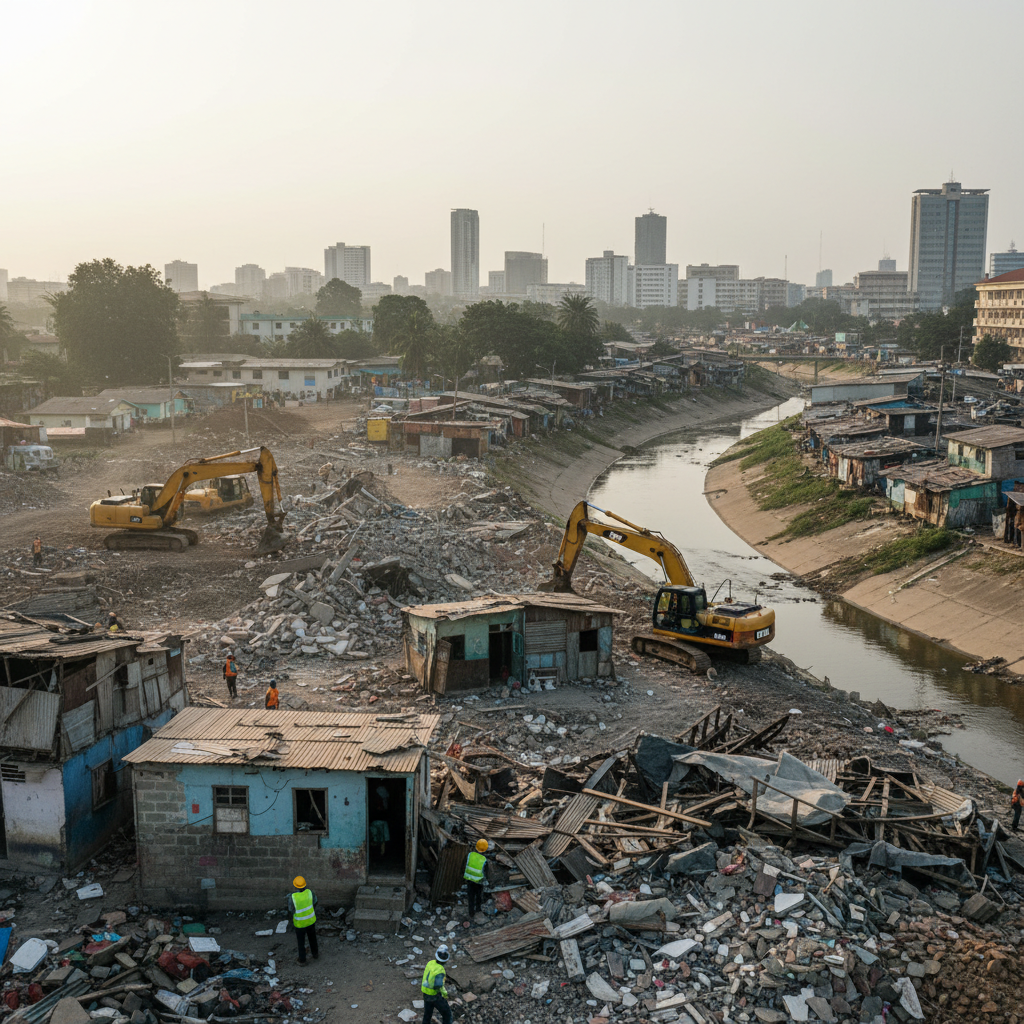
Ghana needs a nationwide approach to demolishing structures blocking waterways, according to Dr. Ted Nii Yemoh Annang. This Senior Research Fellow at the Institute for Environment and Sanitation Studies (IESS) at the University of Ghana calls for action. He states that isolated demolitions will not solve the country's recurring flood problems.
Dr. Annang spoke on JoyNews' Newsfile on July 11, 2026, advocating for a watershed-wide exercise. This exercise must restore Ghana's natural drainage systems from their origins to their endpoints. He explained that encroachment on rivers, streams, and wetlands has happened gradually over many years. This makes small-scale demolition efforts ineffective in reducing flood risks.
This call for a broader strategy fits into Ghana's ongoing struggle with urban planning and environmental protection. Data consistently shows increasing construction in flood-prone areas. For instance, the National Disaster Management Organisation (NADMO) has reported a significant rise in flood-related displacements over the past decade. This trend highlights the economic damage and human cost of inadequate flood mitigation. Prior efforts have often focused on short-term responses rather than long-term preventative measures.
“The demolition should be extensive. It should be nationwide or watershed-wide because it started from a point and it started one by one,” Dr. Annang said. He added, “If we are going to do it, it should go to the root, not just single structures standing in waterways.” This emphasis on systemic action underscores the need for a fundamental shift in policy and enforcement across all regions. The economic impact of floods, including damage to infrastructure and loss of livelihoods, annually costs Ghana millions of GHS.
Policymakers must consider integrating climate adaptation strategies into urban planning. Protecting lives, property, and infrastructure depends on safeguarding watersheds from continued encroachment. This requires coordinated national efforts to restore natural drainage systems. It also demands stricter enforcement of environmental regulations. Without these measures, Ghana will continue to face significant economic losses and human displacement from recurring floods. The government and local authorities should prioritize these recommendations to build more resilient communities.
Protecting the entire river basin is essential, not just focusing on visible obstructions in cities. Rivers are interconnected systems with main channels, tributaries, wetlands, and catchment areas. All these parts are crucial for safely managing stormwater. Development that blocks any part of these natural systems disrupts the entire watershed. This increases the chance of flooding downstream. When one section of a watershed is blocked, floodwaters will find new routes. This often causes damage in communities that have not flooded before.
Dr. Annang also warned about the impacts of climate change. Changing rainfall patterns and more frequent extreme weather events make it more important to preserve natural drainage. Preventing further encroachment on sensitive areas is critical. Integrating adaptation strategies into planning will improve the country's resilience. Safeguarding watersheds is necessary to reduce flood risks. This is especially true as rainfall intensifies across Ghana.