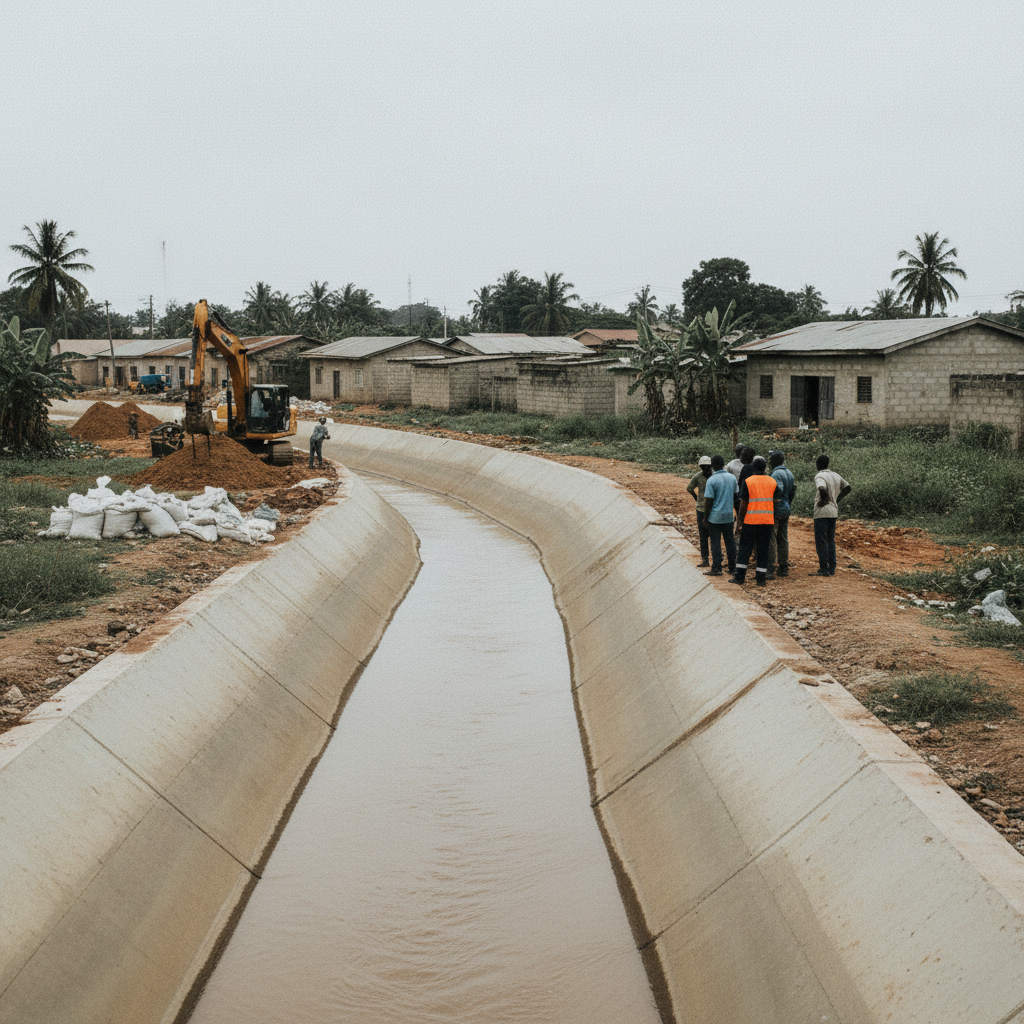
The current Ghanaian government has allocated $13.52 million towards flood control initiatives under the Greater Accra Resilient and Integrated Development (GARID) project in two years. This expenditure between 2025 and 2026 exceeds the $11.4 million spent by the New Patriotic Party (NPP) government on the same project over five years, from 2019 to 2024.
This increased spending comes as a direct response to Ghana's persistent flooding challenges. The World Bank finances the GARID project, intending to build resilience against climate-related shocks in the Greater Accra Region. The project targets infrastructure improvements and crucial flood prevention measures.
This spending pattern highlights a shift in focus within the broader Ghana economic narrative. Historically, flood mitigation efforts have faced criticism for insufficient funding and execution. The current administration's accelerated investment in GARID suggests a heightened urgency to tackle a significant socio-economic problem. Prior administrations have often been accused of diverting funds intended for core project objectives. This new focus aligns with national development goals aiming to protect lives and property, and reduce economic disruption from annual floods.
Atta Issah, Member of Parliament for Sagnarigu and a member of the Parliament’s Finance Committee, highlighted these figures. He stated that the current administration spent $3 million on flood control in 2025 and an additional $10.52 million in 2026. Mr. Issah noted that the previous government, despite withdrawing $103.8 million from the facility, spent only 10.9% ($11.4 million) on actual flood prevention. He argued that the bulk of the earlier withdrawals went to training, consultancy, and Covid-19-related spending, rather than direct flood prevention.
The implications of this heightened investment are significant for Ghana's urban development and climate resilience. Decision-makers will closely monitor the effective deployment of these funds and the resulting impact on flood reduction. Markets and communities will watch for tangible improvements in flood-prone areas, especially during the rainy seasons. The sustained commitment to foundational infrastructure projects like GARID can bolster investor confidence in Ghana's ability to manage critical risks. This can also reduce the economic toll caused by annual flooding, preventing infrastructure damage and displacement.
Beyond the immediate financial outlay, sustained and effective project implementation is crucial. The World Bank’s recent report raised concerns about fiscal controls hindering project execution, even with full financing. Addressing these bureaucratic hurdles will be essential for the GARID project's long-term success. This continuous effort will directly translate into improved living conditions and economic stability for residents of Accra. This proactive approach could reduce the GHS billions lost annually due to flood damage across the country.