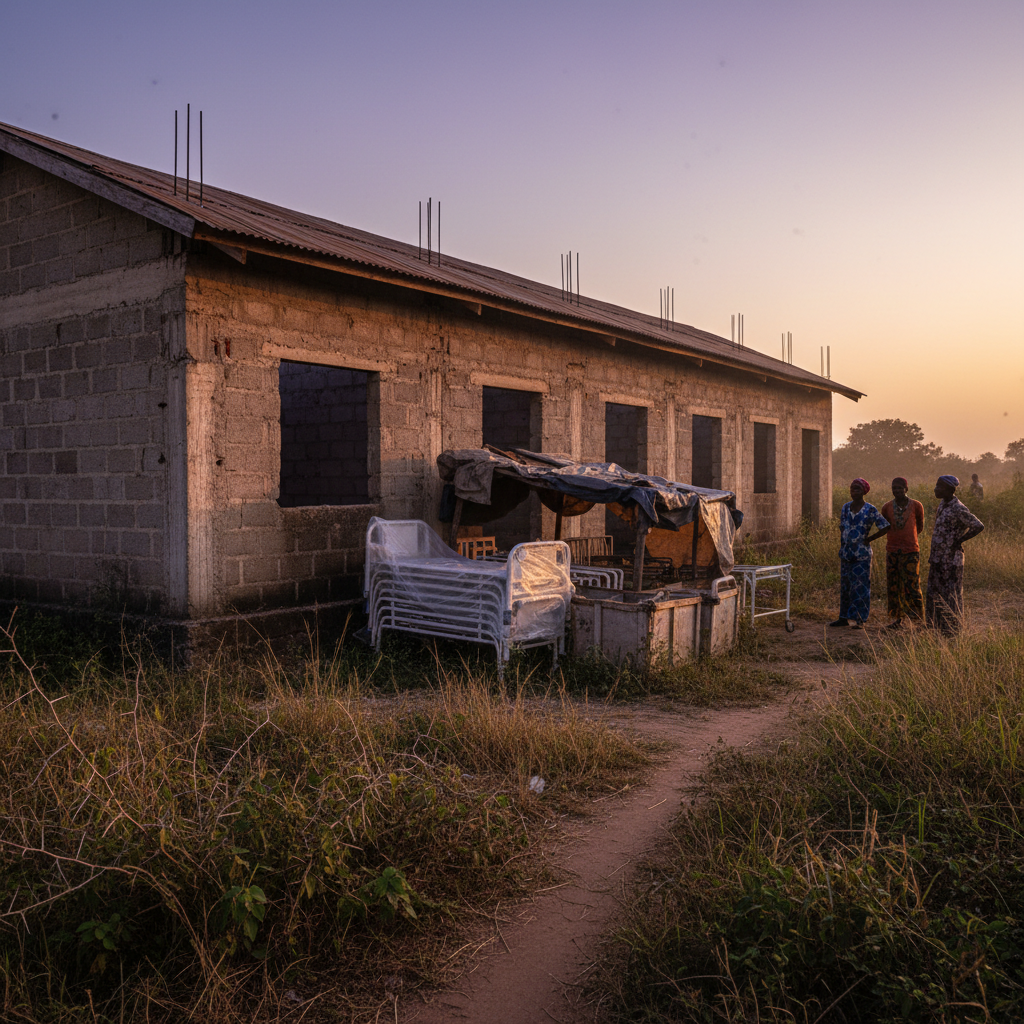
Dr. Kingsley Agyeman, a Member of Parliament for Akyem Abuakwa South and a member of Parliament’s Health Committee, has questioned Ghana’s readiness to combat potential outbreaks of Ebola and other infectious diseases. He highlighted significant deficiencies in health infrastructure, particularly the non-operational status of critical facilities in the middle and northern parts of the country.
The legislator pointed to the Sewua Hospital, designed with a 50-bed isolation centre, which remains non-operational. Similarly, the Afari Military Hospital, another vital facility in the Ashanti Region, is also not fully functional. This lack of ready isolation centres in key regions significantly undermines Ghana's capacity to manage health crises effectively, risking wider public health and economic disruption.
Ghana’s healthcare system has faced ongoing challenges with infrastructure development and equitable distribution of medical resources. The concerns raised by Dr. Agyeman underscore a broader issue of underfunded or incomplete projects impacting national health security. Previous outbreaks, such as the COVID-19 pandemic, exposed weaknesses in Ghana's emergency response capabilities, particularly outside the Greater Accra Region. Ensuring operational health facilities nationwide is crucial for national stability and economic productivity.
Dr. Agyeman, speaking on JoyNews' The Pulse, questioned, “If something like Ebola crops up, and it happens within the middle belt or the northern sector, where will we send the patient?” He further stated that while some facilities in the Greater Accra Region might offer limited support, other parts of the country lack adequate resources. This direct attribution emphasizes the urgency of addressing these infrastructure gaps.
The immediate implication is a heightened risk to public health and potential economic fallout if a major infectious disease outbreak occurs in Ghana's underserved regions. Decision-makers must prioritize the completion and operationalization of abandoned health facilities and ensure an equitable distribution of resources. This action will strengthen public confidence in the healthcare system and protect economic stability by preventing widespread health emergencies. Policymakers and the Ministry of Health will need to respond with concrete plans and timelines to address these critical infrastructure deficits.