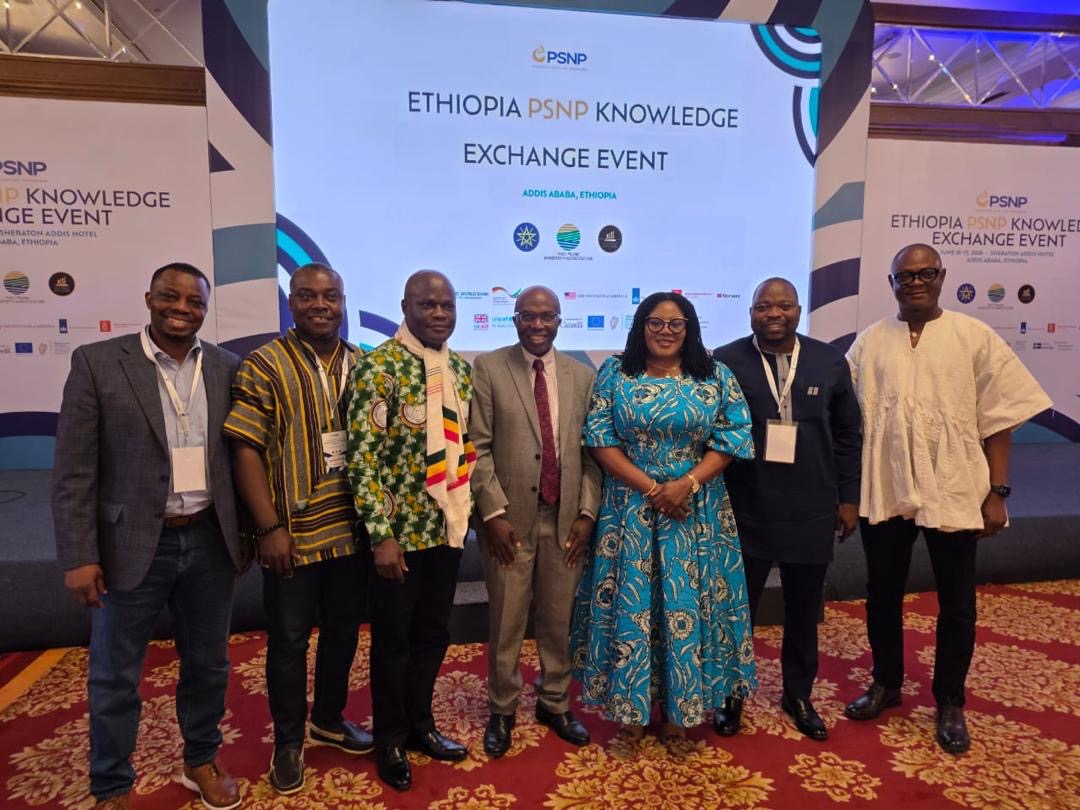
A high-level Ghanaian delegation concluded a strategic visit to Ethiopia to strengthen Ghana’s social protection and livelihood empowerment programmes. The visit focused on Ethiopia's Productive Safety Net Programme (PSNP), widely recognized as one of Africa's most successful social protection interventions. This initiative aims to help Ghana move beyond basic poverty alleviation to create sustainable livelihoods for its citizens.
The delegation, led by Mr. Ahmed Ibrahim, the Minister for Local Government, Chieftaincy and Religious Affairs, and Dr. Agnes Naa Momo Lartey, the Minister for Gender, Children and Social Protection, engaged Ethiopian officials. They discussed how social protection programmes could foster sustainable livelihoods, resilient communities, and long-term economic opportunities. A key part of the mission involved a field visit to Dire Dawa, where they saw how Ethiopia’s public works programme transformed rural areas.
Ghana is currently implementing the Ghana Productive Safety Net Project Phase Two (GPSNP2). This project combines Labour-Intensive Public Works (LIPW) and Productive Inclusion (PI) interventions. The GPSNP2 aims to support poor and vulnerable households across the country. It aligns with Ghana's broader economic strategy to reduce poverty and build a more resilient economy.
Mr. Ibrahim described the experience as insightful and inspiring. He noted that Dire Dawa communities successfully converted fragile landscapes into productive economic zones through carefully planned public works. “Communities in Dire Dawa have successfully converted fragile landscapes into productive economic zones through carefully planned public works interventions,” he stated.
The delegation observed extensive soil and water conservation structures, watershed rehabilitation projects, and erosion control systems. They also saw water harvesting facilities and agricultural activities designed to improve productivity while protecting natural resources. Mr. Ibrahim highlighted that Ethiopia’s public works initiatives moved beyond temporary jobs to become long-term investments in economic development, environmental sustainability, and climate resilience.
For Ghana, these lessons align closely with the goals of GPSNP2. Under this project, more than 57,000 beneficiaries have already received skills training and livelihood support through the Productive Inclusion programme. Additionally, over 30,000 beneficiaries have received grants to start or expand their businesses and income-generating activities. Labour-Intensive Public Works interventions have provided temporary employment for more than 85,000 vulnerable people nationwide. These works also created valuable community assets such as feeder roads, small earth dams, afforestation sites, and climate-resilient plantations.
Mr. Ibrahim stressed that Ethiopia's success showed the importance of sustained investment in safety net programmes that create productive assets and improve livelihoods. “The success stories we have witnessed in Ethiopia show that public works can be much more than a source of temporary employment,” he said. He added that such programmes can transform landscapes, strengthen food security, improve livelihoods, and build resilience against climate shocks. These are crucial lessons for Ghana as it continues to strengthen its own LIPW and Productive Inclusion interventions.
This visit comes at a time when Ghana is increasing efforts to make Productive Inclusion and Labour-Intensive Public Works permanent through policy and legislative reforms. These reforms aim to ensure the sustainability of these programmes beyond support from donors. The Ghanaian delegation emphasized building social protection systems that provide immediate help and create long-term resilience, productivity, and economic transformation for vulnerable households and communities.