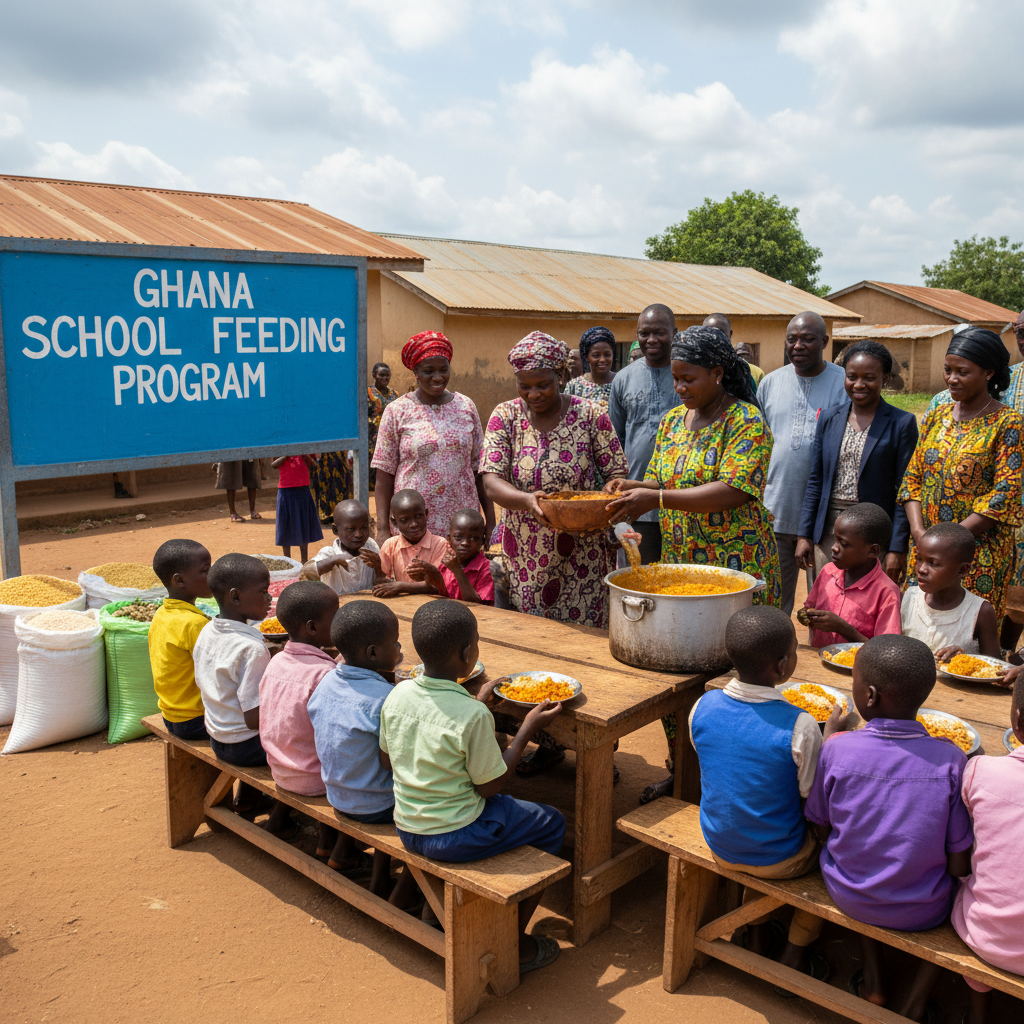
Ghana's Education Minister, Haruna Iddrisu, has confirmed that schools are no longer experiencing food shortages. He made this announcement on June 9, attributing the positive change to government policies and funding. The improvement marks a significant turnaround in the management of food supply for the national school feeding programme.
The Minister stated that the end of food shortages is directly linked to the removal of financial caps on the Ghana Education Trust Fund (GETFund). This 'de-capping' has allowed GETFund to provide more robust financing for school feeding operations. Funds are channeled through the Ghana Commodity Exchange and the National Buffer Stock Company to ensure sufficient food provisions for senior high schools.
This development is crucial for the ongoing success and public perception of the Free Senior High School (Free SHS) programme. The Free SHS initiative has been a flagship government policy, providing tuition-free education to Ghanaian students. Ensuring consistent food supply addresses a major operational challenge and public concern that has plagued the program in previous years. Data from the Ghana Statistical Service indicates that food inflation has been a significant driver of consumer price increases, making stable food supply to schools even more critical.
Minister Iddrisu explicitly detailed the government's financial commitment, announcing a GHS 4 billion allocation for school feeding this year. “This year alone, we allocated four billion Ghana cedis to take care of your feeding across the country,” he stated during his visit to Aburi Girls’ Senior High School. This substantial investment underscores the government's renewed focus on the welfare of students.
Looking ahead, the World Bank is scheduled to consider approval for a major educational infrastructure expansion on June 16. This initiative plans to upgrade 30 Category C schools to Category B status and 20 Category B schools to Category A. An estimated US$300 million investment will support these upgrades across the country. This expansion aims to enhance the learning environment and accommodate the growing number of students under the Free SHS policy, which has led to increased enrollment pressures on existing facilities.
Decision-makers will closely monitor the World Bank's approval next week, as it will unlock significant capital for infrastructure development. The sustained funding for the school feeding program will also be a key indicator for how effectively the government can maintain these improvements. Analysts will observe how the GHS 4 billion allocation translates into consistent food supply chains, especially given past challenges.
This twin focus on feeding and infrastructure aims to strengthen Ghana's education sector. It addresses immediate student welfare needs while planning for future growth and quality improvements. The government's actions reflect a commitment to refining the implementation of critical social intervention programs.