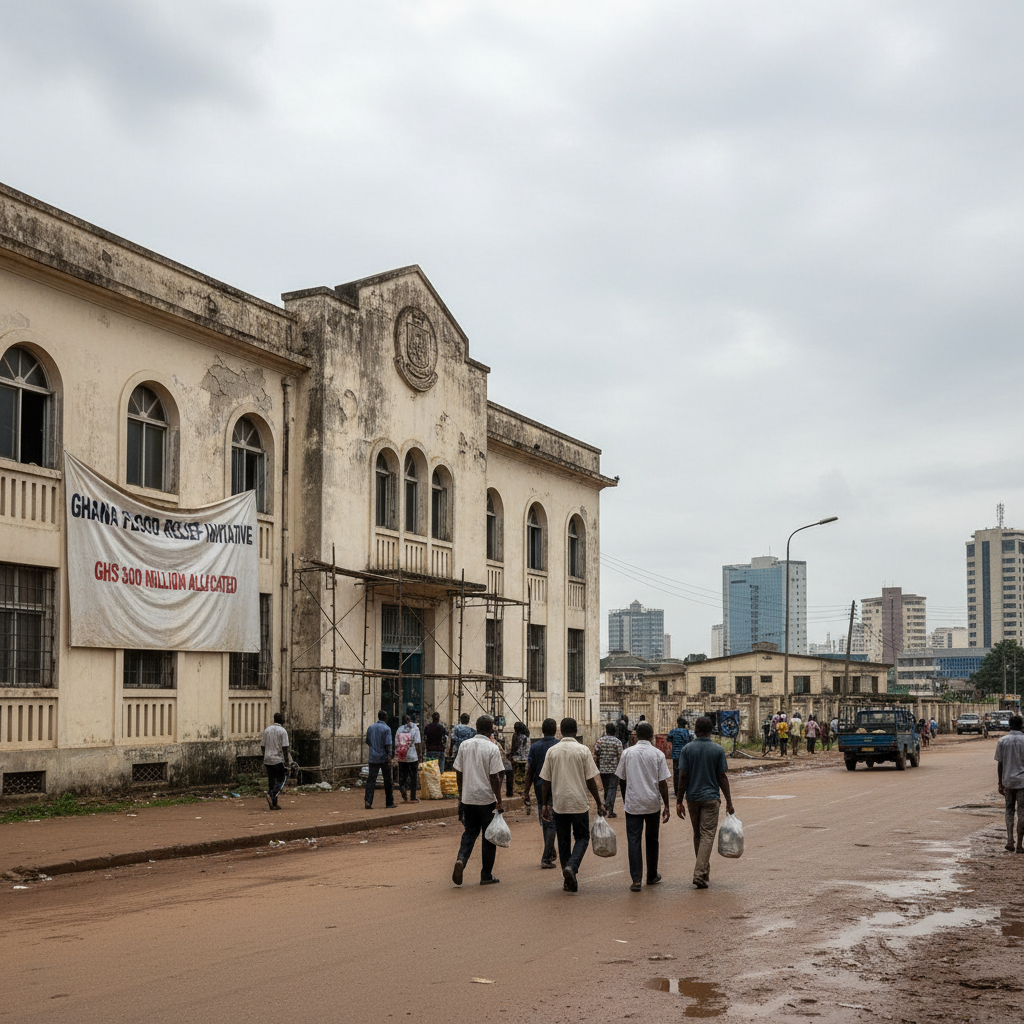
President John Dramani Mahama has directed the release of GHS 300 million from Ghana's Contingency Fund to address recent devastating floods in Accra. This allocation includes GHS 150 million for emergency relief and GHS 150 million for mitigation works. Shortly after, the Minister for the Interior, speaking in Parliament, stated a different figure of GHS 350 million, with GHS 200 million for relief and GHS 150 million for flood control.
These differing figures raise important questions about Ghana's public financial management practices. The allocations for flood response were not clearly drawn from an established financing framework. This suggests decisions often follow the immediate scale of a disaster rather than pre-planned assessments or existing models. Moreover, almost all of NADMO's 2026 budget of GHS 409.4 million covers employee compensation, leaving only GHS 14 million for climate resilience initiatives.
This reliance on emergency funding for predictable events fits a recurring pattern in Ghana's economic and political landscape. Flooding has become a regular occurrence, especially in Accra, due to drainage issues, rapid urbanisation, and changing climate patterns. Despite this predictability, Ghana continues to largely fund disaster response through emergency contingency releases rather than proactive budgetary allocations. Section 36(1) of the Public Financial Management Act, 2016 (Act 921), authorises Contingency Fund advances for urgent or unforeseen needs, a distinction becoming increasingly blurred in the context of regular flooding.
The President visited affected communities, expressing sympathy and pledging immediate support for impacted families. NADMO, along with the military and police, quickly mobilised to rescue trapped residents, an effort that undoubtedly saved lives. However, this immediate response strategy contrasts sharply with the broader lack of integrated, forward-looking financial planning for climate-related risks.
Going forward, decision-makers must address how Ghana budgets for predictable disasters. The inconsistency in allocated funds indicates a need for clearer financial planning and communication. A strategic shift is necessary from reactive emergency spending to proactive investment in resilience and preparedness. Ghana's 2026 Budget Statement already notes the government has secured sovereign drought insurance through the African Risk Capacity. It also plans a Parametric Flood Insurance Scheme for the Greater Accra Metropolitan Area. These initiatives represent encouraging steps towards anticipatory financing. However, their effective implementation is crucial, as the recent floods underscore.
The high percentage of NADMO's budget dedicated to staff compensation (96.6%) leaves minimal funds for actual resilience building. This highlights a critical policy challenge: should predictable flood risks continue to rely on emergency financing, or should operational preparedness and resilience receive greater attention during the annual budget process? The government's approach will be closely watched by markets and international partners. The effectiveness of any newly introduced insurance schemes will also be key to Ghana's financial stability in the face of ongoing climate challenges.