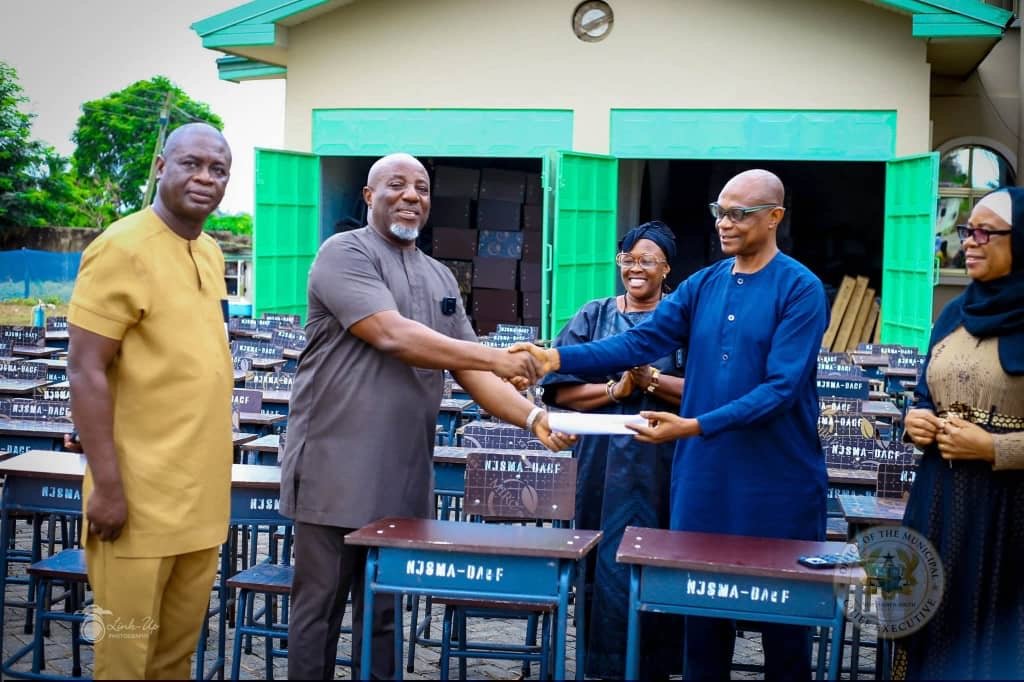
Ghanaian Metropolitan, Municipal, and District Assemblies (MMDAs) must now allocate 10% of their District Assemblies Common Fund (DACF) to procure school furniture. This directive aims to tackle the country's persistent school furniture shortage, impacting thousands of basic schools nationwide. The New Juaben South Municipal Chief Executive (MCE), Ransford Owusu Boakye, confirmed the allocation's potential to significantly improve learning environments.
This new government directive mandates that a specific portion of the DACF, a fund distributed to local government units, be dedicated solely to furniture. The move addresses a long-standing issue of inadequate desks and chairs in public schools. Mr. Owusu Boakye stated that sustained allocation will allow assemblies to replace damaged items and progressively meet demand. This intervention is crucial for creating conducive teaching and learning spaces across Ghana.
This policy fits into Ghana's broader efforts to enhance educational infrastructure and outcomes. The DACF, established by Article 252 of the 1992 Constitution, represents at least 5% of total national revenue. With the total DACF projected to be around GHS 7 billion annually, this 10% allocation could channel an estimated GHS 700 million each year towards school furniture. This significant investment underscores the government's commitment to basic education, a sector that has historically faced funding challenges for essential resources.
New Juaben South MCE Ransford Owusu Boakye emphasized the timely nature of this directive. He stated, “The directive will help us solve the problem of furniture deficit in our schools, and we are happy that it has come at the right time.” The New Juaben South Municipal Assembly recently handed over 700 mono desks and other furniture to 11 basic schools, demonstrating immediate action. The Municipal Education Director, Haruna Appiah, welcomed the directive, calling it a sustainable mechanism for addressing shortages.
The implications of this policy are far-reaching for Ghana's education sector and local governance. Improved furniture availability can directly enhance student comfort and concentration, potentially leading to better academic performance. The shift to mono desks, as highlighted by Mr. Appiah, also facilitates modern teaching methods and improves examination integrity by reducing opportunities for cheating. Local assemblies will face increased accountability for transparently managing these dedicated funds. Stakeholders will closely monitor the effective implementation and impact of this GHS 700 million annual investment on school infrastructure nationwide. This sustained funding mechanism promises to transform learning conditions for millions of Ghanaian students.
The provision of furniture extends beyond students to include teachers and headteachers. The New Juaben South Assembly also provided 20 teachers’ tables and chairs, 15 cupboards, and various items for kindergarten classrooms. This holistic approach acknowledges the importance of a well-equipped environment for all educational stakeholders. The directive is expected to benefit over 11,000 basic schools across Ghana, addressing a critical need that has hampered quality education for years. The consistent allocation of funds will ensure that furniture procurement becomes a regular, budgeted item for MMDAs, moving away from ad-hoc solutions. This structured approach is vital for long-term educational development and equity across all regions.