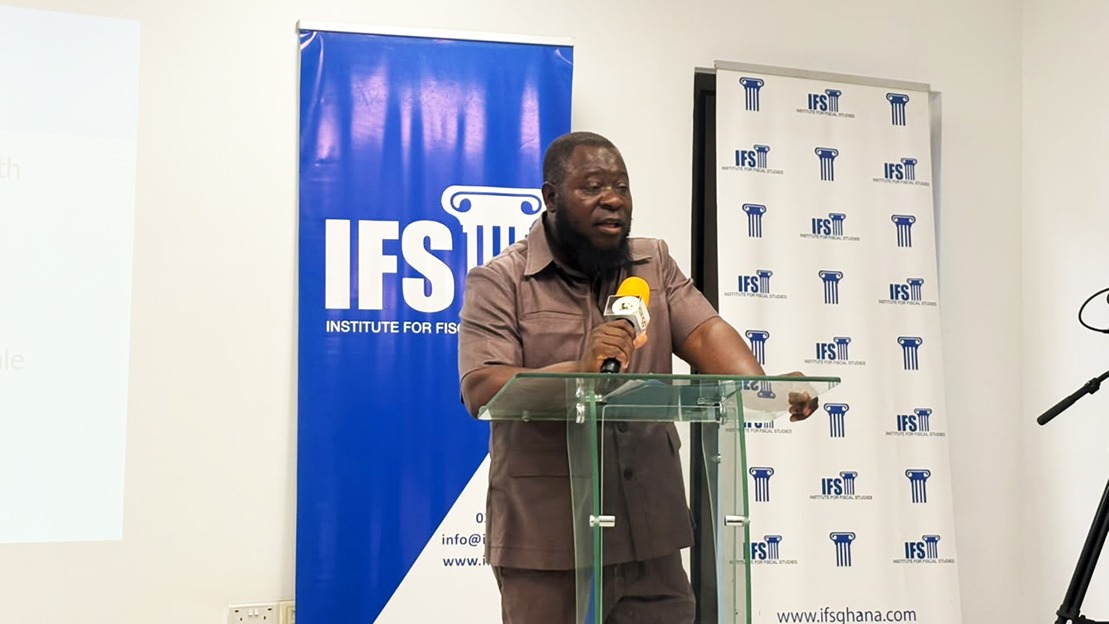
Ghana's government underspent its planned budget by GHS 35.6 billion in the first half of 2026. This significant shortfall represents 20.6% of the total budgeted expenditure, raising concerns about the country's economic trajectory.
The Institute for Fiscal Studies (IFS) highlighted this poor budget execution, warning it could hinder economic growth. The spending gap was particularly acute in capital expenditure and payments to government contractors, known as arrears. These shortfalls directly affect economic activity and business liquidity.
This underperformance fits into a broader narrative of fiscal challenges and economic management in Ghana. The government aims to stabilize the macroeconomy and reduce interest rates. However, restricting critical spending could undermine these efforts. The IFS noted a decline in non-oil Gross Domestic Product (GDP) growth momentum in the first quarter of 2026, linking it directly to reduced government spending. This trend suggests a potential slowdown in the overall economy if spending patterns continue.
Dr. Said Boakye, Executive Director of the IFS, presented these findings during an analysis of the 2026 Mid-Year Budget Review. He stated, "The 2026 budget outturns in the first half of the year show that the budget is being poorly executed." Dr. Boakye emphasized that arrears payments are crucial for providing liquidity to businesses dependent on government contracts, making their significant shortfall particularly damaging.
The continued restriction of government expenditure carries serious implications for Ghana's economy. Government spending forms a substantial part of the nation's GDP. A sustained reduction could further weaken economic growth, impacting job creation and overall prosperity. Decision-makers must now consider whether current fiscal austerity measures are inadvertently stifling vital economic activity. Markets will closely watch for any adjustments in spending policy or revised economic forecasts.
The IFS report detailed that capital expenditure fell short by GHS 14.35 billion, a 39.3% reduction from the budgeted amount. Arrears payments saw an even larger deficit, missing the target by GHS 8.64 billion, which is 61.8% of the planned figure. These specific shortfalls indicate a significant slowdown in government-funded projects and payments to suppliers.
The IFS cautioned against viewing the expenditure shortfall as automatically beneficial for Ghana's fiscal position. While reduced spending can help contain the budget deficit, sacrificing critical investments and payments can have severe negative consequences. Dr. Boakye explained that not spending has its own negative implications, especially when government expenditure is a key component of GDP.
The analysis also revealed that the large expenditure gap cannot be solely attributed to weaknesses in revenue mobilization or foreign borrowing. The combined shortfall from these sources was GHS 8.39 billion, less than a quarter of the total GHS 35.6 billion expenditure gap. Instead, the IFS identified a substantial shortfall in domestic financing as the primary cause.
Domestic financing of the budget fell short by GHS 34.45 billion, representing 67.2% of the budgeted amount. This significant gap raises questions about the government's financial planning. The IFS questioned why domestic financing was so low, especially since the government had accumulated GHS 15.6 billion in a Sinking Fund by July 2026. This Sinking Fund amount was not clearly captured in the original budget, leading to concerns about transparency and planning.
Dr. Boakye asked whether the government was aware of these Sinking Fund mobilizations when preparing the 2026 budget. He stated, "Whatever the case may be, it shows poor planning on the part of the government. This has greatly affected the credibility of the 2026 budget." This lack of clarity undermines public trust in fiscal management.
Furthermore, the IFS attacked the government's 4.8% GDP growth projection for 2026 as unrealistic. Dr. Boakye pointed out that Ghana's economy grew by 6.0% in 2025, exceeding earlier projections. First-quarter 2026 GDP growth also stood at 6.4%. These figures, according to the IFS, provided sufficient basis for the government to revise its full-year growth projection upwards in the Mid-Year Budget Review, which it failed to do.