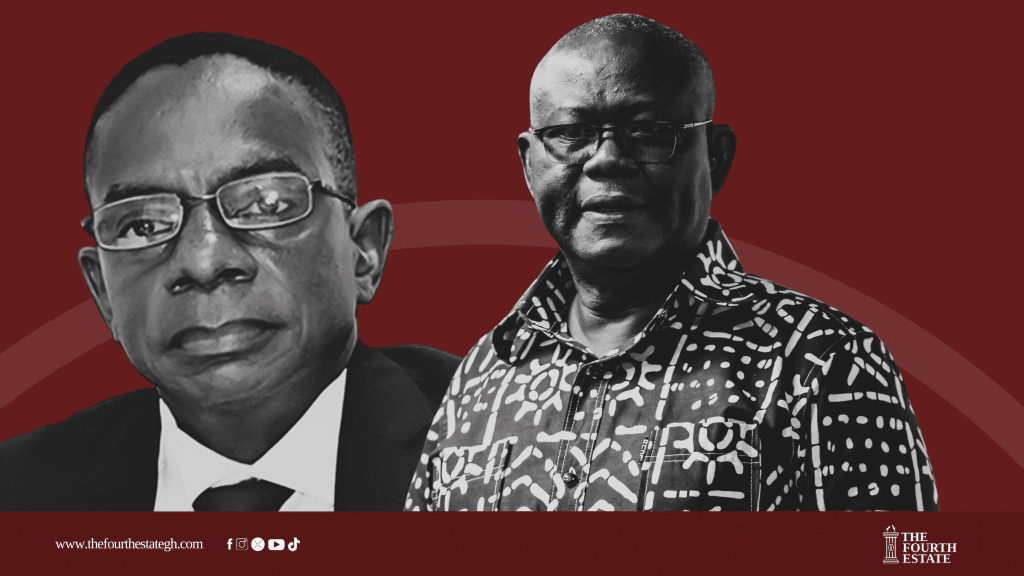
The Director-General of the Ghana Broadcasting Corporation (GBC), Professor Amin Alhassan, has challenged the Auditor-General's report on the 2023 African Games. He stated the report ignored evidence GBC submitted, leading to skewed findings.
The Auditor-General's report alleged GBC engaged companies without contracts and poorly managed broadcast rights. It claimed GBC lost GHS 59.4 million in potential revenue from these rights. Professor Alhassan insists GBC provided signed contracts and payment records that contradict the report's conclusions.
This dispute highlights ongoing tensions between state institutions regarding financial oversight and accountability. It follows a pattern of public officials questioning audit findings, raising concerns about transparency in public expenditure. The African Games, a major national event, involved significant public funds and scrutiny.
Professor Amin Alhassan told The Fourth Estate that the auditors did a "shoddy job." He stated, "[On] the issues of the contracts, I provided them; she [lead auditor] refused to acknowledge them in the report." He added that auditors received and signed for the submitted evidence.
The Auditor-General's findings and GBC's rebuttal will likely prompt further investigation and public debate. Stakeholders will watch how the government and Parliament address these conflicting accounts. This situation could influence future audit processes and public trust in state institutions.
The Auditor-General's report specifically cited GBC for engaging The Production Room, Silicon House Productions, and Broadstem Company Limited without written contracts. However, GBC's response included signed contracts for all three companies. The Production Room was contracted on February 22, 2024, for staff training and equipment. Silicon House was contracted on February 22, 2024, for outside broadcast vans. Broadstem Company Limited signed a contract on March 15, 2024, for satellite services.
The report also claimed The Production Room received a 100 percent advance payment. Payment records reviewed by The Fourth Estate show the first payment of GHS 69,000 occurred on March 22, 2024. The largest payment, $52,133, was made on February 18, 2025, nearly a year after the Games concluded. Professor Alhassan argued auditors assumed payment terms from a contract they then omitted from their report.
Regarding broadcast rights, the Auditor-General criticised GBC for granting free rights to SuperSport (DSTV). Auditors claimed this cost the country GHS 59.4 million in foregone revenue. GBC spent about $3.6 million on production for the Games. Only two licensing deals generated revenue, totaling $45,000, from Botswana and DR Congo national broadcasters. Professor Alhassan countered that selling broadcast rights was not GBC's responsibility. He stated the Local Organizing Committee (LOC) or the Ministry should appoint a marketing agency for this task. LOC Chairman, Dr. Kwaku Ofosu-Asare, declined to comment, awaiting the report's official service.
The Auditor-General's report also questioned an irregular training contract and the use of GBC staff for third-party contracts. The Fourth Estate verified some training occurred online during the Games, with varying attendance. GBC also received eight Dell laptops from The Production Room, with three seen at GBC's editing units. Professor Alhassan found it unusual to be surcharged for training and laptops when evidence was provided. This ongoing disagreement underscores the need for clear communication and robust evidence in public financial audits.