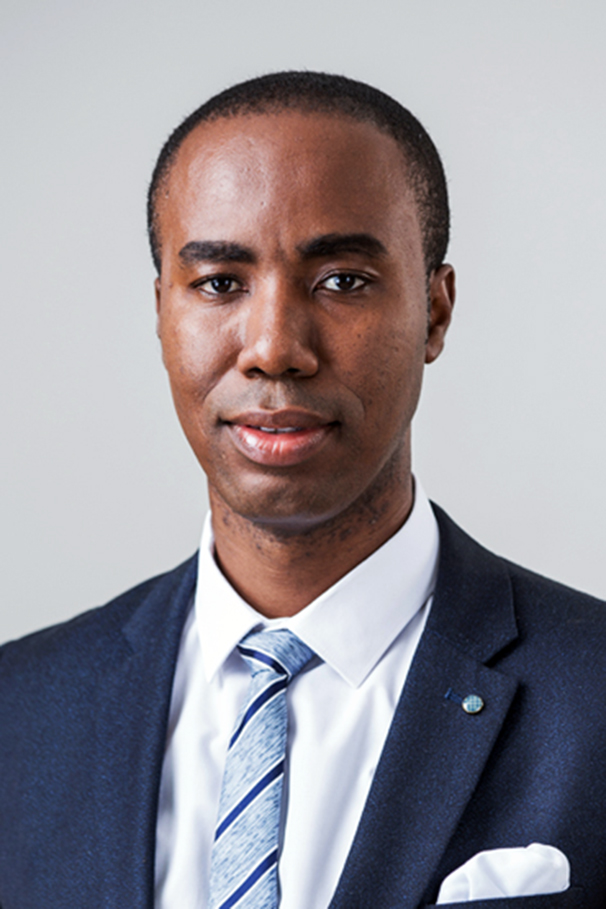
A lead investigator from the Economic and Organised Crime Office (EOCO) has told the High Court that former National Signals Bureau (NSB) Director-General Kwabena Adu Boahene accumulated wealth that did not align with his known income. Investigator Frank Marshall Cromwell testified on Wednesday in the ongoing GHS49.1 million cyber security procurement trial. His testimony focused on the financial discrepancies found in Adu Boahene's assets.
EOCO’s investigation revealed that Adu Boahene earned an average monthly salary of GHS5,000 in 2017, GHS6,000 in 2018, and GHS7,000 in 2019. Despite these earnings, he and his wife, Angela Adjei Boateng, jointly owned 11 identified properties. This significant disparity between income and assets raised questions from the investigating team. Angela Adjei Boateng also had a limited employment history, primarily National Service from 2012 to 2013 and a directorship role in Advantage Solutions from 2018.
This case highlights Ghana’s ongoing efforts to combat corruption and ensure accountability among public officials. It underscores the challenges of asset recovery when public funds are allegedly misappropriated. Ghana has faced persistent issues with financial malfeasance in public service, impacting public trust and economic development. Data from the Auditor-General's reports consistently show significant financial irregularities in various government institutions, prompting calls for stricter oversight.
Investigator Cromwell stated, “In the course of our investigations, we identified 11 properties belonging to them. Comparing these properties with A1’s salary from 2017 to 2020, we found it strange that A1 and A2 owned these properties.” He further noted that EOCO could not establish any legitimate link between the couple’s declared income and their accumulated wealth. The Ghana Audit Service also confirmed that Adu Boahene had not declared his assets as required.
This trial's outcome will be closely watched by the public and financial institutions. It could set an important precedent for future cases involving public officials and undeclared wealth. Decision-makers in Ghana's anti-corruption agencies will likely monitor the court's findings closely. The market for public contracts, especially in sensitive areas like cyber security, may also face increased scrutiny. This case emphasizes the need for transparency in procurement processes and asset declarations by public servants.
EOCO obtained freezing orders for properties allegedly owned by the accused, including seven units at Mayfair Gardens Estate and a 27-unit development named Belsize Park at Oyarifa. A search on March 21, 2025, confirmed ownership of seven properties at Mayfair Gardens Estate. Payment receipts from the estate’s management showed one payment of GHS1.566 million in April 2020. This payment allegedly corresponded with funds traced from BNC Communications Bureau Ltd through Advantage Solutions to the estate. Subsequent property payments were also made through Advantage Solutions and Vertex Solutions, companies linked to the accused.
UMB Bank filed a Suspicious Transaction Report shortly after initial deposits into the BNC Communications Bureau Ltd account in 2020 due to detected irregularities. In March 2023, Adu Boahene and his wife instructed the bank to close the account and transfer the remaining balance to an Advantage Solutions account. Investigators found no evidence that the National Signals Bureau received the cyber defence system Adu Boahene claimed was procured from ISC Holdings. The NSB's inventory also did not include the alleged system. While approximately GHS9 million was transferred to ISC Holdings, the remaining funds from the GHS49.1 million were allegedly transferred to companies linked to the accused, including Advantage Solutions. Adu Boahene’s explanations for the GHS49.1 million, including expenditures like “special operations” and “stability of the nation,” were not supported by EOCO’s findings. Investigators concluded that much of the remaining funds were channelled to associated companies, with some allegedly withdrawn for private projects like the Dorchester property development.