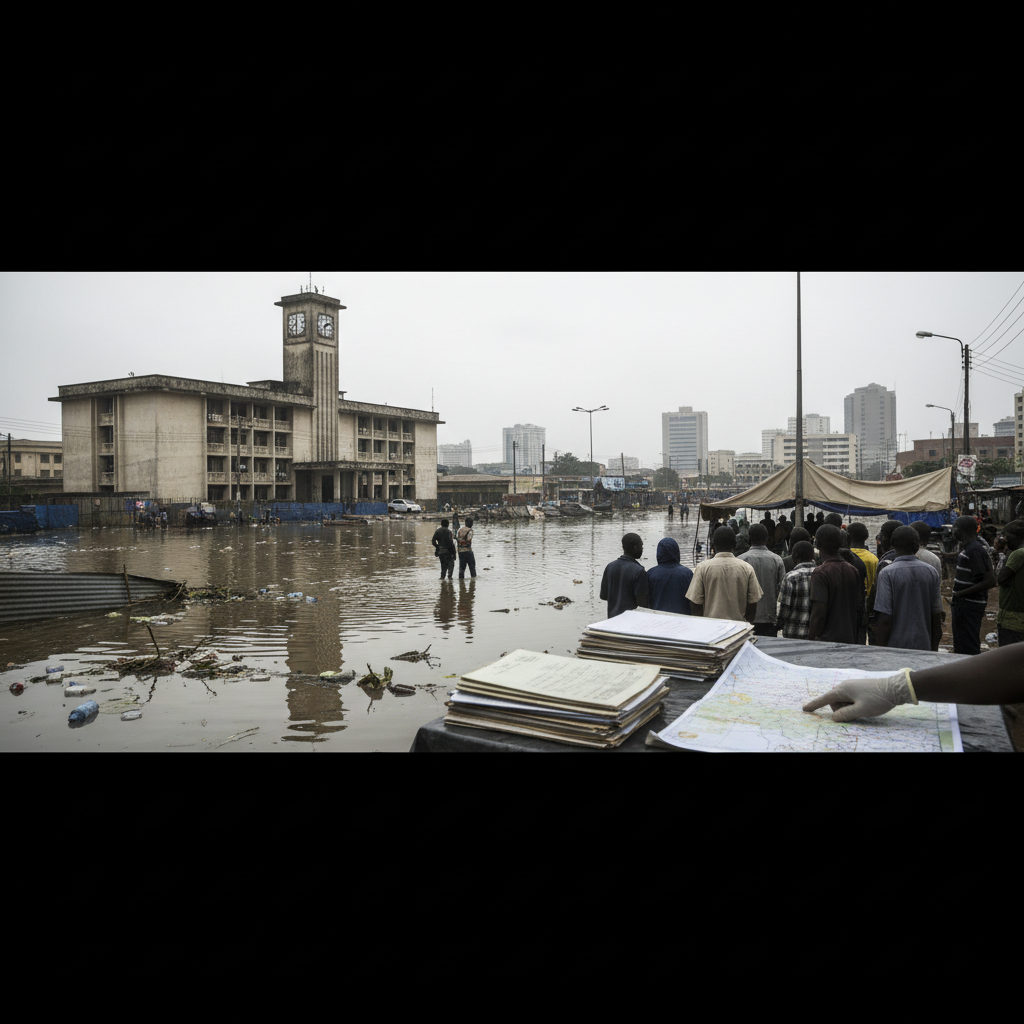
Former Member of Parliament for Sekondi, Andrew Egyapa Mercer, has strongly criticized the government's handling of recent flooding events. He specifically questioned why authorities delayed action until at least 12 lives were lost and businesses suffered substantial damage. Mr. Mercer described the government's subsequent efforts as a "clean-up charade" during a national broadcast.
This criticism follows devastating floods on June 29, 2026, which severely impacted Greater Accra and other regions. The floods displaced thousands, submerged homes and vehicles, disrupted businesses, and caused extensive traffic gridlock. Mr. Mercer stated that the government had ample warning of the impending rainy season but failed to conduct nationwide clean-up exercises. He also noted that funds were not released to Metropolitan, Municipal, and District Assemblies for desilting drains.
These repeated flooding incidents highlight Ghana's persistent challenge with urban drainage and infrastructure resilience. Ghana's economy frequently suffers significant losses from seasonal flooding, impacting livelihoods and public finance. The lack of proactive measures contrasts sharply with stated government commitments to improve disaster preparedness and environmental management. Data consistently shows that infrastructure deficits contribute significantly to flood vulnerability.
Speaking on JoyNews' Newsfile on Saturday, July 11, Mr. Mercer explicitly accused the Mahama administration of incompetence. He referenced President John Mahama's prior acknowledgments that flood prevention is a government responsibility. Mr. Mercer also pointed to the National Democratic Congress' 2024 manifesto, which promised interventions like constructing water retention ponds and reservoirs. "Eighteen months and two budgets after coming into office, where are they?" he queried regarding these promised facilities.
The government will face increasing pressure to demonstrate a more effective and proactive approach to flood management. Decision-makers must address the long-standing issues of inadequate drainage, waste disposal, and urban planning. The public and affected communities will keenly observe the implementation of promised infrastructure projects and funding allocations for preventative measures. Financial markets may also consider the economic impact of recurring flood damage on national growth projections.
Mr. Mercer rejected attempts to blame residents for the floods, asserting that engineering solutions and waste management are government responsibilities. He argued that citizens are not responsible for large-scale engineering or communal waste collection solutions. He urged the government to acknowledge its shortcomings and implement lasting solutions. Mr. Mercer’s comments underscore the public's demand for accountability and effective governance in disaster prevention and response. Sustained investment in resilient infrastructure is crucial to mitigate future economic losses.