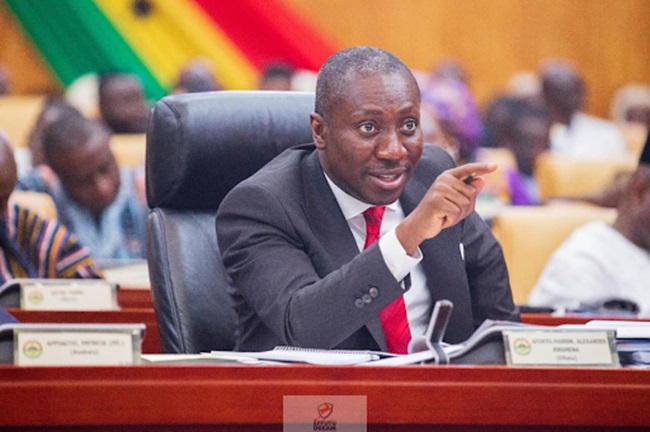
Sammy Gyamfi, Chief Executive Officer of the Ghana Gold Board (GoldBod), has formally accused Minority Leader Alexander Afenyo-Markin of extortion. This serious allegation emerged after Mr. Afenyo-Markin publicly criticized GoldBod's Domestic Gold Purchase Programme (DGPP).
The accusation by Mr. Gyamfi directly follows Mr. Afenyo-Markin's claims that the DGPP incurred significant losses. Specifically, the Minority Leader cited an International Monetary Fund (IMF) report indicating GoldBod suffered losses of approximately GHS 22 billion, equivalent to about US$1.7 billion, under the program in 2025. This financial performance critique appears to be the trigger for the extortion allegation.
This incident fits into a broader narrative of heightened scrutiny over public finance and accountability in Ghana. Recent economic challenges have amplified calls for transparency in government programs and state-owned enterprises. The alleged GHS 22 billion loss, if confirmed, would represent a substantial drain on public resources, impacting the nation's fiscal health. Such allegations also erode public trust in political institutions and economic management, particularly as Ghana navigates its economic recovery.
The Herald Ghana, in its editorial, emphasized the gravity of the situation. It stated, "Extortion is a criminal offence, and therefore such an allegation cannot simply be dismissed as another episode in Ghana’s increasingly heated political discourse." The publication urged the Office of the Special Prosecutor (OSP) and the Economic and Organised Crime Office (EOCO) to launch an immediate investigation. These bodies are crucial for upholding the rule of law and ensuring accountability among public officials.
The immediate implication is a potential legal and political showdown that could significantly impact public confidence. Decision-makers and financial markets will closely watch how law enforcement agencies respond to these serious claims. A thorough and impartial investigation is essential to either substantiate the allegations or clear the names of those involved. Failure to address this matter decisively could further undermine institutional integrity and accountability in Ghana's governance framework.
This development also raises questions about the oversight mechanisms for large-scale government programs like the DGPP. The alleged financial losses highlight the need for robust auditing and financial reporting standards within state entities. Ghanaians expect transparency and accountability from their leaders, especially concerning the management of national assets and public funds. The outcome of this investigation will set an important precedent for future interactions between political figures and state-owned enterprises.
Furthermore, the political climate in Ghana is increasingly polarized, with serious allegations often traded between opposing factions. This particular accusation, however, transcends typical political banter due to its criminal nature. It demands a response that goes beyond mere political rhetoric. The integrity of Ghana's legal system and its ability to prosecute alleged crimes, regardless of the individuals involved, is now under the spotlight. The public's trust hinges on a fair and transparent process.