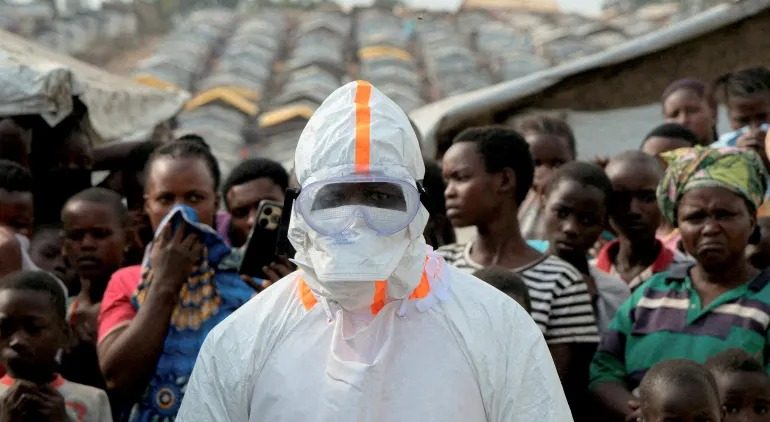
Ebola infections in the Democratic Republic of Congo (DRC) have surged to 3,200 cases, with 1,405 recorded deaths. Government data released on Sunday confirmed this alarming increase. The outbreak, the 17th in the DRC, has seen infections rise by approximately 1,000 in just ten days, posing a significant public health challenge.
This rapid escalation underscores the difficulties medics face in containing the disease. The current outbreak, declared on May 15, is caused by the Bundibugyo strain of the Ebola virus. There is currently no approved vaccine or treatment specifically for this strain, complicating containment efforts.
The World Health Organization (WHO) reports that nearly 90 percent of cases are concentrated in the northeastern province of Ituri. This region borders South Sudan and Uganda, raising concerns about potential cross-border transmission. The virus has now spread to five provinces, including two new areas recently affected, indicating a widening geographical footprint.
Humanitarian efforts to combat the outbreak are severely hampered by logistical challenges. Hedley Tah of the UN Humanitarian Air Service (UNHAS) noted that getting aid workers to affected areas is a major hurdle. UNHAS plays a crucial role by transporting medics and response teams to crisis front lines, and also moves samples for laboratory testing to ensure accurate traceability of the virus.
Improved detection and testing capabilities have contributed to identifying more infections, according to authorities. However, the outbreak is projected to last several more months. Response efforts have also been disrupted by strikes from healthcare workers demanding unpaid wages in some hospitals, further complicating the situation on the ground.
Ebola spreads through contact with bodily fluids and causes hemorrhagic fever, a severe and often fatal illness. Over the past 50 years, the disease has claimed more than 15,000 lives across Africa. The economic impact of such outbreaks can be substantial, disrupting trade, travel, and local economies, particularly in affected regions.
Scientists are actively working to develop vaccines and treatments for the Bundibugyo strain. Oxford University announced on Friday that the first volunteer group had received an experimental vaccine targeting this specific strain. Several other candidate vaccines are being fast-tracked for clinical trials, and two potential treatments are also under development. These scientific advancements offer a glimmer of hope in the ongoing fight against this deadly virus.
The sustained nature of the outbreak and its spread to new provinces highlight the need for continued international support and coordinated efforts. Addressing the underlying issues, such as healthcare worker remuneration and secure access for humanitarian aid, remains critical for effective containment. The global community watches closely as researchers race to provide effective tools to combat the Bundibugyo strain and prevent further loss of life.