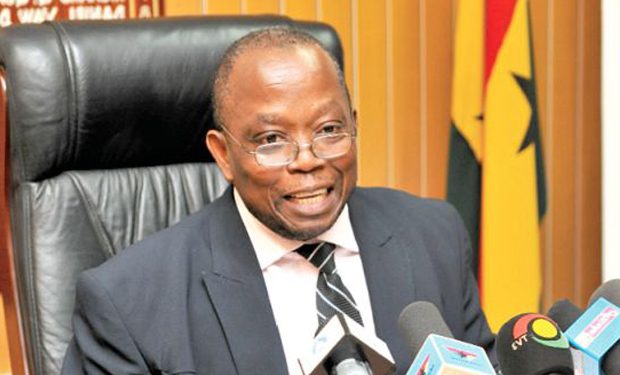
Former Auditor-General Daniel Yaw Domelevo has questioned alleged payments from the Presidency to Members of Parliament (MPs) for their participation in vetting government nominees. He stated that any allowances for parliamentary duties must come from Parliament's budget, not funds allocated to the Office of the President.
Mr. Domelevo made these comments during a panel discussion on September 5, focusing on an alleged GHS 70,000 payment. This payment was reportedly linked to the vetting of ministerial and Supreme Court nominees. He emphasized that allowing a presidential office to pay MPs undermines sound public financial management practices. It also blurs the clear separation of budgetary responsibilities between state institutions.
This issue fits into Ghana's ongoing efforts to strengthen public financial accountability and combat corruption. The Public Financial Management Act (PFMA) provides a framework for how public funds should be managed. Concerns about adherence to these laws often arise in discussions about government spending. Previous instances of alleged irregular payments to public officials have also drawn scrutiny, highlighting a persistent challenge in governance.
“Parliament has its own budget and should therefore be responsible for settling allowances associated with activities undertaken by its members in the course of parliamentary business,” Mr. Domelevo stated. He further stressed that any transfer of public funds between government institutions must strictly follow the Public Financial Management Act. This includes obtaining necessary budgetary procedures and approvals, such as supplementary estimates when required.
The Office of the Special Prosecutor (OSP) is currently investigating an alleged GHS 70,000 payment. This payment was reportedly offered to Deputy Minority Leader Patricia Appiagyei, the MP for Asokwa, in connection with a vetting exercise. Mrs. Appiagyei has denied these claims, which emerged after a purported memorandum circulated publicly. Mr. Domelevo acknowledged her denial but insisted the issue requires a broader examination beyond this specific allegation.
This situation raises critical questions about financial oversight and the independence of legislative functions. Decision-makers will need to address how such payments are managed and accounted for. Markets and the public will watch closely for transparency and adherence to financial regulations. A proper investigation could clarify procedures and ensure public trust in financial management. This also impacts Ghana's reputation for good governance and fiscal discipline.
The former Auditor-General maintained that a thorough investigation is crucial. It would help establish whether the alleged payment occurred. More importantly, it would clarify the appropriate procedures for handling such financial arrangements. This ensures that all public funds are managed transparently and legally. It also reinforces the distinct financial roles of different government branches. The outcome of the OSP investigation will be critical in shaping future policy on parliamentary allowances. It will also influence public perception of accountability within government. This ongoing scrutiny is vital for maintaining fiscal integrity in Ghana's public sector.