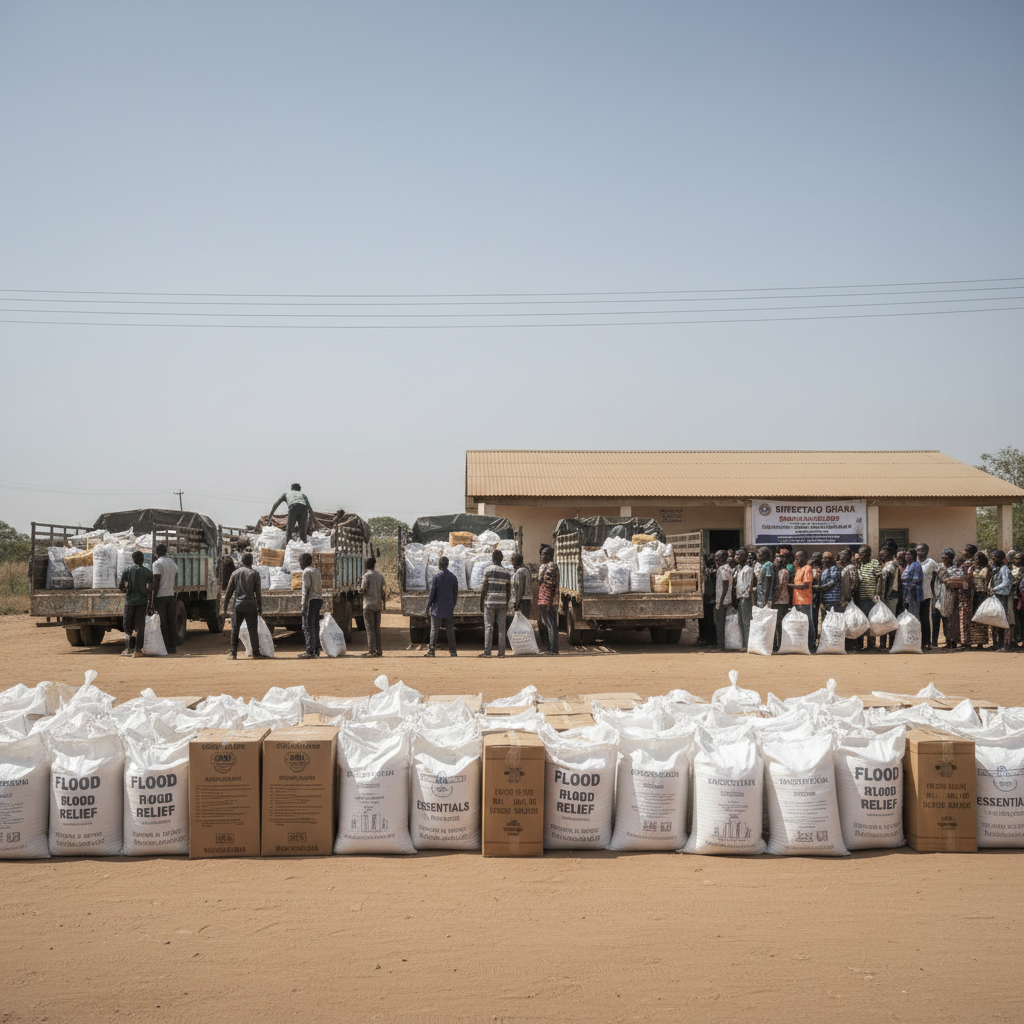
DirectAid Ghana has completed its GHS 2 million flood relief distribution to 1,500 families affected by the June 2026 floods. This humanitarian effort targeted communities in Greater Accra and Kasoa, providing crucial support to those who lost homes and livelihoods.
The relief program delivered essential items including rice, cooking oil, spaghetti, beans, and tomatoes. Beneficiaries also received household goods such as mattresses, bedsheets, blankets, and soap. These distributions were vital for families recovering from the widespread damage caused by the floods.
The June 2026 floods significantly impacted several communities across Greater Accra and other regions. This event disrupted daily life and caused substantial economic losses for many households. The DirectAid intervention underscores the ongoing vulnerability of urban and peri-urban areas to severe weather events.
DirectAid Ghana funded this initiative with support from its donors located in Kuwait. Government officials also provided coordination assistance during the distribution exercise. Deputy Chief Executive Officer of the Zongo Development Fund, Hajia Rakia Abdulai, participated in the penultimate distribution event in Dansoman.
The conclusion of this relief effort highlights the urgent need for robust flood prevention strategies. Hajia Rakia Abdulai urged residents to stop building on waterways and disposing of waste in drains. These practices directly worsen flooding and increase the severity of disasters.
Preventive measures are crucial to protect lives and property from future flood events. Improved waste management and strict enforcement against illegal construction on waterways are essential. DirectAid also plans to extend assistance to clinics and hospitals with medical supplies.
The GHS 2 million investment in relief by DirectAid demonstrates the significant financial burden of disaster response. This amount could have been used for development projects if effective prevention was in place. Ghana's economy faces recurring costs from such natural disasters, impacting national budgets and household finances.
The government's commitment to supporting affected persons must be matched by proactive measures to reduce flood risks. This includes investing in resilient infrastructure and public education campaigns. Such efforts would shift focus from repeated relief operations to sustainable community development.
Markets and local economies in affected areas experience disruptions following severe floods. Businesses suffer losses, and residents face challenges rebuilding their lives and livelihoods. The long-term economic recovery depends on both immediate aid and strategic prevention.
Decision-makers must prioritize urban planning that respects natural drainage systems and enforces environmental regulations. This will reduce the frequency and impact of future floods. The recurring nature of these disasters demands a comprehensive national strategy for climate resilience.
The DirectAid program benefited 1,500 families, providing a temporary reprieve from their hardship. However, the underlying issues of poor drainage and uncontrolled development persist. Continuous investment in flood mitigation is critical for Ghana's economic stability and public safety.