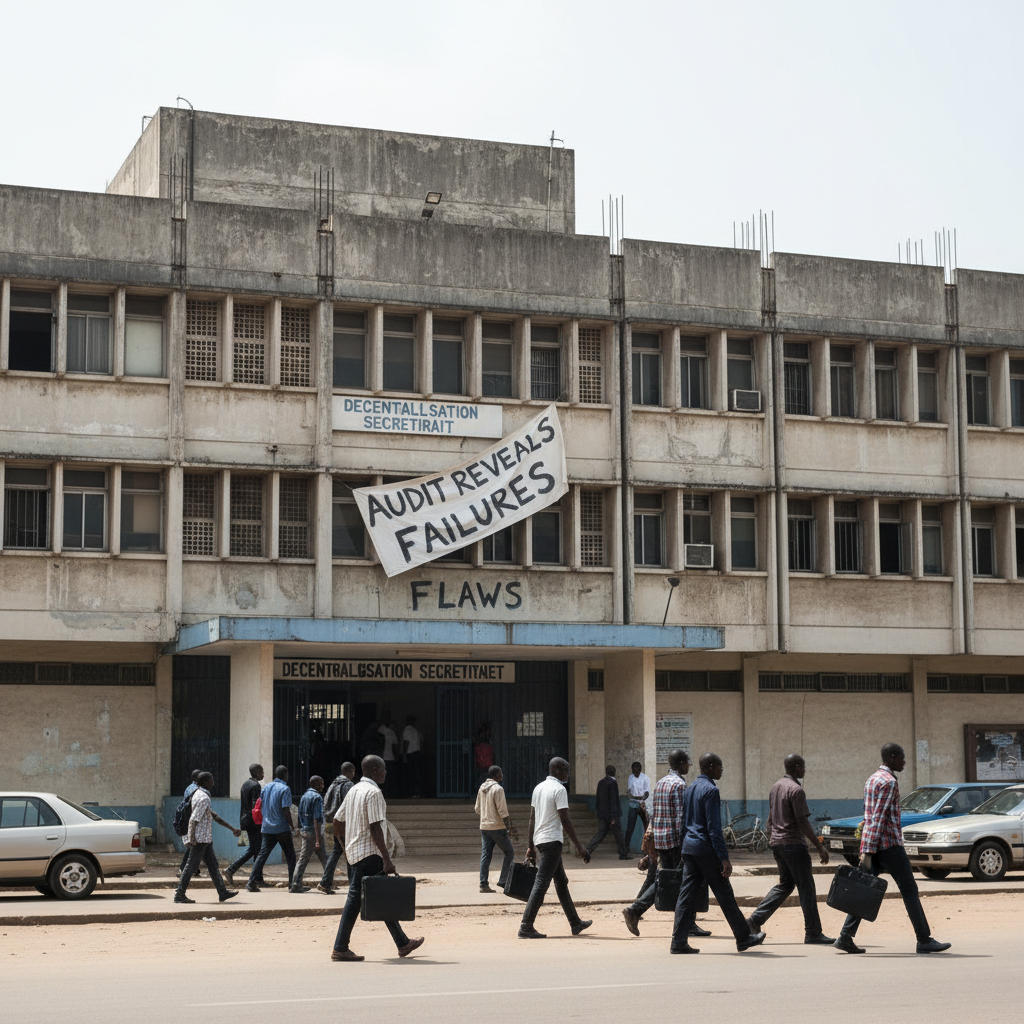
A forensic audit into the financial operations of the Inter-Ministerial Coordinating Committee on Decentralisation (IMCCOD) has identified significant weaknesses in financial controls. The audit also found numerous undocumented transactions and discrepancies in investments. Auditors are recommending accountability for officials responsible for these irregularities.
KDK and Associates conducted the investigative audit at the request of the current Executive Secretary, Dr Gameli. The audit covered transactions from August 1, 2022, to February 2, 2025. It aimed to determine if IMCCOD’s income, expenditure, and investments followed the Public Financial Management Act and the Public Procurement Act. Weak financial controls and a lack of proper documentation present a risk to public funds and confidence in state institutions.
These findings fit into Ghana's ongoing efforts to improve public financial management and combat corruption. Irregularities in public sector bodies often lead to significant financial losses for the state. Recent Auditor-General reports have consistently highlighted similar issues across various government ministries and agencies. These reports underscore the need for stricter adherence to financial regulations and robust internal control systems. Reliable data is crucial for effective governance and service delivery.
Asaase Radio's Head of Legal and Political Desk, Wilberforce Asare, announced these findings on July 14. He explained that the auditors reviewed four bank accounts, payment vouchers, bank statements, and investment certificates. The report indicated IMCCOD relied only on Microsoft Excel for financial records, exposing it to data integrity dangers and weak access controls. This reliance makes verifying financial transactions difficult and raises questions about data security.
The audit revealed varying levels of documentation for bank withdrawals. For one Apsa Bank account, 99.75% of 2022 withdrawals were properly documented. This documentation dropped to 97% in 2023 but then improved to 100% in 2024. However, transactions from a Zenith Bank account showed a higher need for clarification or lacked full supporting documentation. This inconsistency suggests a systemic problem with financial record-keeping.
Auditors also found shortfalls in returns on some of IMCCOD’s investments. This issue suggests potential mismanagement or poor oversight of public funds. Investment performance directly impacts the financial health of public institutions. Ensuring optimal returns on investments is a key aspect of sound financial management.
The audit report recommends installing proper accounting software to improve data integrity and access controls. It also suggests stricter internal controls for approving expenditures and mandatory verification of documents before releasing funds. These recommendations aim to prevent future financial irregularities and enhance transparency. The Public Financial Management Act of 2016 sets out clear guidelines for managing public funds. Adherence to these guidelines is mandatory for all public officials.
Notably, the report recommends surcharging or recovering misappropriated funds from individuals responsible for financial irregularities. According to Asare, the report assigns primary responsibility to the former Executive Secretary and the accountant. They allegedly authorised or facilitated non-compliant transactions. This highlights the importance of individual accountability in preventing financial malfeasance in public institutions.
The implications are significant for public financial administration in Ghana. The government will likely face pressure to implement the audit’s recommendations swiftly. Decision-makers and the public will watch closely for actions taken against those identified as responsible. This move could set a precedent for greater accountability across other state entities. Improved financial oversight is essential for Ghana’s economic stability and development.