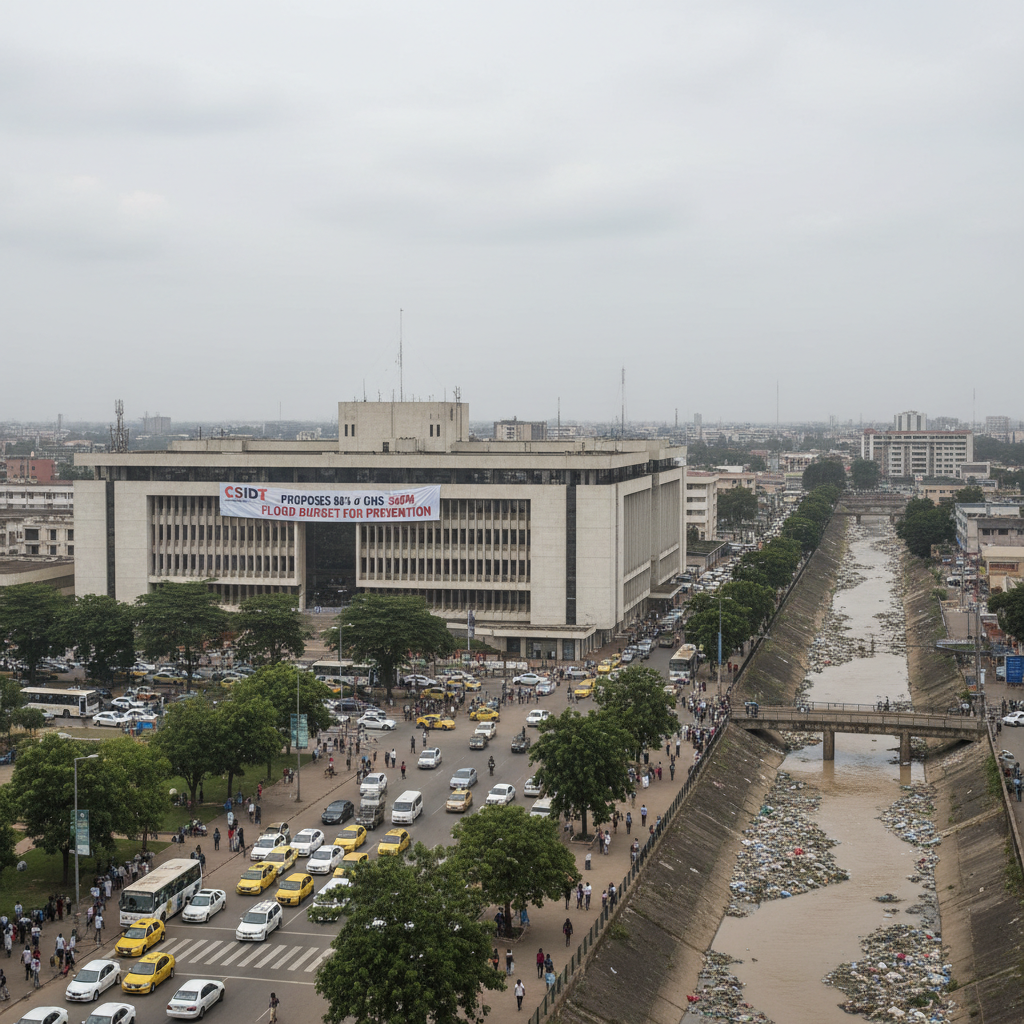
The Centre for Social Innovation and Democratic Thought (CSIDT) has proposed that 80% of Ghana's GHS 350 million flood response budget be invested in prevention rather than post-disaster relief. This recommendation seeks to fundamentally change the government's approach to flood management.
This strategic shift follows the severe June 2026 floods, which saw 169.2mm of rainfall within 24 hours. These floods tragically resulted in 12 deaths, displaced thousands of people, and caused an estimated GHS 5 billion in damages. CSIDT argues that a proactive approach focusing on resilience will prevent future losses and save lives.
Ghana's persistent struggle with flooding highlights the need for a new strategy. Between 2017 and 2022, approximately GHS 1 billion was spent on flood response, primarily on relief efforts. Despite these expenditures, flooding has continued to worsen, underscoring the ineffectiveness of a purely reactive stance. This trend indicates a broader economic challenge where resources are consumed by recurring disasters instead of being invested in sustainable development.
CSIDT Executive Director Eugene Boadu emphasized the long-term economic benefits of prevention. He stated, "Relief spending is reactive; resilience spending is preventive." Boadu added that every US$1 invested in resilience measures should generate US$7 in avoided flood losses. This highlights the significant return on investment from proactive flood management strategies.
The think tank's proposal outlines a revised allocation for the GHS 350 million budget. Under this plan, GHS 70 million would be reserved for emergency relief, representing 20% of the total. The remaining GHS 280 million would be dedicated to prevention. This includes GHS 130 million for desilting and restoring major drains, GHS 100 million for technology and engineering interventions, and GHS 50 million for sustained public education and behavioral change campaigns.
CSIDT's five-point agenda for strengthening Accra's flood resilience over the next 18 months includes several key initiatives. These proposals involve establishing a nationally adopted flood preparedness standard and creating an Accra Flood Operations Centre. The plan also calls for improving coordination among drainage and sanitation agencies and strengthening enforcement against illegal developments on waterways. These measures aim to create a more robust and coordinated response system.
Furthermore, the think tank recommended deploying artificial intelligence-based flood prediction tools and developing dynamic flood maps. It also suggested partnering with universities to develop engineering solutions tailored to Ghana's specific flooding challenges. CSIDT urged collaboration with countries like Mauritius, South Africa, and the Seychelles, which have advanced flood management systems. Encouraging private-sector investment in flood resilience initiatives is also a crucial part of their strategy.
The current government plan allocates GHS 200 million for emergency humanitarian relief and GHS 150 million for flood mitigation measures. While CSIDT acknowledges this package is "better structured than previous plans," it argues the allocation remains "weighted toward reaction, not prevention." The proposed shift from 57% relief and 43% mitigation to 20% relief and 80% prevention represents a significant policy change.
This shift would deliver visible improvements and maximize the impact of the GHS 350 million investment. It would also lay the foundation for a long-term flood resilience strategy for Accra. Decision-makers and markets will closely watch the government's response to this proposal, as it has significant implications for public finance and urban development.