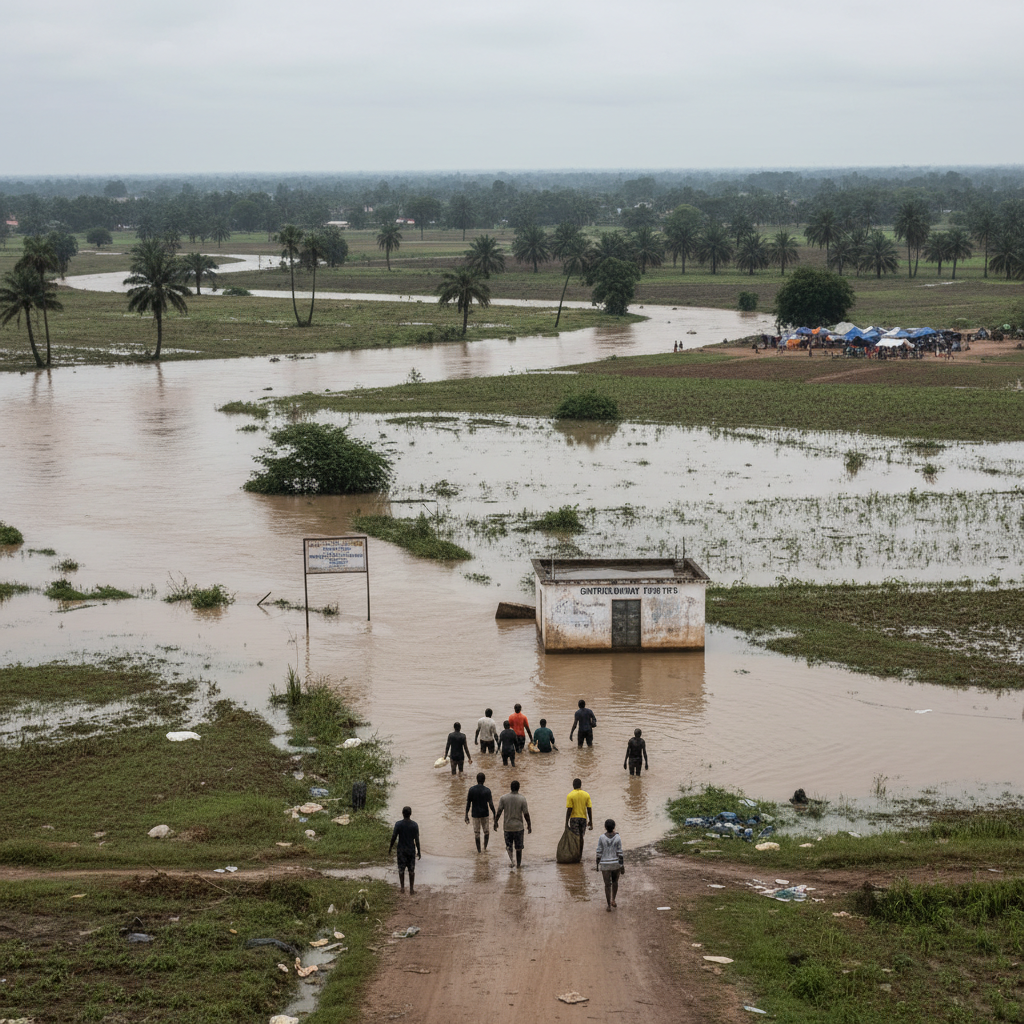
Former Vice President and the New Patriotic Party's 2028 presidential candidate, Dr. Mahamudu Bawumia, has urged Ghanaians to set aside political differences. He called for unity to address devastating floods that have claimed at least 12 lives and displaced thousands across parts of the country. This urgent call followed a visit to flood-affected communities in the Greater Accra Region on Tuesday, June 30.
The devastating floods followed heavy rainfall on Monday, June 29, 2026, severely impacting Greater Accra and other regions. Beyond the tragic loss of life, the disaster has displaced thousands of residents and submerged homes. Businesses have faced disruption, and widespread traffic gridlock affected daily life. Dr. Bawumia highlighted the extensive destruction left behind, making collective action crucial.
This event fits into a broader pattern of flood vulnerability in Ghana, particularly in urban areas like Greater Accra. In recent years, inadequate drainage systems and rapid urbanization have worsened the impact of seasonal rains. Data from the National Disaster Management Organization (NADMO) consistently points to flooding as a major recurring natural disaster. Previous episodes, such as the June 3, 2015, flood and fire disaster, resulted in significant economic losses. These recurring events underscore the urgent need for robust infrastructure investments and long-term urban planning strategies.
Dr. Bawumia described the disaster as a national crisis demanding collective action, not partisan politics. He stated, "It is a tragedy for all of Ghana. It isn't a tragedy just for Accra or here in the Greater Accra Metropolis. It is a tragedy for all of Ghana." He stressed the importance of focusing on solutions rather than political debates. He also appealed to emergency agencies to work together for swift victim recovery and timely assistance to affected families.
Moving forward, the government will likely face increasing pressure to implement more effective flood control measures. This includes investing in improved drainage systems and enforcing building regulations. Policymakers will need to consider the economic impact of such disasters, which can run into millions of Ghana cedis in damages and lost productivity. The response of various political actors and emergency services will be critical in the coming weeks. The nation will watch for concrete action plans to prevent future occurrences and provide relief.
Stakeholders, including local authorities and community leaders, must collaborate on sustainable urban planning. The call for unity from Dr. Bawumia signals a recognition of the shared responsibility in addressing this pressing national challenge. Long-term solutions require sustained effort and cross-party cooperation to protect lives and livelihoods. The economic cost of inaction on flood management continues to escalate, affecting Ghana's urban development.