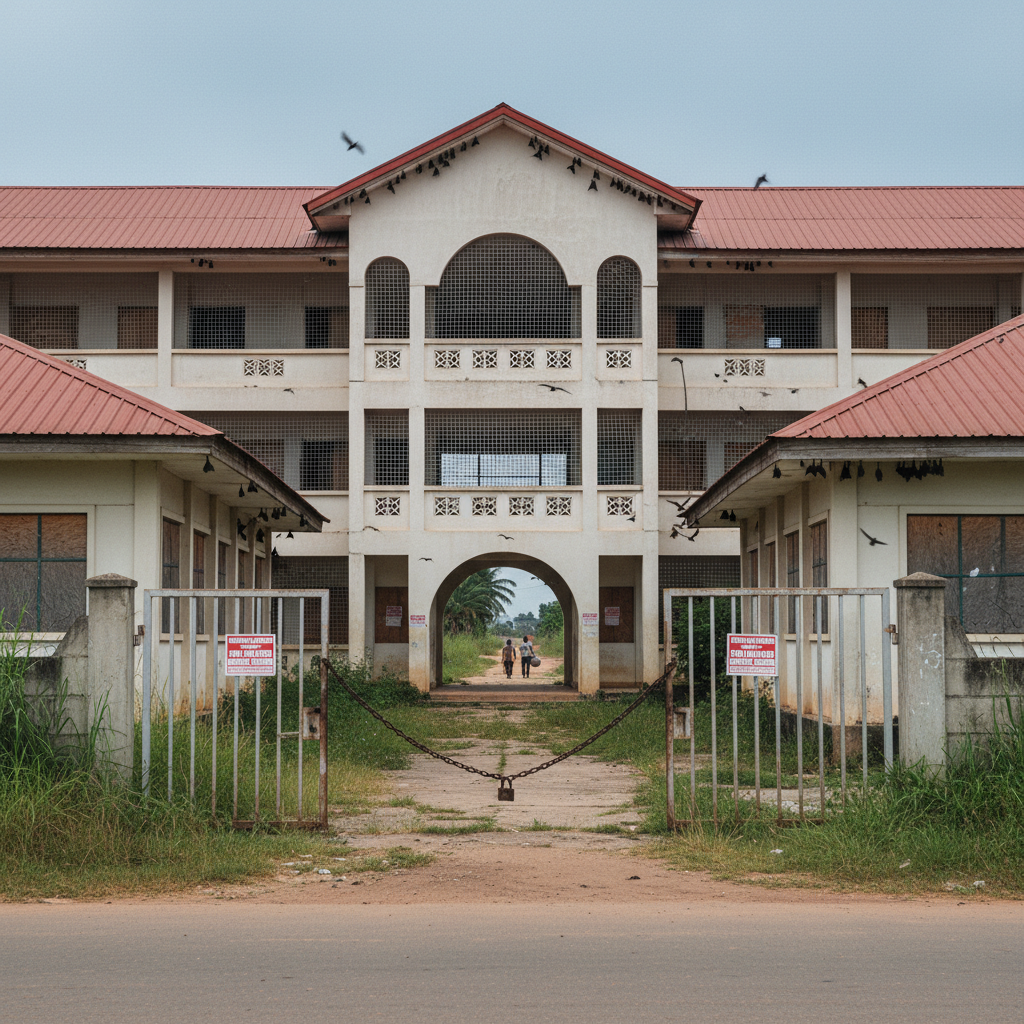
A three-unit classroom block at Kamalo D/A Junior High School in the Kwahu Afram Plains North District has been abandoned due to a severe bat infestation. This facility was completed in 2021 using petroleum revenues from the Annual Budget Funding Amount (ABFA). The absence of a ceiling allowed bats to occupy the building, making it unusable.
The bat infestation has left classrooms filled with droppings and a strong stench. This situation has made teaching and learning impossible in the new building since late 2024. Headmaster Samuel Offei and the only other teacher now conduct lessons in a temporary open-sided pavilion for 197 pupils.
This incident reflects broader concerns about infrastructure projects funded by Ghana's petroleum revenues. The ABFA allocates a portion of oil and gas proceeds to priority development areas. However, this case highlights potential lapses in project design and supervision, wasting public funds. The classroom block represents a significant investment of public funds, estimated at GHS 4.2 billion for similar projects.
The Public Interest and Accountability Committee (PIAC) identified the issue during an inspection of facilities funded by petroleum revenues. The PIAC team expressed concern about the conditions at Kamalo D/A Junior High School. They stated that the facility requires timely maintenance and remedial works to ensure value for money.
This closure leads to significant implications for the pupils' education and the efficient use of public funds. The situation has forced the combination of classes and negatively affected academic activities. Declining attendance among pupils from surrounding communities, 4 kilometres away, is also a concern. Decision-makers must now address the structural flaw and ensure accountability for project quality.
The school headmaster, Samuel Offei, explained the dire situation. He said the bats occupied the roof space, leaving droppings across classrooms nightly. "The learners and teachers wanted to use the facility, but the bat infestation made it impossible," Mr. Offei stated. "Every morning, the classrooms were littered with droppings, and the stench was unbearable."
The lack of proper infrastructure affects pupils from Kamalo, Richard Kope, and Sokpe. The relocation to a temporary structure contributed to declining attendance. Community leaders are exploring ways to fund tricycle transport for students. This situation underscores the need for thorough planning, construction quality checks, and ongoing maintenance for all public projects. The effectiveness of ABFA funding in delivering lasting educational infrastructure remains under scrutiny.