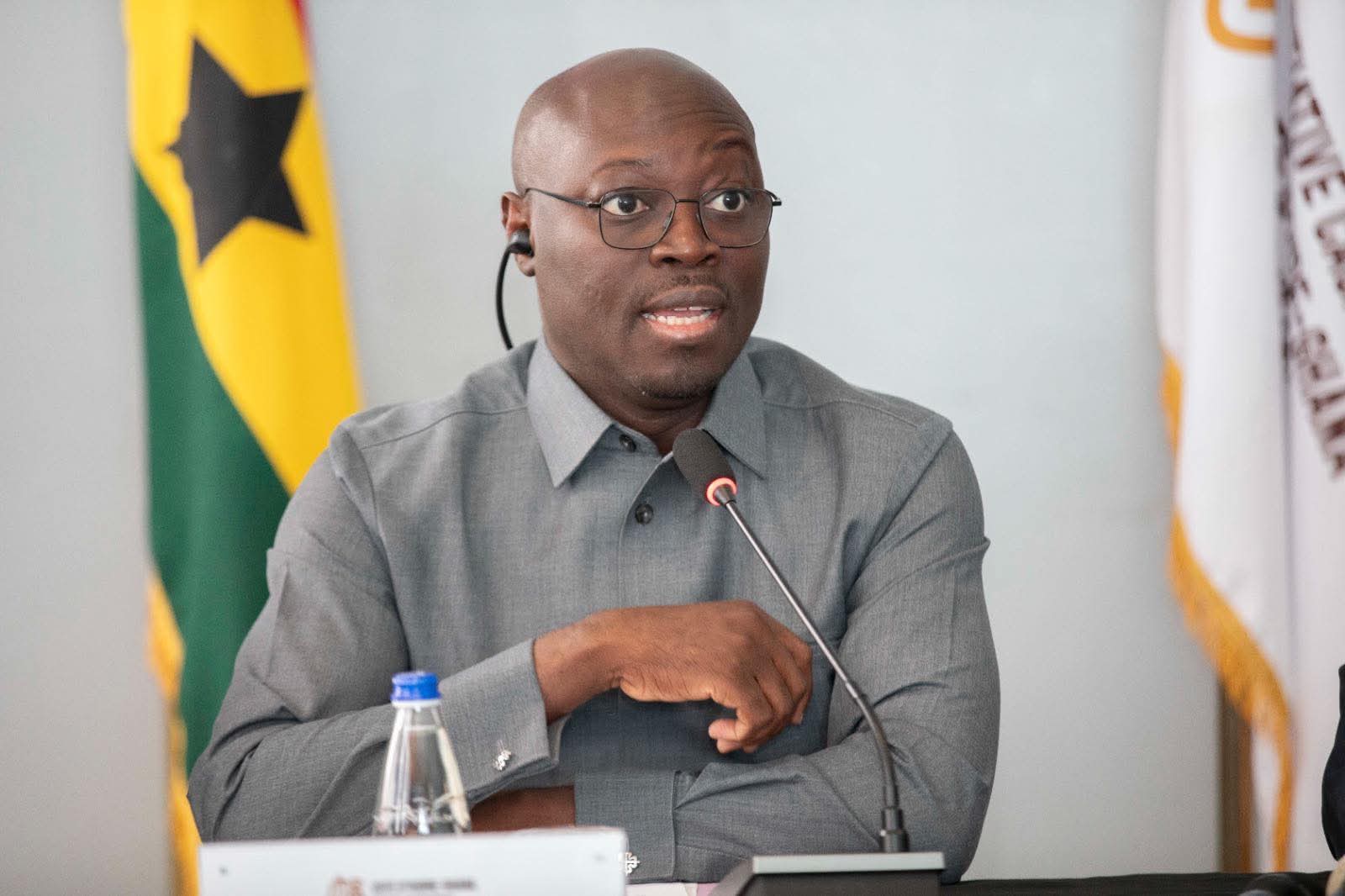
Ghana's Finance Minister, Dr. Cassiel Ato Forson, has issued a strong warning against calls for accelerated public spending. He argues that any reckless loosening of fiscal discipline could derail Ghana’s economic recovery. Such actions, he stated, could push the country back into the crisis conditions that necessitated debt restructuring and an International Monetary Fund (IMF) supported rescue programme.
Dr. Forson defended the government’s cautious fiscal stance. He emphasized that Ghana remains bound by the commitments made under the US$3.00 billion IMF program. This obligation stands regardless of which administration originally negotiated the arrangement. He stated, “The IMF does not deal with political parties; it deals with governments and countries.”
The Finance Minister’s comments arise amid a growing debate over whether the government should increase expenditure. This debate follows improvements in key macroeconomic indicators. Inflation has fallen sharply from crisis levels, interest rates have declined, and fiscal performance has outperformed programme targets. However, Dr. Forson pushed back against the argument that improved fiscal performance should automatically translate into aggressive spending.
He asserted that the government’s first responsibility is to protect the stability that has been painfully rebuilt. This stability follows years of economic turbulence. Ghana recorded a fiscal performance of 0.90% of Gross Domestic Product (GDP) in the first half of the year. This places the country ahead of schedule to meet the year-end primary surplus target of 1.50% of GDP. Dr. Forson explained, “I’ve done 0.90%, and by annualising that, it means we will have some room to spend without breaching our commitments.”
The Finance Minister’s position highlights the central tension in Ghana’s post-crisis recovery. This tension involves balancing demands for public investment, social support, and economic stimulus. It also requires maintaining fiscal consolidation, debt sustainability, and investor confidence. Ghana seeks to avoid the familiar cycle where stabilization is followed by fiscal relaxation, renewed borrowing pressure, and another return to macroeconomic instability.
Dr. Forson stressed that Ghana cannot afford to treat the IMF programme as a partisan agreement. He noted that successful implementation of the programme allowed the IMF to confirm Ghana’s compliance with key performance benchmarks. This positions the country to conclude the financial support programme as scheduled. This expected exit is central to the government’s recovery narrative.
Ghana aims to transition from IMF financial support to a post-bailout framework. This framework is anchored on policy discipline, structural reform, and continued investor confidence. Any sharp fiscal slippage at this stage would risk undermining the credibility the government is trying to rebuild. Responding to suggestions for more aggressive spending, Dr. Forson asked, “Do you want me to spend and derail the IMF programme?”
He warned, “If we spend as though there’s no tomorrow, we will crash the economy again and return to the crisis that forced Ghana into debt restructuring.” This warning is politically significant. Fiscal restraint often becomes harder to defend when economic indicators improve. During a crisis, governments can justify difficult measures by pointing to emergency conditions. During recovery, citizens and interest groups expect relief, higher spending, and faster delivery of public programmes. This presents a challenge for the Finance Ministry. The government must demonstrate that recovery is real while persuading the public that gains remain fragile and require protection.