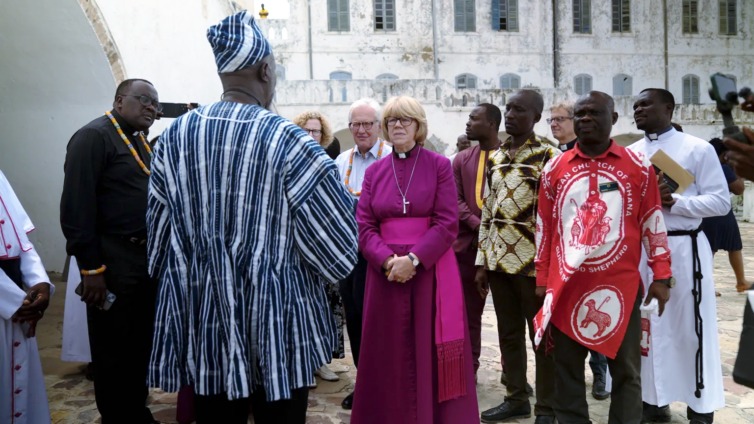
The Archbishop of Canterbury, Dame Sarah Mullally, has renewed her commitment to a controversial £100 million fund. This fund addresses the Church of England's historical involvement in the transatlantic slave trade. Her reaffirmation occurred during a significant visit to Cape Coast Castle in Ghana.
Dame Sarah Mullally stated that touring the castle deeply moved her. The castle once held enslaved Africans before their forced transport to the Americas. She acknowledged the Church's clear role in the slave trade. The fund aims to support communities still feeling the legacy of this historical injustice through concrete actions.
This commitment aligns with Ghana's ongoing global campaign for reparations from institutions and nations that benefited from the slave trade. The West African nation has consistently advocated for reparative justice. This visit highlights a growing international recognition of the need to address historical wrongs.
Ghana's Foreign Minister, Samuel Okudzeto Ablakwa, praised Dame Sarah's actions. He believes her visit sends a strong signal to those within the Church of England who may resist such initiatives. Mr. Ablakwa emphasized that Christian belief requires admission of sins for salvation.
The £100 million fund was established three years ago. This followed an audit of the Church's historical endowment fund. The audit revealed significant investments in a company involved in trafficking enslaved people. The fund's purpose is to finance a program of investment, research, and engagement in communities damaged by the enslavement of African people.
The Church of England has previously apologized for its connections to the slave trade. Its missionary arm operated slave-farmed plantations in the Caribbean. These plantations funded the spread of Anglicanism. Individual clergy members also owned slaves, and the Church accepted large donations from slave traders.
Dame Sarah's visit is her first pastoral trip to Africa since becoming head of the Church of England in March. Reparative justice has been a central theme of her Ghana itinerary. At Cape Coast Castle, she witnessed the horrific conditions in the dungeons and the infamous "door of no return."
She described the experience as deeply unsettling. It brought home the immense evil of transatlantic slavery. The presence of a chapel directly above the dungeons served as a stark reminder. It illustrated the Church's direct involvement in the slave trade.
Despite the fund's clear objectives, it has faced opposition. Some critics question the historical accuracy of reports detailing the Church's complicity. Others have raised legal concerns and ideological objections to the fund's existence. However, the Church maintains its commitment to this reparative justice work.
The implications of this renewed commitment are significant for both the Church of England and the global reparations movement. It could encourage other institutions to confront their historical ties to slavery. This action sets a precedent for financial redress and reconciliation efforts. Decision-makers and affected communities will closely watch the fund's implementation and impact.