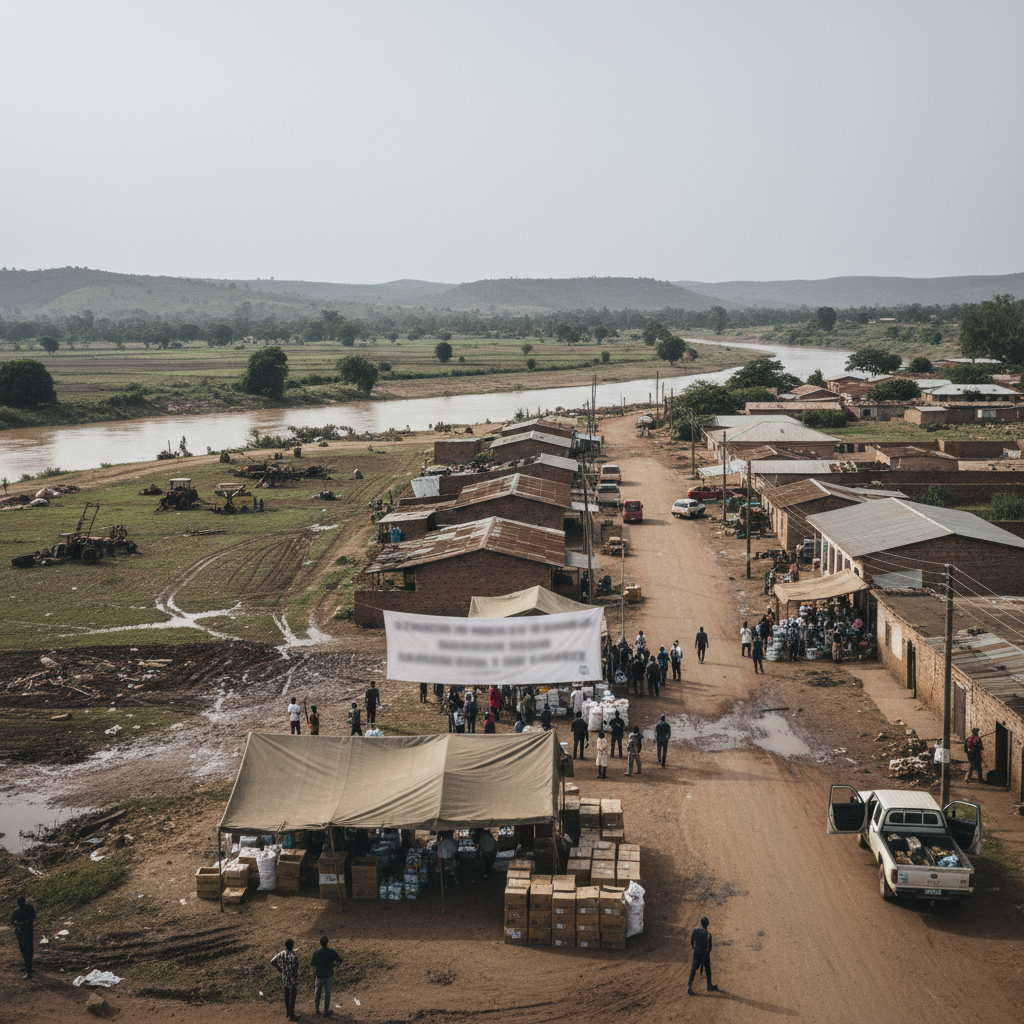
The Adventist Development and Relief Agency (ADRA) Ghana has committed GHS 224,000 to provide skills training and livelihood support for families affected by the devastating June 29 floods. This initiative marks a strategic shift from immediate emergency relief to long-term recovery efforts. The organization aims to help victims rebuild their livelihoods and generate sustainable income sources.
The June 29 floods destroyed homes, businesses, and other means of survival in several communities across Ghana. ADRA Ghana's new focus addresses the critical need for sustained economic recovery among the displaced. The GHS 224,000 was mobilized with support from ADRA International, its Africa Regional Office, and the Seventh-day Adventist Church in Ghana.
This commitment aligns with broader national efforts to address the aftermath of natural disasters. Ghana frequently experiences flooding during its rainy seasons, which often displaces thousands and causes significant economic damage. Previous relief efforts have sometimes focused heavily on immediate aid, making ADRA Ghana's long-term approach a notable development in disaster response.
Dr. Isaac Kankam-Boadu, ADRA Ghana's Country Director, stated the organization's response extends beyond distributing relief supplies. "After this presentation, we will be engaging with our donor partners," he said. He added, "Once NADMO has identified the victims, we will collaboratively work with them so that the affected victims can be trained in some skills which they can engage in livelihood activities."
The funds were initially used to procure essential relief items identified by NADMO, including mattresses, toiletries, detergents, and other household necessities. Dr. Kankam-Boadu confirmed, "Altogether, it is about 224,000 Ghana cedis, and these are the monies that we have used to provide all the items for the victims." ADRA Ghana will continue to work closely with NADMO during the distribution phase.
Alhaji Ahmed-Rufai Afarahim, NADMO's Deputy Director-General in charge of Technical, received the donation on behalf of the government. He assured the public that the relief items would reach those affected. "We promise these items will get to the victims of the June 29 flood disaster," he stated.
The shift to livelihood support is crucial for the long-term stability of flood-affected communities. While immediate relief addresses urgent needs, sustainable income generation prevents prolonged dependency and fosters resilience. This approach will likely influence future disaster response strategies by other non-governmental organizations and government agencies.
Decision-makers and affected communities will closely watch the implementation of these training programs. The success of this initiative could set a precedent for how Ghana manages post-disaster recovery. It emphasizes the importance of empowering individuals to rebuild their lives with dignity rather than relying solely on external aid.
The collaboration between ADRA Ghana and NADMO is vital for effective resource allocation and beneficiary identification. This partnership ensures that aid reaches the most vulnerable populations. It also maximizes the impact of the GHS 224,000 investment in long-term recovery efforts.