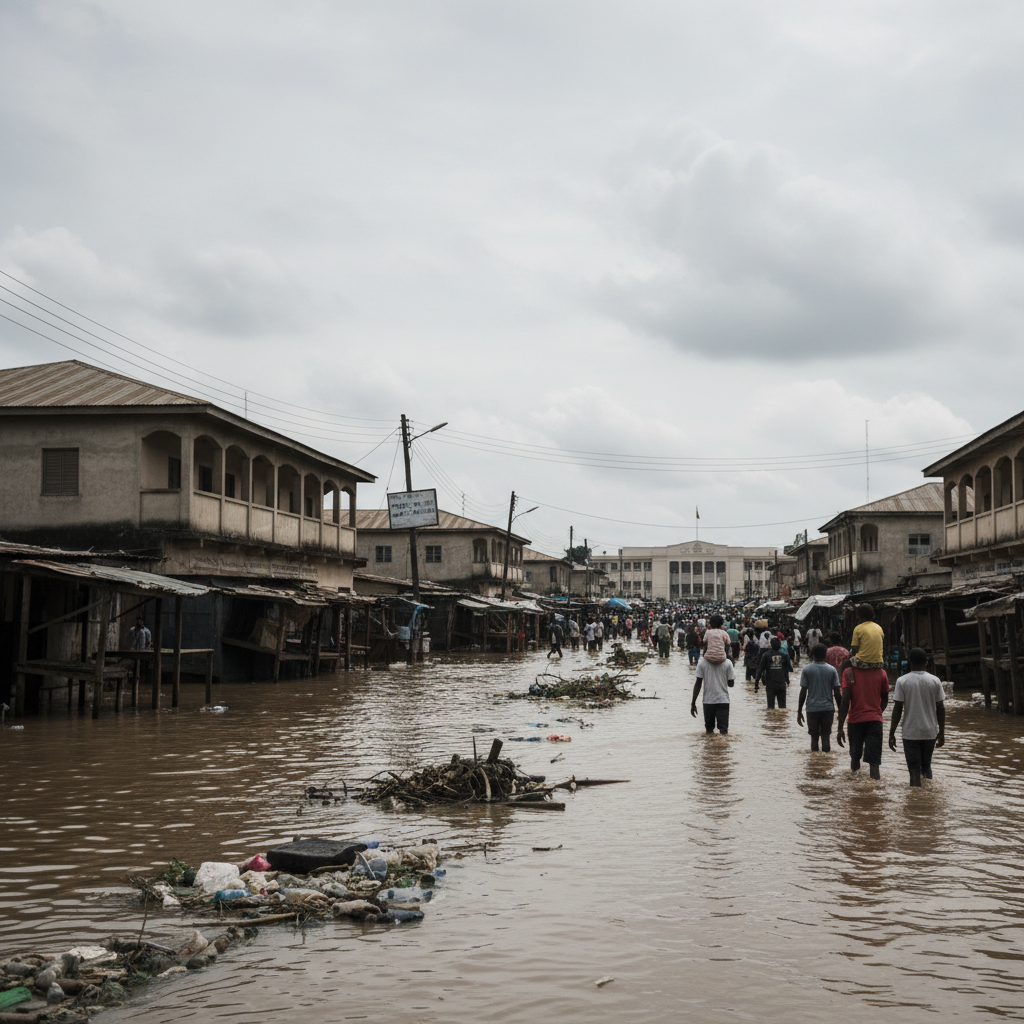
Ghana's Interior Minister, Muntaka Mohammed-Mubarak, announced that 7,761 households were affected by severe floods on Monday. These floods swept across parts of Greater Accra and other regions. The disaster resulted in 12 confirmed deaths and left 7 people still missing as of Tuesday, June 30.
This torrential rainfall was one of the heaviest to hit Accra in recent years. It inundated several communities, including Alajo, Adabraka, Circle, Kaneshie, Weija, and Tse Addo. The floods submerged homes and businesses, stranding hundreds of motorists. Transport services were significantly disrupted, and public infrastructure suffered damage. Thousands of families were forced to flee their homes.
The widespread flooding aligns with a concerning trend of increasing urban flood incidents in Ghana's major cities. These events often highlight the country's infrastructure deficit and rapid, unplanned urbanisation. The economic cost of such disasters is substantial, affecting livelihoods and placing a strain on public finances for recovery and mitigation efforts. Previous reports by the National Disaster Management Organisation (NADMO) have indicated that flood-related losses run into millions of GHS annually, hindering economic growth and development.
Minister Mohammed-Mubarak updated Parliament on Tuesday, June 30, on the situation. He stated, "As of this morning, seven persons are still missing." He also confirmed that 3,882 people had been directly impacted. Emergency agencies are continuing search, rescue, and recovery operations in the hardest-hit communities. He assured Parliament that the government is working to provide immediate humanitarian assistance.
The government is coordinating interventions to support flood victims with emergency relief items. Longer-term measures are under consideration to reduce the impact of recurring floods in the capital. These efforts will likely involve significant investment in drainage infrastructure and urban planning. Businesses and markets will also monitor the government's response to assess potential short-term economic disruptions and aid reconstruction efforts. The affected regions will face challenges in restoring normalcy and economic activity.
The National Disaster Management Organisation (NADMO), the Ghana Armed Forces, the Ghana Police Service, and the Ghana National Fire Service remain on the ground. These agencies are actively involved in rescue operations, damage assessment, and providing relief to displaced residents. The extensive disruption to economic activities, including road closures and suspension of academic activities, underscores the far-reaching impact of the disaster. Residents have been urged to remain vigilant and avoid flood-prone areas as recovery efforts continue.