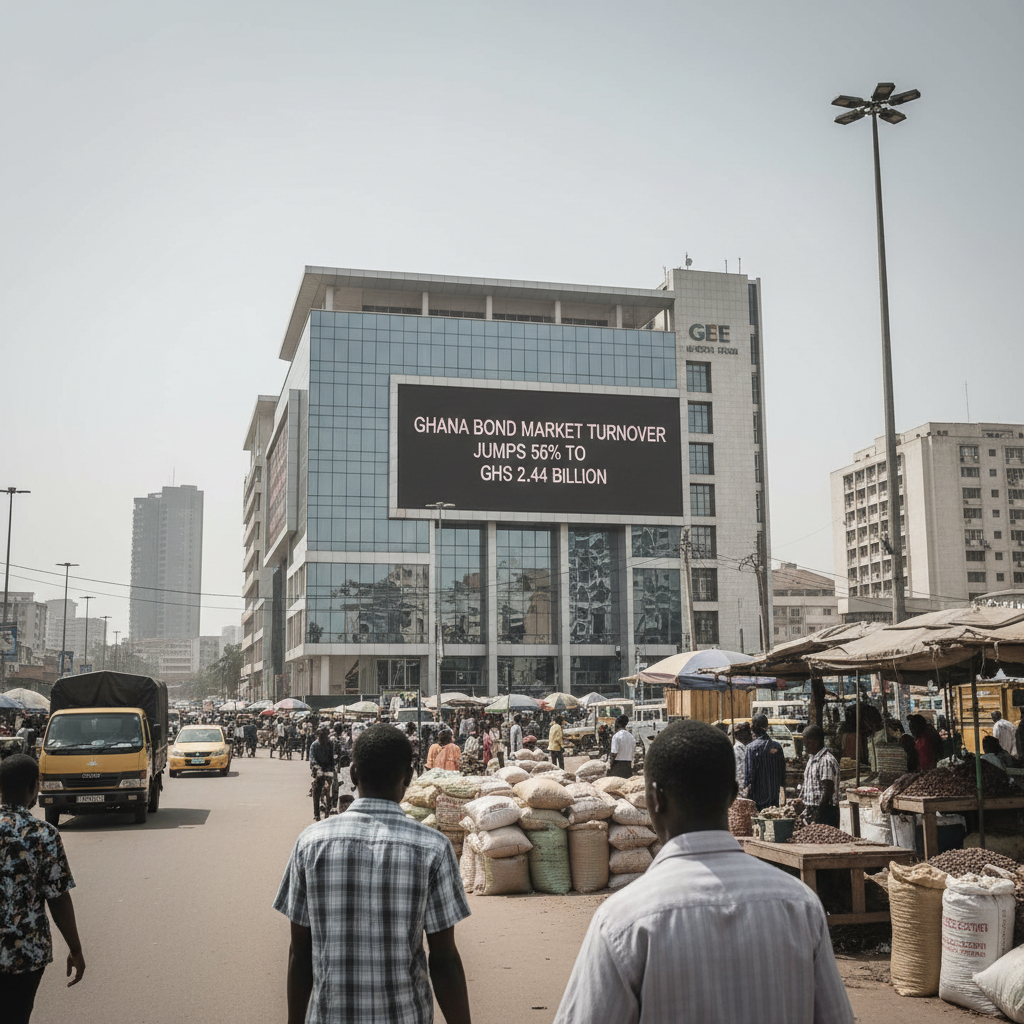
Ghana's secondary bond market recorded a substantial increase in activity last week, with turnover jumping by 56.45% to GHS 2.44 billion. This marks a significant rebound in the trading of government debt instruments.
Trading was heavily focused on bonds maturing between 2031 and 2034, which accounted for 53.24% of the total turnover. These had an average yield of 14.18%. Additionally, the 2027-2030 segment contributed 44.40% of trades, showing a weighted-average yield of 12.39%. This concentration indicates investor preference for medium-term maturities.
This renewed interest in the bond market aligns with broader efforts to stabilize Ghana's public finances. The government has focused on managing its debt burden and improving market confidence. Previous periods have seen fluctuating market activity, including earlier declines in turnover. The current increase suggests that investors are becoming more comfortable with Ghana's sovereign debt.
Databank Research expects this strong secondary bond market activity to continue in the coming weeks. They cite the third-quarter 2026 issuance calendar as a key driver. The calendar indicates renewed market engagement from the government.
Databank Research stated, “We believe the government’s planned net issuance of GHS 15.39 billion, aimed at extending the debt maturity profile and reducing refinancing risk, should support price discovery, trading interest, and market turnover.” This strategy aims to make Ghana's debt more sustainable over time. It reduces the immediate pressure to repay large sums.
Looking ahead, market participants will closely watch the government's upcoming bond issuances. These issuances will provide new opportunities for investors. The successful execution of the GHS 15.39 billion issuance will be crucial. It will help manage the debt maturity profile and alleviate refinancing risks. This continued activity could further strengthen investor confidence and liquidity in the secondary market. A healthy bond market is essential for government borrowing and overall economic stability. It signals trust in the country's financial management.