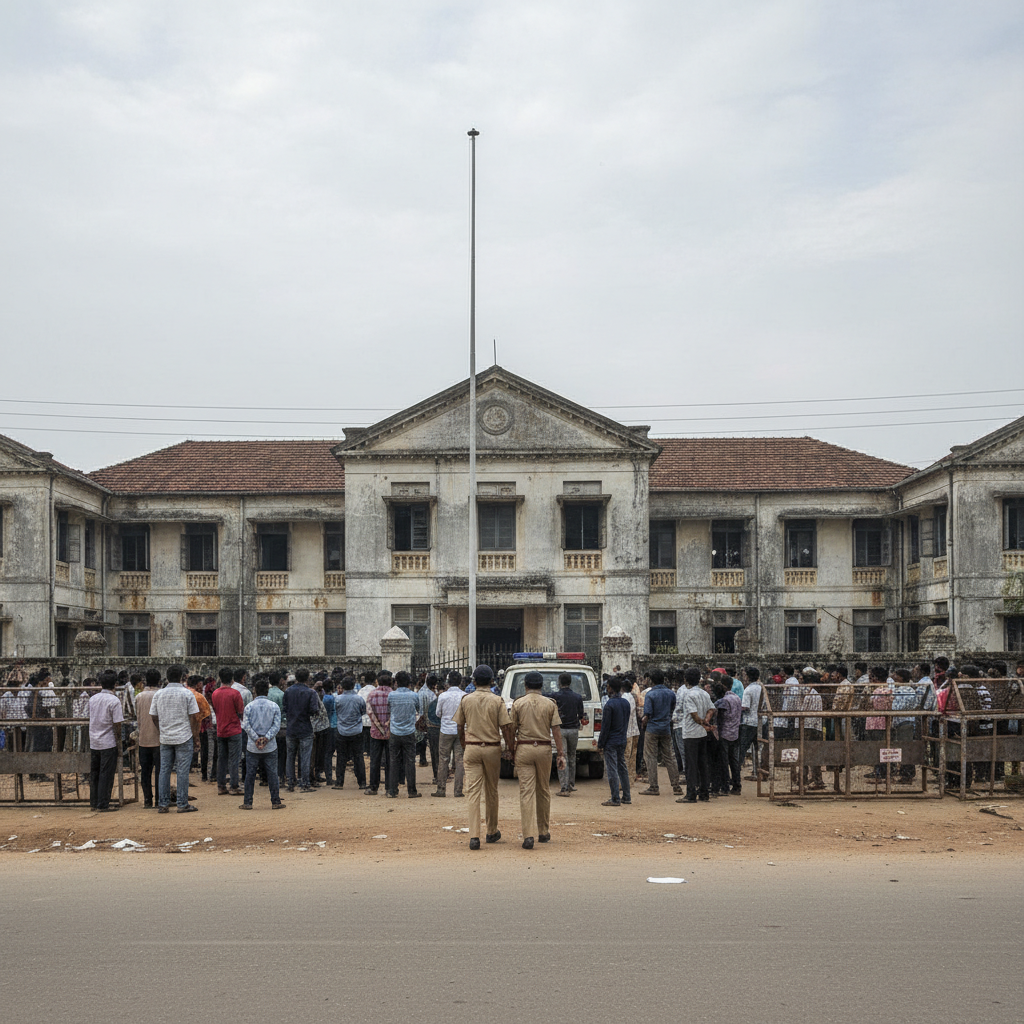
Zambian security forces have arrested 11 individuals, including leading opposition presidential candidate Brian Mundubile. Authorities allege these arrests are linked to an insurrection plot involving foreign nationals and illegal military training camps. The arrests occurred days after the country's presidential election, where vote counting is still underway.
The government stated that those arrested posed a serious threat to state security. They reportedly possessed high-grade military weapons, ammunition, and other materials intended for an armed uprising. Patrick Kangwa, Zambia's top civil servant, confirmed Mundubile was found at the raid scene in Lusaka. Mundubile, however, described the raid as an attempt on his life and claimed colleagues were shot in his presence.
This incident unfolds against a backdrop of a closely contested presidential election. Mundubile is currently trailing incumbent Hakainde Hichilema, with results from over half of the constituencies counted. Earlier, Mundubile had claimed victory and alleged widespread voting irregularities. These claims were denied by authorities, and election observers initially described the poll as largely peaceful.
The arrests and allegations of an insurrection plot could significantly impact Zambia's political stability. Such events often deter foreign investment and raise questions about the rule of law. Ghana, like other West African nations, closely monitors political developments across the continent. Regional stability is crucial for economic integration and trade, influencing investor confidence in emerging markets.
Patrick Kangwa provided further details, stating the arrested individuals were connected to "military plans involving foreign nationals." He emphasized the discovery of "high-grade military weapons" and ammunition. Kangwa also alleged that shots were fired at law enforcement officers during the raid, leading to an exchange of fire. Among those detained is Patrick Mwansa, husband of Tasila Lungu, daughter of former Zambian President Edgar Lungu.
Mundubile has consistently raised concerns about the electoral process. He cited military involvement at tallying centres and irregularities with ballot boxes. He also claimed he was interrogated and assaulted by Zambian army officers over videos he released. Authorities have denied these allegations. Mundubile further accused Tanzania of interfering in the election, a claim Tanzania firmly rejected as false.
The Zambian electoral commission briefly suspended vote counting on Friday due to violence against polling staff. They also reported the theft of marked ballot papers. The suspension was lifted the same day after security threats were reportedly contained. This volatile post-election period highlights the fragility of democratic transitions in some African nations.
The implications for Zambia's economic future are substantial. Political instability can lead to capital flight and reduced foreign direct investment. Businesses operating in Zambia may face increased uncertainty, affecting their long-term planning. For Ghana, observing these events underscores the importance of robust democratic institutions and peaceful power transitions to maintain economic growth and investor trust. The international community will be watching closely for due process and adherence to democratic principles.
This situation could also influence regional economic blocs like the Southern African Development Community (SADC). Any prolonged instability in a member state affects the entire region's economic outlook. Investors often view African markets collectively, meaning events in one country can impact perceptions of others. Therefore, a swift and transparent resolution to Zambia's political tensions is vital for its own economy and broader regional stability.