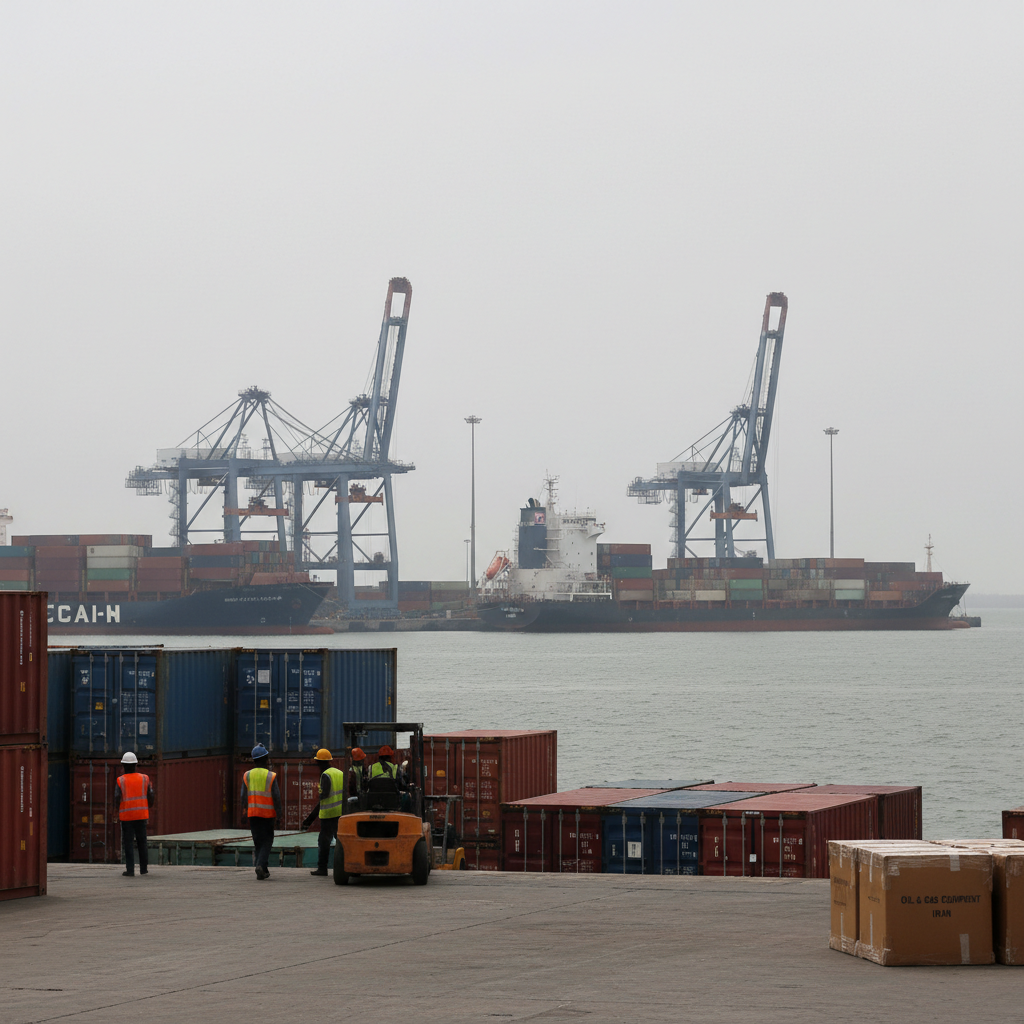
The United States military has conducted strikes on Iranian targets following a drone attack on a cargo ship in the Strait of Hormuz. US Central Command (Centcom) reported hitting missile and drone storage facilities and coastal radar positions on Friday, June 26, 2026. This action came after President Donald Trump accused Iran of violating a truce.
The strikes were a direct response to a one-way attack drone hitting the Singapore-flagged cargo ship, Ever Lovely, on Thursday. The vessel was struck 7.5 nautical miles southeast of Oman's port of Dahit. No casualties were reported, but the incident prompted concerns about the safety of commercial shipping. Centcom described the strikes as a "powerful response" to Iran's "unwarranted aggression against commercial shipping."
The Strait of Hormuz is a crucial international trade corridor, particularly for global oil and gas shipments. Disruptions in this strait previously caused a significant spike in global oil prices and affected the flow of other vital commodities, such as fertiliser. The recent attack and the US response heighten tensions in a region already sensitive to maritime security. Earlier this year, Tehran effectively closed the strait after US and Israeli attacks against Iran began in late February, underscoring its strategic importance.
US Vice-President JD Vance commented on the situation following the retaliatory strikes. In a post on X, Vance stated, "If Iran has disagreements about how the MOU is being applied, they can pick up the phone." He emphasized that "violence will be met with violence," indicating a firm stance from the US administration. The US and Iran had agreed on June 17 to end hostilities under a 14-point memorandum of understanding (MOU). This MOU called for Iran to ensure the safe passage of commercial vessels for 60 days without charge.
The immediate implication is an increase in geopolitical risk and uncertainty surrounding maritime trade in the Gulf region. Global markets, particularly oil and gas, will closely monitor further developments and any potential escalation. Decision-makers face renewed pressure to secure unimpeded passage through the Strait of Hormuz. The Iranian Islamic Revolutionary Guard Corps (IRGC) blamed the US and Israel, stating that if aggression is repeated, their response would be more extensive, adding to the instability.
The incident also puts spotlight on the prior agreement between the US and Iran. President Trump had stated on Truth Social that Iran informed the US there would be "no tolls, no insurance costs and no other charges of any kind being sought or received." He warned that if this information was false, negotiations would end immediately. The US has consistently condemned any reports of Iran charging fees for passage through the strait.
The United Nations International Maritime Organization (IMO) had to pause a planned evacuation of over 11,000 sailors. These sailors have been stranded in the key shipping lane since the war erupted. The continued instability in the Strait of Hormuz directly affects the safety and well-being of these seafarers. The situation remains fluid, with ongoing diplomatic and military maneuvers determining the next steps for regional stability and global trade.