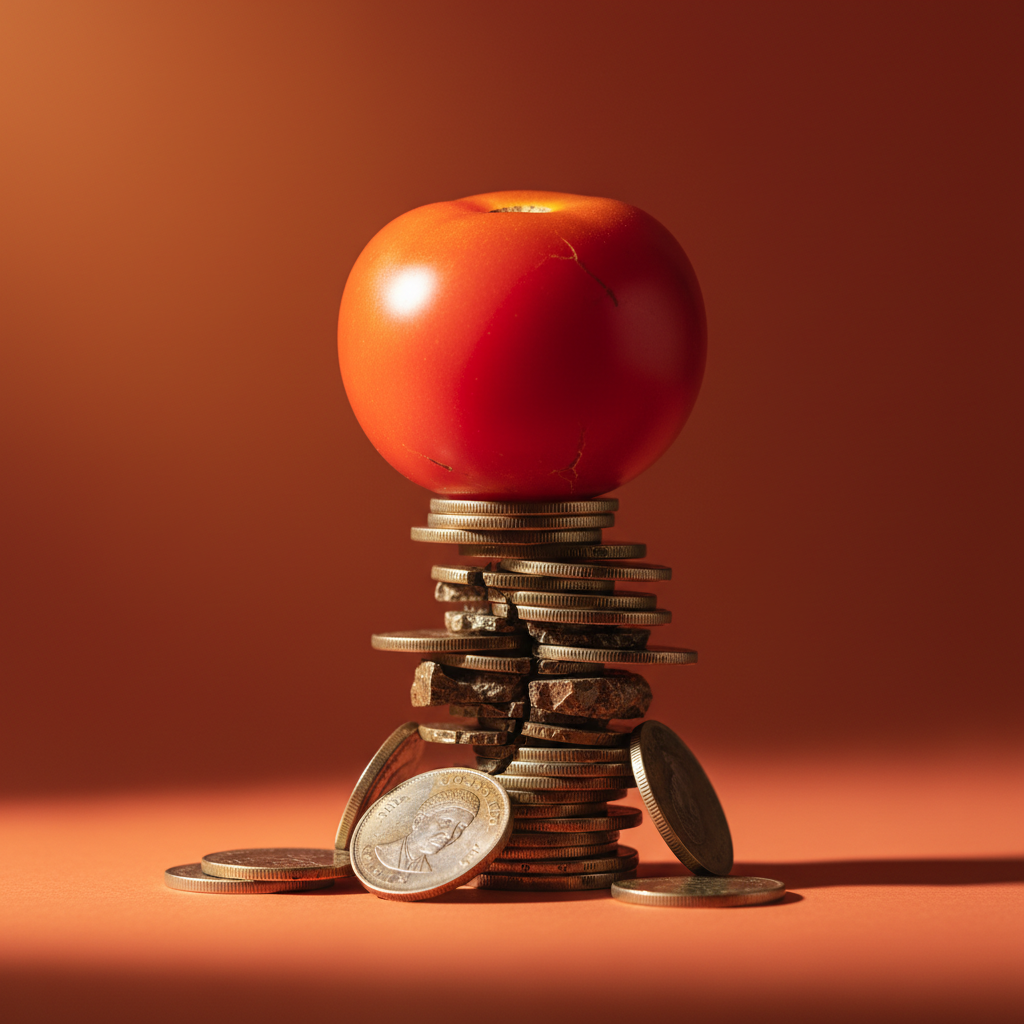
Ghana's overall inflation rate climbed to 5.0% in August 2026, up from 4.6% in July, marking a second consecutive monthly increase. Fresh tomato prices surged by 158.3% year-on-year during the same month, making it the commodity with the largest price jump recorded by the Ghana Statistical Service (GSS).
This significant rise in tomato prices occurred despite a slight moderation in overall food inflation, which decreased to 3.0% in August from 3.1% in July. The GSS data shows that while some food items became much more expensive, others saw price reductions. This creates a complex picture for household budgets across the country.
The latest inflation figures indicate that domestic factors remain the primary source of price pressures in Ghana. Non-food inflation, which includes items like housing, transport, and utilities, was the main driver of the overall increase. This trend suggests that local economic conditions and supply chains are significantly influencing consumer costs, even with a relatively low headline inflation rate.
Government Statistician Dr. Alhassan Iddrisu highlighted the varied market experiences. He stated, “Fresh Tomatoes more than doubled in price (+158.3%) while Lime fell 33.7%: the overall Y-on-Y inflation of 5.0% hides very different experiences at the market.” This comment underscores how headline figures can mask significant price volatility for specific goods that impact daily living.
Policymakers and consumers will closely watch how these divergent price movements evolve in the coming months. The continued dominance of non-food inflation suggests that broader economic policies, rather than just agricultural interventions, will be crucial. Businesses may face increased costs, potentially affecting their pricing strategies and consumer spending patterns.
The GSS data revealed that non-food inflation rose to 6.8% in August, significantly higher than food inflation at 3.0%. Non-food items contributed 70.9% to the total inflation, while food contributed 29.1%. This shows that the cost of services and manufactured goods is increasing faster than basic food items for many Ghanaians.
Services inflation reached 8.6%, outpacing goods inflation which stood at 3.8%. This indicates that sectors like transport, education, and healthcare are experiencing stronger price pressures. Locally produced goods and services accounted for 86.2% of total inflation, with imported inflation at a much lower 2.2%. This reinforces the idea that internal economic dynamics are the primary concern.
Other notable price increases in August 2026 included ginger, which rose by 128.3%, shrimp by 67.1%, and mangoes by 57.7%. Fresh coconut prices increased by 38.0%, and fresh green pepper by 30.5%. These significant jumps in key food items can strain household budgets, especially for low-income families.
Conversely, some food items saw price declines. Lime prices fell by 33.7%, and maize recorded a 31.3% reduction. Cocoyam leaves, sweet apples, fried fish, and pawpaw also experienced notable price drops. These varied movements demonstrate the complex nature of Ghana's food market, influenced by seasonal factors and supply chain efficiencies.
Despite these divergent movements, food prices as a whole decreased by 2.5% month-on-month in August. Dr. Iddrisu clarified that inflation measures the rate at which prices change, not their absolute level. He explained, “Inflation measures how fast prices in general are rising or falling, not how high they already are.” This distinction is important for understanding economic trends.
The Bank of Ghana will likely consider these inflation figures when making decisions on interest rates. Persistent non-food inflation could signal underlying economic pressures that might require monetary policy adjustments. Businesses and investors will monitor these trends for their impact on operational costs and consumer purchasing power.
The government's fiscal policies, particularly those affecting domestic production and service costs, will also play a critical role. Addressing the drivers of non-food inflation, such as energy prices or transport costs, could help stabilize overall price levels. Consumers will continue to adapt their spending habits in response to these fluctuating market conditions.