Professor Ransford Gyampo, Chief Executive Officer of the Ghana Shippers Authority, declared that Ghana cannot achieve meaningful and sustainable development within a deeply polarised society. He stated that policy discontinuity, where new governments abandon prior projects, undermines national progress.
Professor Gyampo made these remarks as a guest speaker at the 8th Biennial Social Science Conference at the University of Education, Winneba (UEW) on July 6, 2026. The conference focused on "Bringing the Gown to Town: Seeking Sustainable Development in a Polarised World." Scholars from various universities across Ghana and beyond attended the two-day event, discussing crucial aspects of national growth.
This concern about policy discontinuity directly impacts Ghana's economic stability and investment climate. Frequent changes in project priorities discourage long-term planning and deter both local and international investors. Data from the Ghana Investment Promotion Centre (GIPC) consistently highlights policy uncertainty as a significant barrier to attracting foreign direct investment. This fragmentation stalls infrastructure projects and public services, reducing their economic benefit to the country.
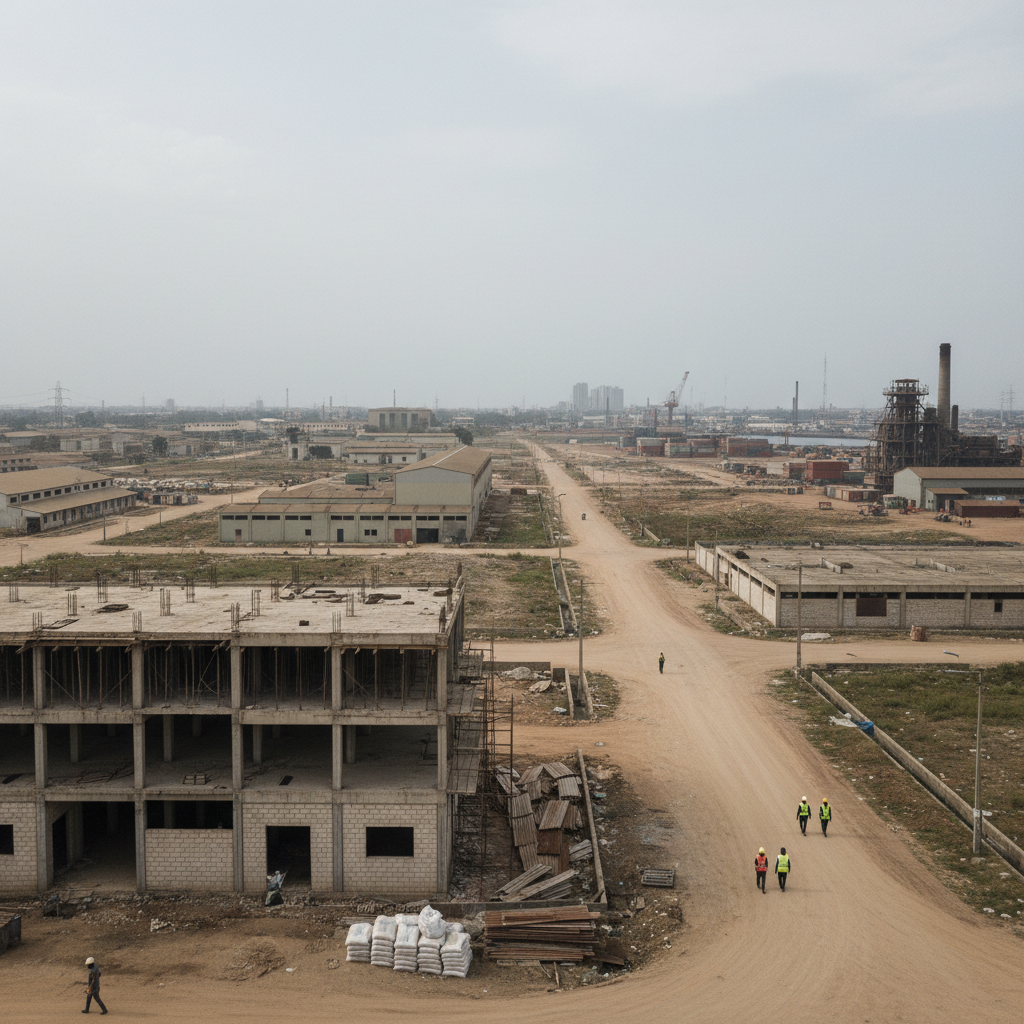
Professor Gyampo emphasised in his address that sustainable development requires a collective commitment. He explained that long-term thinking depends on having a minimum level of social cohesion and public agreement on a common good. "We must agree, for instance, that it is wrong to destroy a road simply because a new administration wants to construct another," Professor Gyampo said, illustrating the impact of political short-sightedness.
Political polarisation weakens this social cohesion, leading to short-term policymaking. This environment turns complex development challenges into political battles, which makes sustainable development difficult and uncertain. Universities, according to Professor Gyampo, must move beyond their traditional roles. They should become facilitators of dialogue, mediators of competing interests, and builders of public trust, rather than just knowledge producers.
The implications of sustained polarisation are significant for Ghana's economic future. Without a stable policy environment, achieving key national development goals, such as those outlined in the Ghana Beyond Aid agenda, becomes increasingly challenging. Decision-makers in government and the private sector need to foster consensus on critical national projects to ensure continuity and attract necessary funding. The ability to maintain consistent policies despite changes in political leadership will signal maturity to both the electorate and financial markets.
Furthermore, Professor Gyampo highlighted that communities should not be passive recipients of knowledge. Their experiences and indigenous knowledge must actively shape research and development efforts. This collaboration, consistent with the quadruple helix model of innovation—which includes civil society, academia, government, and industry—will produce more relevant and widely accepted solutions. The inclusion of civil society is a transformation, not merely an addition, ensuring development is negotiated, contextualised, and co-owned.
Trust forms the bedrock of sustainable development, he noted. Without it, policies face resistance, innovations are rejected, and public institutions lose credibility. Ghanaian universities must create public value through research and societal engagement. They need to produce graduates who are not only technically competent but also equipped to navigate a polarised world. This proactive role for universities is essential for building a more sustainable, inclusive, and united Ghanaian society.