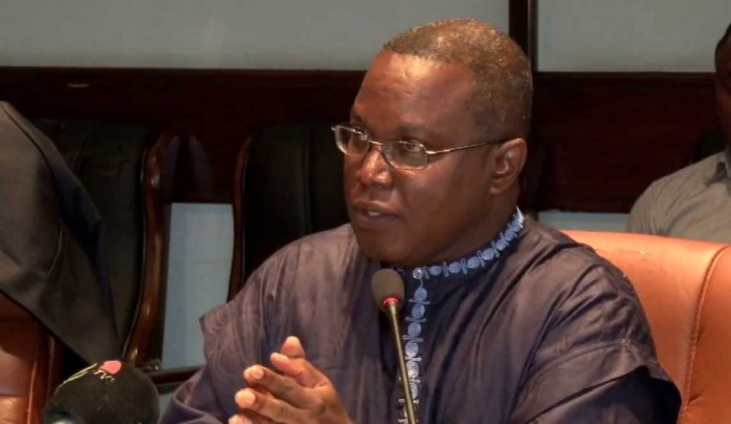
Ghana’s National Development Planning Commission (NDPC) is consolidating four major development blueprints into a single, comprehensive Ghana Consolidated National Development Plan. This initiative aims to anchor the nation's economic transformation by ensuring policy continuity beyond electoral cycles. The NDPC briefed the Speaker of Parliament, Rt Hon Alban Kingsford Sumana Bagbin, on Wednesday, July 22, 2026, regarding this crucial effort.
The consolidation addresses a persistent weakness in Ghana’s development history: the repeated abandonment of national plans when political power changes hands. By seeking parliamentary adoption, the NDPC intends for this plan to become a binding national framework. This framework will guide economic, social, and institutional development, preventing the disruption of long-term goals by new administrations.
This move is critical for Ghana's broader economic and political stability. The country has a history of launching new development agendas rather than consistently building on existing ones. This lack of continuity has led to delayed projects, reversed priorities, and wasted public resources on repetitive planning. The NDPC's effort seeks to translate Ghana's political stability into sustained development discipline, a key factor for economic progress.
Dr. Nii Moi Thompson, Chairman of the NDPC, stated that the Commission expects the Ghana Consolidated National Development Plan to be adopted by Parliament as “the legislated will of the people.” This phrase underscores the NDPC's desire for the plan to possess a legitimacy that extends beyond the executive branch and any single political party's manifesto. Such adoption would elevate the plan to a strategic national framework, aligning medium-term development plans, annual action plans, and public investment decisions.
The implications are significant for Ghana's future economic trajectory. If adopted, the plan could provide the stability needed to tackle complex development challenges that require more than one political term to resolve. This includes sustained productivity growth, industrial upgrading, export diversification, and stronger human capital. Decision-makers and markets will closely watch Parliament's response to this proposal, as it could signal a new era of disciplined national planning.
The four existing plans being consolidated include the 40-Year Development Plan from 2016, Ghana Beyond Aid from 2019, Ghana@100 also from 2019, and Vision 2057 from 2024. Despite their ambitions, these plans were never fully implemented, according to the NDPC. The current consolidation is therefore an attempt to rescue Ghana’s “unfinished business of development” from political discontinuity and policy abandonment.
Dr. Thompson warned that Ghana has remained stuck in a “middle-income trap” since becoming a lower middle-income country in 2010. He argues that without a disciplined national framework, Ghana risks remaining trapped or even regressing. Escaping this trap demands sustained reforms in areas like infrastructure, education, industrialisation, and more efficient public institutions, which cannot be achieved within a single political term.
The Speaker welcomed the briefing and pledged Parliament’s support for the development of the Ghana Consolidated National Development Plan. He emphasized the importance of governance and institutional reforms in achieving Ghana’s development aspirations. The Speaker noted Ghana's stable democratic institutions under the Fourth Republic, reinforcing the argument that the country must now convert political stability into development discipline.
This initiative represents a direct response to a structural problem in Ghana’s democracy: the tension between electoral competition and long-term national planning. The NDPC's proposal aims to bridge this gap, ensuring that Ghana's long-term development priorities are not rewritten every four years. This commitment to continuity is essential for fostering an environment conducive to sustained economic growth and improved living standards for all Ghanaians.