The Ghana Investment Promotion Centre (GIPC) is actively strengthening its staff’s technical skills to better attract foreign direct investment. This effort aims to improve Ghana's standing in the competitive global market for capital.
This initiative responds to growing competition among African and emerging market nations for limited investment flows. Quality investment promotion, efficient investor facilitation, and strong aftercare services are now essential for national competitiveness. The GIPC’s focus is on building a highly skilled team capable of delivering world-class investor services.
This move is critical for Ghana's broader economic narrative. The country seeks sustainable investment in key sectors like agriculture, manufacturing, and renewable energy. These sectors are vital for economic growth, increased exports, industrialization, and job creation. Ghana cannot solely depend on its natural resources or perceived stability to draw investors.
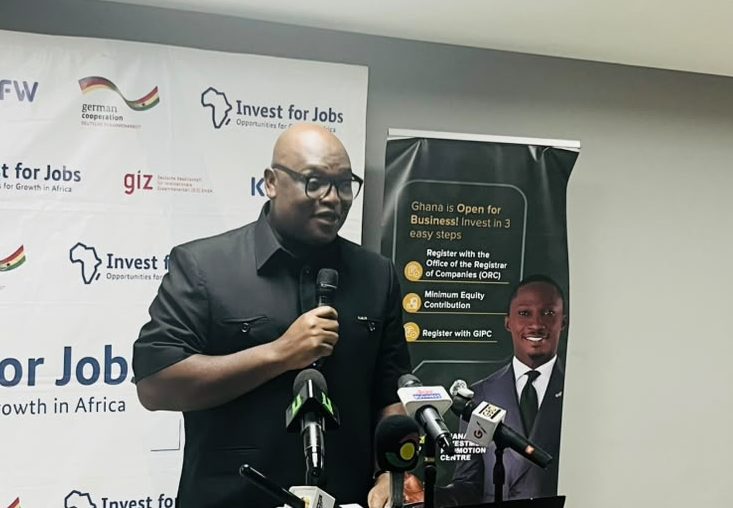
Simon Madjie, the CEO of the GIPC, stated that the changing investment environment demands a responsive team. He made these remarks at a recent five-day capacity-building workshop in Accra. Mr. Madjie stressed the importance of technically prepared, commercially aware, and service-oriented institutions. Ghana must compete effectively as investors now have more choices globally.
This training forms part of a larger plan to modernize Ghana’s investment facilitation infrastructure. It also aims to position the nation more effectively in the international investment market. The workshop, supported by GIZ under Germany’s BMZ Invest for Jobs Special Initiative, focused on various critical areas. These included digital investment promotion, investor facilitation, strategic investment marketing, negotiation, and stakeholder engagement.
Modern investment promotion agencies must do more than just provide information. They need to identify lucrative opportunities, target specific investors, offer credible market intelligence, and support investment decisions. Furthermore, they must coordinate with other government bodies and provide effective aftercare to established investors.
Mr. Madjie explained that the training equips staff with professional judgment and practical tools to meet these expectations. He urged participants to reflect their newly gained knowledge in their work quality and engagement with investors. This underscores the growing understanding that institutional efficiency heavily influences investment attraction.
Investors now evaluate more than just market size or political stability when considering Ghana. They also assess the speed of institutional responses, the clarity of presented opportunities, regulatory predictability, and how effectively concerns are resolved. The GIPC’s role has become central to Ghana’s economic strategy in this context.
Mr. Madjie also emphasized the importance of GIPC’s regional offices. He described staff in these offices as crucial ambassadors for Ghana’s investment drive. He noted that many significant opportunities in agribusiness, manufacturing, logistics, tourism, and agro-processing exist outside Accra. These regional offices are expected to find local investment opportunities and support regional economic development.
Every interaction between GIPC staff and investors is significant. Investor confidence stems not only from policy statements but also from practical experiences with state institutions. Mr. Madjie cautioned that the professionalism and responsiveness of staff directly influence investors’ perception of Ghana as an investment destination.
This highlights a broader challenge for Ghana’s investment climate. While historically viewed as a stable destination, Ghana faces intense competition. Other economies are offering improved business reforms, targeted incentives, and faster administrative processes. Attracting quality investment now requires strong institutional performance.